NEW YORK, October 24, 2026 — General Motors has unveiled a centralized computing architecture and AI-driven development process designed to halve vehicle creation times and extend eyes-off autonomy to its truck lineup by 2028. The strategy, presented at the GM Forward 2026 event, positions the automaker to compete with newer entrants by leveraging decades of accumulated data rather than relying solely on fresh engineering talent.
AI Accelerates the Engineering Cycle
The core of GM’s new approach is the application of artificial intelligence to compress traditional development timelines. According to the company, AI integration aims to reduce the standard four-to-five-year vehicle development cycle by 50 percent. This acceleration is driven by virtual testing and closer collaboration between engineering and manufacturing teams. The technical reality is that iteration speed has become a competitive metric, not just a logistical one.
GM provided a specific example involving its lithium manganese-rich battery technology. Engineers virtually evaluated over 300,000 battery designs before building a single physical prototype. The company states this process moved the initial battery concept to formal program approval in just one month. Chief Product Officer Sterling Anderson noted that aerodynamics testing, which previously took 60 hours, can now be completed in 60 seconds. Structural analysis that used to require months of calculation now takes hours. As Anderson put it, “You can imagine what that does for iteration speed.”
A New Centralized Computing Backbone
Under the hood of this strategy lies a new centralized computing architecture that GM claims offers 40 times the processing power of existing systems. This hardware shift is scheduled to debut in the 2028 Cadillac Escalade IQ before expanding to other vehicles. The detail that matters here is the reduction in physical complexity. GM says the new architecture will reduce wiring length and weight by 30 percent, supporting faster connectivity and software updates.
This computing platform supports the fourth-generation EV platform, which incorporates new battery chemistry and redesigned electric drive units. According to the company, these updated propulsion systems will use 40 percent fewer parts than current designs. The technology is not restricted to electric models. GM intends to introduce this next-generation technology across both electric and gasoline-powered vehicles, including best-selling trucks and SUVs. The goal is to make advanced features available to a broader customer base, moving beyond the niche of expensive electric models.
Autonomy Expands to Gasoline Trucks
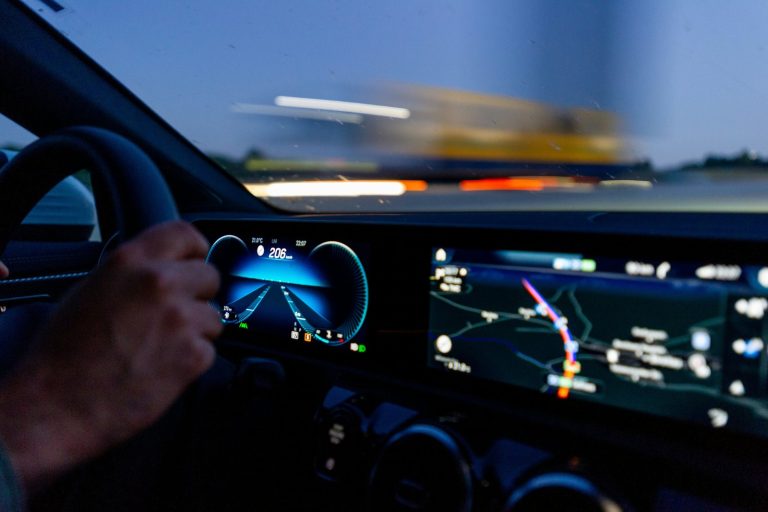
GM previously announced plans for autonomous highway driving in the 2028 Cadillac Escalade IQ. The company now intends to expand that eyes-off capability to popular full-size SUVs and light-duty pickups. This expansion is significant because it brings high-level autonomy to vehicles that rely on internal combustion engines, a segment where GM has historically held strong market share.
The development of this system relies on real-world driving data alongside AI-powered simulations. GM’s testing operation generates approximately one million miles of detailed sensor data monthly, supplemented by billions of virtual miles. Anderson argued that this data trove provides a structural advantage over smaller competitors. “The size and scale of GM with its data isn’t an anchor, it’s an advantage. Decades of data and experience. Smaller players can build models, but can’t match GM’s data,” Anderson said. This data advantage is central to GM’s claim that it can compete with and best less experienced newcomers in the autonomous space.
Unifying the Digital Ownership Experience
Alongside the hardware changes, GM is overhauling its software ecosystem. A new AI-powered OnStar assistant will debut in the 2027 Cadillac Lyriq through a software update. This assistant is designed to handle tasks such as ensuring the vehicle is started and warm 15 minutes before a scheduled departure. The feature will work with both gas and electric GM vehicles.
In 2027, the existing brand-specific apps for Buick, Cadillac, Chevrolet, and GMC, along with OnStar Guardian, will be replaced by a single OnStar mobile app. This unified platform aims to provide one singular place for managing the entire family’s vehicles, regardless of the badge on the front end. Parents will be able to track both vehicles and people via permissions from devices, such as Find My on an iPhone integration. CEO Mary Barra and President Mark Reuss presented these plans alongside Anderson, signaling a unified front for the company’s digital transformation.
Despite the technical optimism, questions remain about execution. Paul Waatti, Director of Industry Analysis at AutoPacific, told The Drive that while the tech impressed, the devil is in the details, or historically at GM, execution. Barra addressed cost concerns by noting that GM already sells a vast lineup of vehicles for $30,000 or less at a profit, though she did not confirm that AI-driven cost savings would directly lower consumer prices. The company is already implementing some of these changes internally, with owners set to get their first taste in the coming months and broader rollouts starting in 2028.
Sources
- GM Is Going All-In On AI, EVs, And Self-Driving Tech
- GM Is Going All-In On AI, EVs, And Self-Driving Tech
- GM Just Laid Out Its Entire Future. It Runs on AI, Eyes-Off Driving, and One Central Computer
Photo: Randy Tarampi / Unsplash (Unsplash License)