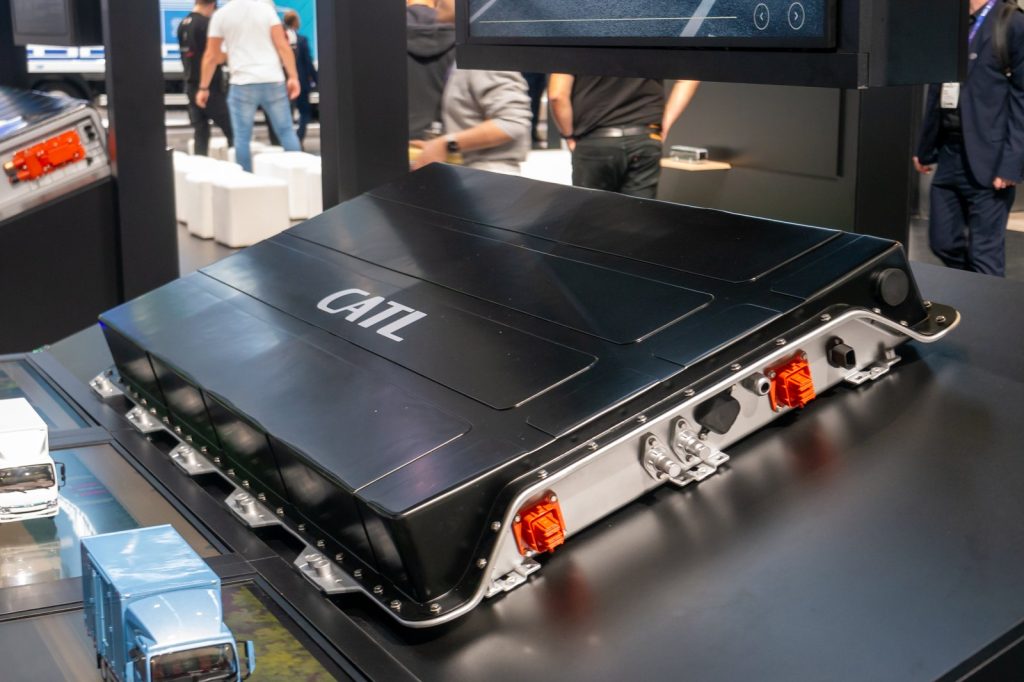
In 2016, CATL ranked third in the world for electric-vehicle batteries, behind Panasonic and BYD. A year later it was first, with sales of 11.84 GWh of power battery systems. It has stayed near the top ever since.
The numbers today are lopsided. SNE Research put CATL’s global share at 37% in 2022 and 36.8% in 2023. Through April 2024, the South Korean firm found, CATL had 81.1 GWh installed, up 30% on a year earlier, and 37.7% of a market that consumed 216.2 GWh in those four months. BYD was second at 15.4%. LG Energy Solution, the largest of the South Korean makers, held 13%.
A spin-off from Ningde
The story starts with Robin Zeng, who founded Amperex Technology Limited in 1999 to make batteries for portable devices. Japan’s TDK bought the business in 2005, and Zeng stayed on as a manager. China began subsidizing electric vehicles in 2009, and ATL had already set up an R&D division for EV batteries.
In 2011, a group of Chinese investors led by Zeng and vice-chairman Huang Shilin spun that division off as CATL after acquiring an 85% stake. TDK kept the other 15% until 2015.
That same year Beijing required foreign automakers to transfer crucial technology to domestic companies in order to qualify for EV subsidies. In 2012, CATL began working with BMW Brilliance, its first main customer. China’s grip on the battery supply chain gave firms like CATL a foundation to compete with Panasonic and LG Chem. Today its batteries go into cars from BMW, Tesla, Volkswagen, Hyundai, Toyota and Volvo, among others. BYD, its main rival, has put its own vehicles first.
Scrutiny in Washington
Success abroad brought attention. When Ford said in July 2022 that it would buy CATL batteries for the Mustang Mach-E and F-150 Lightning, the House Select Committee on the Chinese Communist Party raised concerns. A planned Ford battery plant in Marshall, Michigan, using CATL technology, was paused after lawmakers questioned the tax subsidies.
In December 2023, Duke Energy disconnected CATL batteries from Marine Corps Base Camp Lejeune over security concerns. CATL called the espionage accusations “false and misleading.”
In June 2024, U.S. lawmakers asked the Department of Homeland Security to put CATL on an import ban list under the Uyghur Forced Labor Prevention Act. The company called the allegations “groundless and completely false” and said it complied with applicable laws. Two months later, legislators Marco Rubio and John Moolenaar asked Defense Secretary Lloyd Austin to bar CATL from military contracts. On January 7, 2025, the Defense Department added CATL to its list of “Chinese military companies.”
The town behind the company
Ningde, the Fujian city where CATL is headquartered, was once among the poorest in eastern China. Between 2012 and 2021 its gross domestic product nearly tripled, and CATL became its largest local taxpayer and employer. The city is still a relative backwater next to Shenzhen or Shanghai, which makes hiring talent harder.
In February 2025, CATL filed for a secondary listing in Hong Kong, aiming to raise more than $5 billion for expansion in Hungary, Spain and Indonesia.
Sources
- CATL – Wikipedia
- CATL still dominates the EV battery market share in 2024, but BYD is gaining ground