
The shift is happening outside the gatekeepers. Emmy-winning director Eugene Jarecki is launching his Julian Assange documentary “The Six Billion Dollar Man” through what he calls a “pre-theatrical digital release” aimed straight at the global Bitcoin community — with former Twitter CEO Jack Dorsey as his partner in circumventing the US studios and streamers that, in his words, “were never going to touch this.”
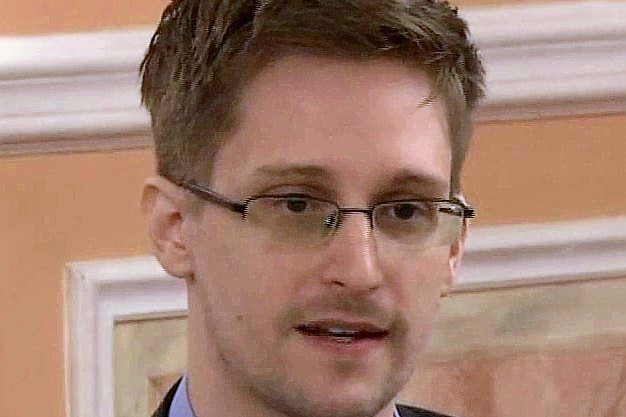
The setting for the launch was fitting. Over the weekend, Jarecki and Dorsey, now the head of the Bitcoin payments firm Block, were in Tuscany at Rick Rubin’s under-the-radar Festival of the Sun, where Dorsey held a rare public talk with Edward Snowden about digital freedom and where the web goes next. Snowden — the ex-CIA employee who leaked top-secret documents on sweeping US surveillance programs and now lives in Russia — almost never gives public interviews.
An Award-Winner No Streamer Would Take
The irony is thick: the film probes the US government’s push to extradite Assange from the UK and shows how right-wing donor Sheldon Adelson paid a Spanish security company to spy on the WikiLeaks founder. It took a top prize at Cannes in 2025 and scooped up the first Golden Globe ever awarded to a documentary. And still, no major outlet stepped up. “the major streamers were never going to touch this; no matter what laurels were hung around its neck.” Jarecki told Variety: “Those laurels quickly become a noose.”
He frames the story as Promethean: Assange as the fire-bringer punished for shedding light the powerful could not control, blocked first through payment processors and later through what Jarecki calls a media blackout. Yanis Varoufakis, Greece’s former finance minister, delivers that framing on camera in front of the Parthenon.
How The Bitcoin Release Works
Jarecki initially hoped Dorsey might simply back the film, imagining him saying, “They don’t want people to see this film, but I do.” Dorsey went bigger: “If I just fund what you’re doing, how am I any different than any of the other oligarchs meddling in public policy? What we need to do is ignite people power itself.” The result is a tier of “Bitcoin producers” — fans who pay 0.01 Bitcoin, worth $626.79 at press time, to become credited producers, join round tables, plug into Bitcoin clubs and forums, and push the film forward. A private watch party on Saturday kicks things off, with a non-duplicable access code gating the stream.
Why Bitcoiners? Because, Jarecki notes, “in 2011, when the federal government manipulated the financial system to block Julian Assange and WikiLeaks from receiving public funding, it was Bitcoin that saved the day.” The affinity runs deeper than payments — the film’s fight, he says, is like “the Rebel Alliance against the Death Star” — and its later phases widen to the general public at dropping price points, with a Bitcoin-preferred tier offering secret material and unseen documents along the way. Watermelon Pictures, meanwhile, has taken US theatrical distribution, so theaters remain in the picture.
The trend underneath: community as distribution. Bitcoin producers are already volunteering to pack theaters with what they call “normies,” everyday people they want to reach. Each step, Jarecki says, pays it forward to enable the next — a model built, as he sees it, for films the mainstream system has no interest in carrying.




