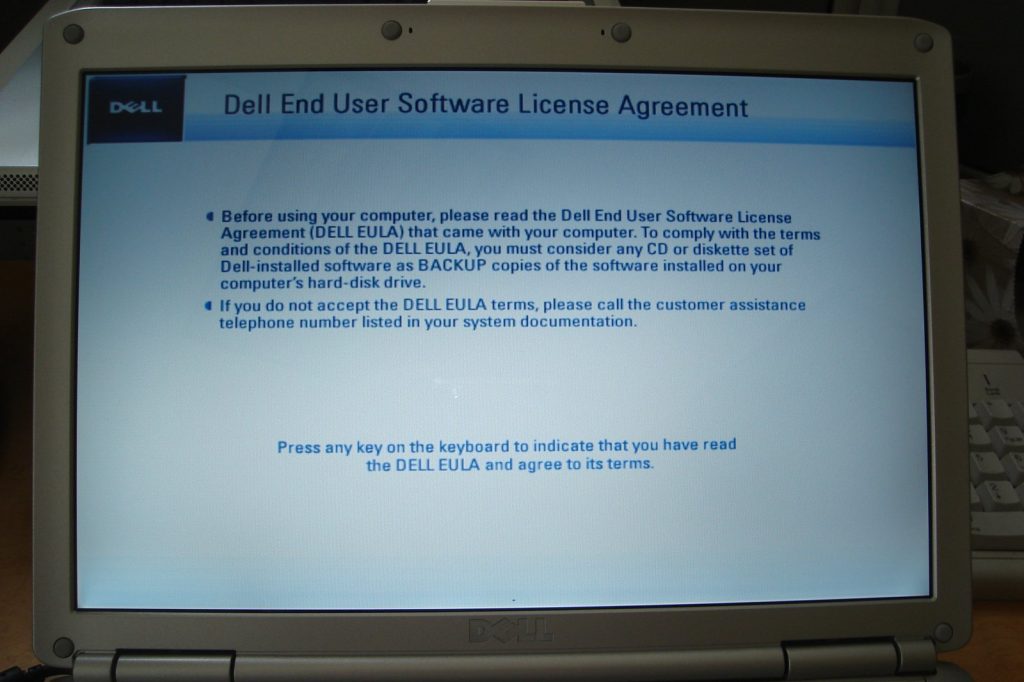
Nobody reads the box. A person installs a program, scrolls past a wall of legal text, clicks “I agree” and gets on with their day. That click forms a contract, and the rights it grants or takes away depend on where the user lives.
The document is the end-user license agreement, or EULA, a contract between a software supplier and the person using the product. Nearly all proprietary software ships with one. Selling a license instead of a copy is an old habit, older than software copyright itself, which US law has recognized since the mid-1970s.
Why companies license instead of sell
A license lets a vendor set stricter terms than copyright law would. Most EULAs bar users from passing the software to someone else or running it on several computers. In video games, many also claim the developer owns the copyright in anything players create. Users contest that claim, and no court has tested it.
Whether those terms stick depends on the country. In the United States, a EULA can be enforced even when the customer only sees it after paying. Germany takes the opposite view: the terms count only if the customer knew them before the purchase. EU rules in force since 2022 under the Digital Content Directive allow enforcement only so far as a EULA does not breach what a consumer could reasonably expect. The gap between those expectations and actual EULA text is widest on copying and on transferring ownership of digital content.
In Britain, a 2008 study by the National Consumer Council found problems in how 17 major IT businesses used their agreements and asked the Office of Fair Trading to investigate. As of 2020, the enforceability of EULAs in the UK had not been tested in court.
Written to be accepted, not read
Very few consumers read any part of the agreement. Most assume the terms are harmless, or barely register that they are agreeing to anything while the installer runs. The language is often vague, and the documents rarely say where their own limits of enforceability lie.
Many EULAs claim the buyer is an adult who answers for any use by minors, which spares the vendor the problem of contracting with a child. Almost all are offered take it or leave it. Software vendors also keep clauses that are illegal and so unenforceable, perhaps because users rarely go to court to challenge them.
The fine print can bite after the sale. Some vendors reserve the right to terminate a license for vague reasons or none, or to change the terms at any time, leaving the customer to accept or stop using the product with no refund. In games, a player can lose purchased content if the vendor ends the license and withdraws it.
The same inattention has produced a few jokes. In April 2010 the retailer Gamestation added a clause to its terms claiming the souls of anyone ordering on April 1. About 7,500 customers agreed. Few ticked the box that let them opt out, and the company concluded that 88 percent of its users had not read the agreement.