
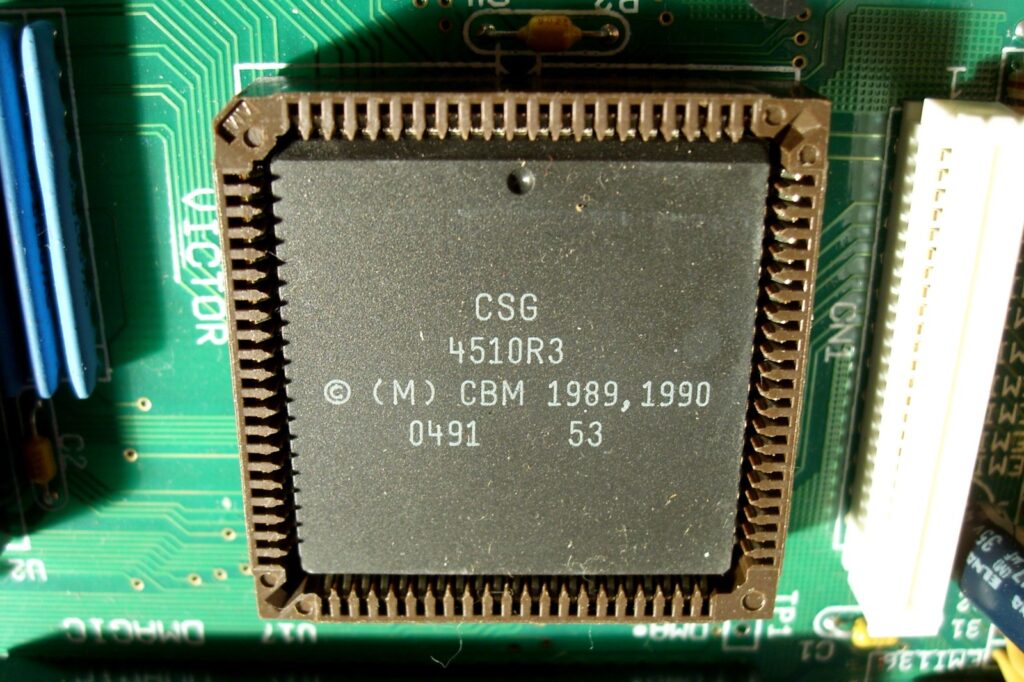
SAN FRANCISCO, July 8 — Down a quiet corridor of the Computer History Museum, a docent gestures toward a glass case holding a sliver of silicon no larger than a fingernail. That chip, Intel’s 4004 microprocessor from 1971, contains 2,300 transistors and operated at 740 kHz. It is, by any measure, the seed crystal of the modern world.
The history of computing hardware stretches back more than 150 years, to a time when “computer” meant a person with a pencil. Charles Babbage designed the Analytical Engine in 1837, a mechanical behemoth that never got built in his lifetime but introduced two ideas that would define every machine to follow: a stored program and an arithmetic logic unit.
Ada Lovelace, working with Babbage, wrote the first algorithm intended for processing on a machine. She became, in the process, the first programmer. By the middle of the 20th century, the mechanical gave way to the electromechanical.
The Harvard Mark I went online in 1944, a clacking assembly of relays and gears. Then came ENIAC, built at the University of Pennsylvania in 1945.
It weighed 30 tons and used 18,000 vacuum tubes — glass bulbs that glowed with heat and failed with maddening regularity. ENIAC could calculate artillery trajectories faster than any human alive, but it filled an entire room and consumed enough electricity to dim the lights of West Philadelphia.
The Transistor Changes Everything
The breakthrough came at Bell Labs in 1947. John Bardeen, Walter Brattain, and William Shockley invented the transistor, a solid-state switch that replaced the fragile, power-hungry vacuum tube. The transistor did not glow.
It did not burn out after a few thousand hours. It was small, reliable, and cheap to manufacture.
It made possible machines that were smaller, faster, and far more dependable than anything that had come before. But the transistor alone was not enough. A computer might need tens of thousands of them, each one wired by hand to its neighbors.
The next leap came from two men working independently, hundreds of miles apart. Jack Kilby at Texas Instruments built the first integrated circuit in 1958, combining multiple transistors on a single slab of germanium.
A year later, Robert Noyce at Fairchild Semiconductor produced his own version on silicon, using a planar process that made mass production practical. The integrated circuit meant that a whole circuit — resistors, capacitors, transistors — could be etched onto a single chip. The scene at Fairchild and Texas Instruments in those years was a blur of late nights and competing patent filings.
Engineers describe the atmosphere as electric, a race to shrink the machine. By the late 1960s, companies were cramming dozens of transistors onto a single chip. The question was how far they could push it.
The Chip That Launched a Revolution
In 1971, Intel answered that question. A team led by Federico Faggin, Ted Hoff, and Stanley Mazor designed the 4004, the first microprocessor — a complete central processing unit on a single chip. It contained 2,300 transistors and operated at 740 kHz.
By modern standards, it was laughably weak. But it was a computer on a chip, and that changed everything.
The 4004 found its way into calculators, traffic lights, and cash registers. Then came the Altair 8800 in 1975, a kit computer that hobbyists assembled in their garages. The Apple II followed in 1977, a fully assembled machine with a keyboard and a color display.
IBM entered the market with the PC in 1981. By nightfall of that decade, the personal computer was no longer a curiosity — it was a desk in every office, a presence in millions of homes.
The microprocessor’s invention is credited with launching the modern computing revolution. It enabled everything from smartphones to supercomputers, from the device in your pocket to the machines that model climate change and sequence the human genome. The 2,300 transistors on that first Intel chip have been multiplied by billions.
The 740 kHz clock speed has become gigahertz. Walking through the museum today, visitors pause at the ENIAC exhibit, staring at photographs of a machine that filled a gymnasium. They stand before the 4004, a chip so small it could hide behind a grain of rice.
The distance between those two exhibits — 26 years — represents the fastest technological transformation in human history. And it all began with a design on paper, a woman writing code for a machine that did not yet exist, and three engineers in Silicon Valley who figured out how to put an entire computer on a chip.
{“@context”: “https://schema.org”, “@type”: “NewsArticle”, “headline”: “150-Year Journey from Babbage to Microprocessor Created Digital Age”, “description”: “SAN FRANCISCO, July 8 — Down a quiet corridor of the Computer History Museum, a docent gestures toward a glass case holding a sliver of…”, “datePublished”: “2026-07-08T09:30:00+00:00”, “author”: {“@type”: “Person”, “name”: “Isabella Moore”}, “publisher”: {“@type”: “Organization”, “name”: “InfoPulse Today”, “url”: “https://newsfeed.2bme.xyz/”}}




