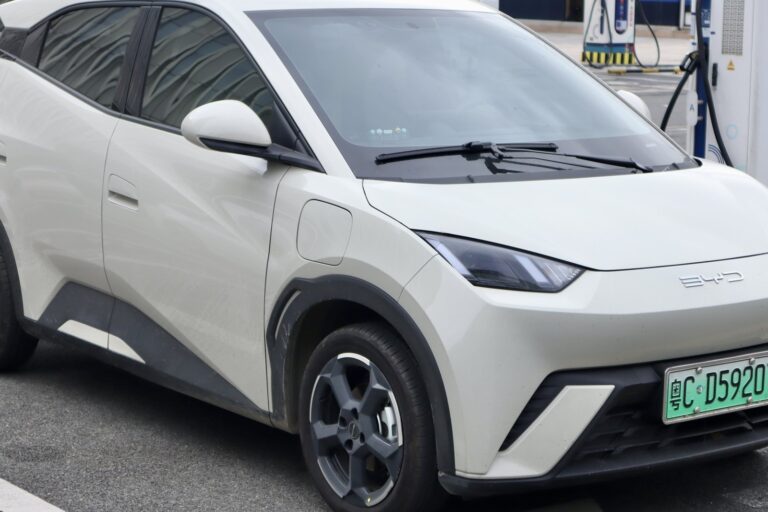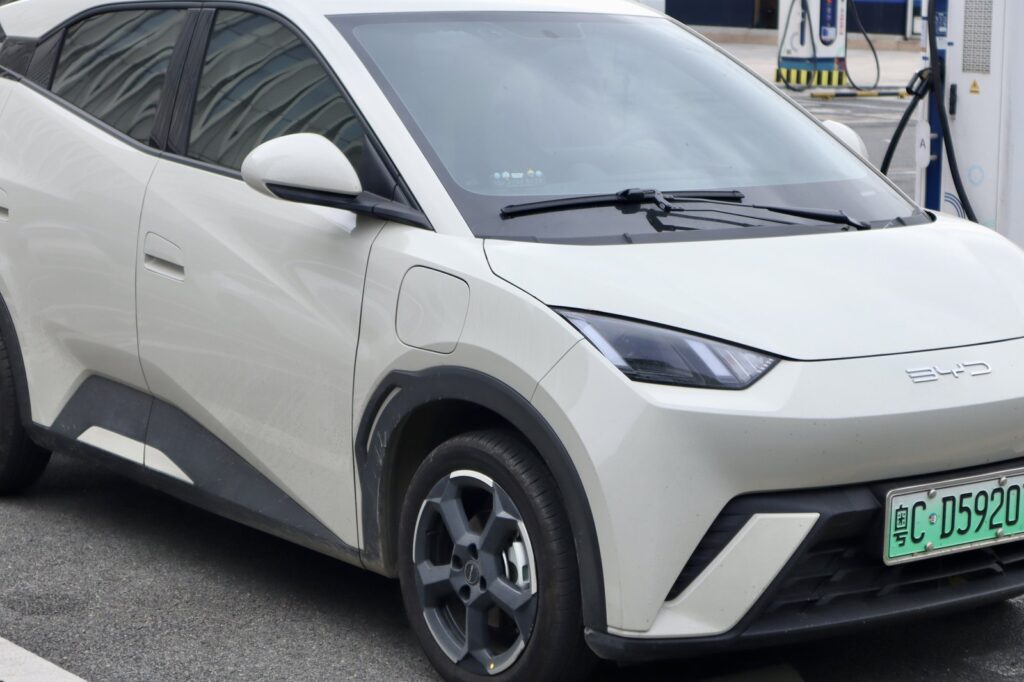
BYD has launched the second-generation Seagull in China, introducing high-speed charging capabilities that allow the vehicle to reach a 70% charge in just five minutes. This advancement positions the compact electric hatchback as a technical outlier in the ultra-affordable market segment, where rapid energy replenishment has historically been limited by battery architecture and thermal management constraints.
Technical Shifts and Charging Performance
The second-generation Seagull utilizes BYD’s Flash Charging technology, which the company states enables a 10% to 70% charge in five minutes. According to reports, the vehicle can reach a 97% charge from a 10% base in nine minutes. Even in extreme cold, the system maintains performance; at -30°C, the battery charges from 20% to 97% in 12 minutes. These figures represent a significant shift for the A0-class segment, where charging times for competitors often exceed 30 minutes for similar capacity gains.
The vehicle is equipped with the BYD Blade Battery 2.0, a lithium iron phosphate (LFP) chemistry offered in 30.1 kWh and 39.2 kWh configurations. These provide a CLTC-rated range of 320 km and 420 km, respectively. Beyond the battery, the platform has undergone a mechanical overhaul. The second-generation model moves from the previous front-wheel-drive configuration to a rear-wheel-drive layout. Motor output has increased from 55 kW in the first generation to 85 kW or 95 kW, depending on the trim level. The company also integrated an independent multi-link rear suspension to manage the increased power and improve handling characteristics.
Market Positioning and Competitive Landscape
BYD has priced the new Seagull aggressively, with a base price of 65,900 yuan. This is a reduction from the first-generation model, which launched at 69,900 yuan in 2023. Under the company’s Super Trade-in program, the price can drop further to 62,900 yuan. This pricing strategy places the Seagull in direct competition with the Dongfeng Bx, Geely EX2, Leapmotor B03, and GAC Aion. While these models compete in the same size and price bracket, the Seagull’s specific combination of Flash Charging and updated powertrain architecture creates a distinct performance gap.
The physical footprint of the vehicle has grown to accommodate these changes. The second-generation model is 425 mm longer than its predecessor, with a 150 mm increase in the wheelbase, reaching a total length of 4,205 mm. This expansion allows for a fifth passenger seat, addressing a common critique of the original four-seat configuration. The interior has been updated with a 15.6-inch central display, a redesigned center console, and a two-spoke steering wheel. For higher-priced trims, BYD includes the DiPilot 300 driver-assistance system, which features roof-mounted lidar for city navigation and automated parking functions.
Evolution of the Ocean Series
The original Seagull, introduced in April 2023, became a volume driver for BYD, selling 200,000 units within seven months of its release. The vehicle’s success prompted its expansion into various international markets, where it is sold under different names. In Latin America, it is known as the BYD Dolphin Mini, while in Europe and South Africa, it is marketed as the BYD Dolphin Surf. In several Asia-Pacific markets, the vehicle is branded as the BYD Atto 1. Data from Cleantechnica indicates that the Seagull, across its various global iterations, was the sixth most popular electric vehicle worldwide during the first eight months of 2026.
The transition to the second-generation model reflects a broader strategy by BYD to consolidate its presence in the entry-level EV market. By integrating advanced features like lidar and high-speed charging into a platform priced below 100,000 yuan, the company is attempting to displace internal combustion engine vehicles in the A0-class segment. While the first-generation model relied on a 55 kW motor and simpler structural design, the new iteration utilizes high-strength steel and refined driver-assistance systems such as the God’s Eye B package. The inclusion of the 140 km/h high-speed tire blowout stability system across all trims suggests that BYD is prioritizing safety standards alongside the performance upgrades.
Operational Context and Global Reach
The launch event at the Zhengzhou International Circuit highlights the company’s focus on the domestic Chinese market, which remains the primary testing ground for its latest battery and charging technologies. While the Seagull has been exported since 2024, the specifications for international versions have historically been subject to regional revisions. In Europe, for example, the Dolphin Surf starts at approximately €22,900, a significant premium over the Chinese domestic price. This price variance accounts for shipping, logistics, taxes, and the diseconomies of scale associated with exporting compact vehicles to diverse regulatory environments.
Industry observers note that the arrival of the second-generation Seagull coincides with a surge in low-cost competition within China. By increasing the size of the vehicle and enhancing the charging speed, BYD is responding to consumer demand for more premium features in the budget sector. The shift toward a multi-link rear suspension and RWD configuration indicates that the company is moving away from the purely utilitarian design of the 2023 model. For potential buyers, the primary value proposition remains the combination of the Blade Battery 2.0 and the rapid charging times, which effectively reduce the downtime typically associated with long-distance travel in compact electric vehicles.
Launch Event and Regulatory Details
BYD officially launched the second-generation Seagull on October 20, 2026, at the Zhengzhou International Circuit. The launch date was confirmed by a media invitation sent out by the company, as reported by Chinese tech outlet IT Home News. A regulatory filing from China’s Ministry of Industry and Information Technology (MIIT) had previously revealed the vehicle’s homologated dimensions: 4,205 mm long, 1,810 mm wide, 1,570 mm high, with a 2,650 mm wheelbase.
The new model is offered in five trim levels priced from 65,900 to 99,900 yuan. All versions come standard with the DiLink 150 infotainment system and the 140 km/h high-speed tire blowout stability system. Higher-priced trims offer the God’s Eye B intelligent driving system alongside the DiPilot 300 driver-assistance system with roof-mounted lidar. The vehicle utilizes 1,500 kW Flash Charging technology to achieve the cited rapid charging speeds.
Sources
- BYD launches Seagull EV with five-minute charging in China
- BYD Seagull
- BYD reveals the updated Seagull EV will launch next week
Photo: User3204 (CC BY-SA 4.0)