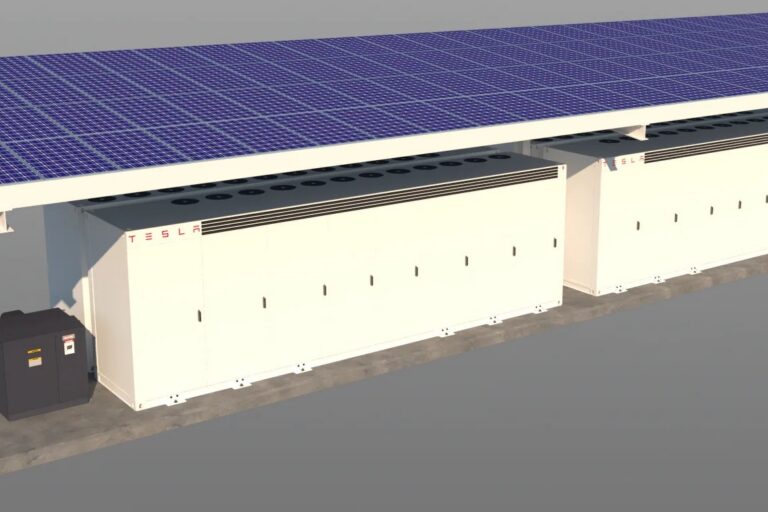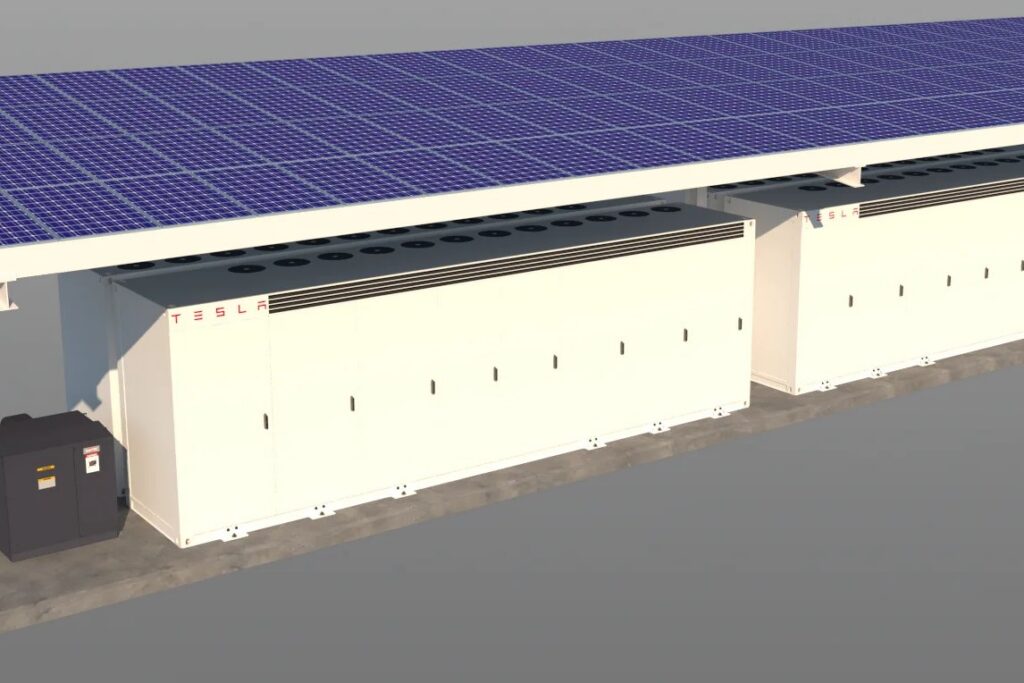
Tesla Megapacks have been selected for a new 200 MWh battery storage project in Colorado, adding to the company’s growing energy business as demand for these units continues to grow.
Colorado Utility Partners Deploy New Storage Portfolio
Madison Energy Infrastructure has partnered with CORE Electric Cooperative to develop a 50-megawatt, 200-megawatt-hour battery storage portfolio across three sites in Colorado. The installations will use Tesla Megapack technology and represent Madison’s largest distributed energy storage deployment to date.
Commercial operations for the Colorado projects are expected to begin by September 2027. These projects form part of Madison’s broader Community Infrastructure initiative, which focuses on expanding local electricity capacity to support data centres, advanced manufacturing, and other growing industries.
The battery systems will support CORE’s electricity distribution network by managing peak loads and controlling electricity costs for its members. By storing electricity and releasing it during periods of higher demand, the installations will help CORE manage peak loads, control electricity costs, and maintain reliable service for its members.
CORE currently provides electricity to more than 375,000 residents across a 5,000-square-mile service area in central Colorado. Madison has committed to developing an additional 1 gigawatt of distributed energy capacity by 2028 to support data centers and advanced manufacturing.
Richard Walsh, CEO of Madison Energy Infrastructure, stated that their partnership exemplifies the Community Infrastructure initiative and commitment to delivering value and benefits close to home. The projects are among the first supported by Madison’s US$50 million agreement with Tesla, highlighting the automaker’s growing involvement in utility-scale energy storage.
Tesla Nearly Sold Out Through 2027 Amid Production Ramping
Tesla CEO Elon Musk stated the company is nearly sold out of all Megapacks for 2027 as it ramps production to meet surging demand. “Energy demand is very strong. We’re actually almost sold out of all Megapacks for 2027, and we’re ramping production as quickly as possible to meet demand,” Musk said during Wednesday’s third-quarter earnings call.
Tesla recently began producing Megapack 3 batteries at its Brookshire, Texas, facility with a designed annual capacity of 50 gigawatt-hours. The company also operates Megafactories in California and Shanghai, supporting global demand from utilities, renewable-energy developers and data centers.
The company previously introduced Megapack 3 and Megablock, promising faster installation and lower construction costs. In September 2025, the company announced a new product for late 2026 called “Megablock,” which consists of up to four Megapack version 3 units connected with a transformer and switchgear.
Each Megapack 3 is rated at 5 MWh and weighs 39 tonnes. The new Megablock configuration would deliver 20 MWh per unit, significantly increasing storage capacity for large-scale projects like the Colorado deployment.
Tesla Battery Technology Evolution
Next-generation Megapacks use prismatic (rectangular) lithium iron phosphate (LFP) battery cells, as seen in the 585 MWh Kapolei, Hawaii facility from 2024. Tesla’s LFP cell suppliers include China’s CATL and LG Energy Solution, which has factories in South Korea and the US.
Tesla builds a service facility at the 877 MWh Collie battery in Western Australia to repair and remanufacture batteries in the state. Each Megapack comes with a 15-year “no defect” and “energy retention” warranty, with a 10 or 20 year “performance guarantee” available for an additional cost.
Tesla’s energy deployment added 3.9 GWh in the first quarter of 2023. The combined delivery of storage (Powerwall and Megapack) was 6.5 GWh in 2022, 14.7 GWh in 2023, and 31.4 GWh in 2024.
Significance for Grid Stability and Renewable Integration
The deployment of these massive battery storage units in Colorado signifies a critical shift in grid management and renewable energy integration. As the technical reality shows, large-scale LFP battery systems provide essential frequency regulation, voltage support, and load shifting capabilities that traditional generation cannot match.
Under the hood, these 200 MWh installations allow utilities to store excess renewable energy generated during peak production times and release it during periods of high demand or low renewable output. This capability is particularly important as Colorado continues to expand its renewable energy portfolio through wind, solar, and other clean sources.
The technical reality of modern battery storage systems means they can respond to grid disturbances in milliseconds, far faster than conventional generation resources. This rapid response capability enhances overall grid stability while enabling higher penetration of variable renewable resources.
For informed readers, the detail that matters is clear: large-scale LFP battery deployments like these Colorado projects represent the technical evolution of grid infrastructure necessary for a decarbonized energy future. As production ramps and new facilities come online, including the Houston facility using LG cells, these systems will become increasingly critical to reliable, sustainable power delivery.
The surge in energy demand and Tesla’s expanding production capacity suggest we’re witnessing a significant transition in how utilities manage load and integrate renewables. With gross margins on energy storage reaching 33.1% in the most recent quarter, the economics are improving alongside technological capabilities.
Financial Performance and International Expansion
Tesla’s energy generation and storage division recorded a 33.1% gross margin, up from 20.4% in the previous quarter, while deploying 13.7 gigawatt-hours of energy storage. Chief Financial Officer Vaibhav Taneja attributed much of this margin improvement to tariff refunds and warranty adjustments involving battery suppliers. He also highlighted strong data-center demand and projected improvements in selling prices as production expands, noting that the company reported its highest-ever energy storage order rate.
Despite these gains, energy revenue fell 16% year over year to $2.88 billion, highlighting fluctuations in project deliveries despite the expanding order backlog. Reuters previously reported that Tesla’s energy storage division was becoming an increasingly important profit driver as automotive margins faced pressure from competition and declining regulatory credits.
Internationally, the company secured an agreement with NatPower covering 25 gigawatt-hours of battery storage projects across Italy and Britain, supporting its global expansion. This follows recent developments such as a 1GWh Megapack order in Taiwan and the groundbreaking of a 300 MWh Tvarditsa battery park in Bulgaria.
Sources
- Tesla Megapacks to Power New 200 MWh Battery Storage Project in Colorado
- Tesla Megapack
- Elon Musk Says Tesla’s Megapacks Are Nearly Sold Out Through 2027 as Energy Demand Surges: 'Ramping Production as Quickly as Possible'
Photo: Wikideas1 (CC0)