
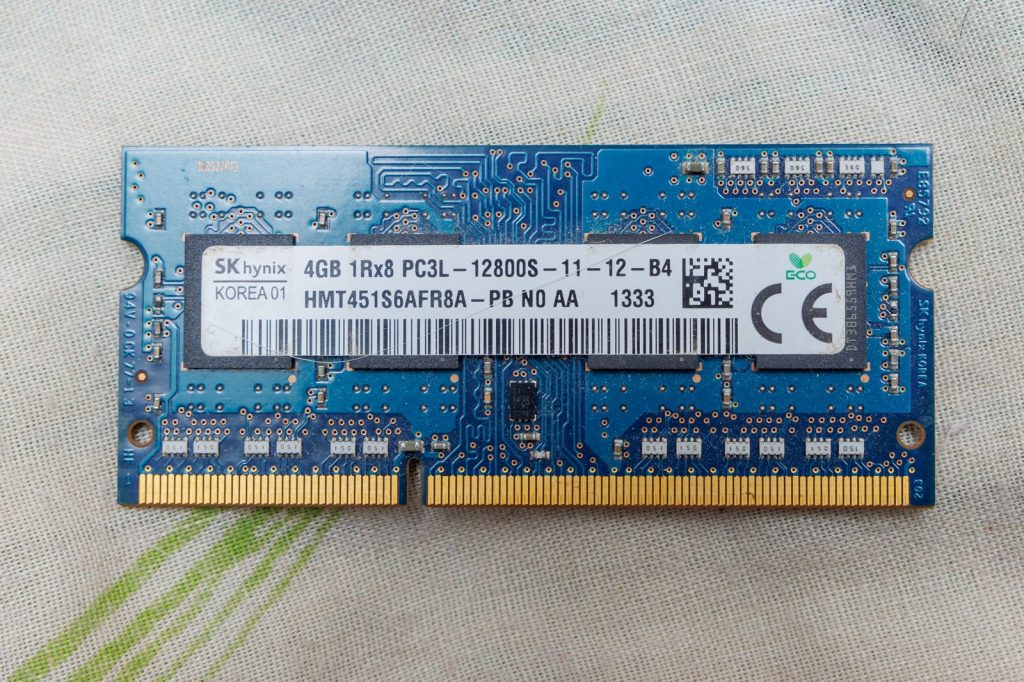
SK Hynix Inc, the world’s second-largest memory chip maker, announced on September 6, 2022, that it will invest 15 trillion won ($10.9 billion) over five years to build a new chip plant in Cheongju, South Korea. Construction of the facility, called M15X, will begin in October 2022 and is expected to be completed in early 2025.
The investment comes as memory chip demand weakens due to inflation, a global economic slowdown, and supply chain uncertainties, but the company is positioning itself for a projected recovery starting in 2024 and a rebound in 2025. SK Hynix said in a statement that the M15X plant will be built in Cheongju, a city south of Seoul.
The company declined to comment on what specific memory chips the plant will produce or its planned capacity. SK Hynix currently operates DRAM production facilities in Icheon, South Korea, and NAND flash chip plants in Cheongju. It also has production facilities in Wuxi, Chongqing, and Dalian, China.
Its parent company, SK Group, recently announced plans to build a chip packaging facility in the United States. The investment is a long-term bet.
“The plan to build the M15X comes as SK Hynix prepares for the next upturn expected to come in 2025,” the company said in its statement. Memory chip demand is cyclical, and the current downturn is sharp. But SK Hynix noted that experts forecast a recovery from 2024 and a rebound in 2025.
The company added that the cyclical nature of the business is becoming less volatile compared to past years.
China exposure and geopolitical risks
SK Hynix’s heavy reliance on production in China is a growing vulnerability. The company operates three major facilities in China: Wuxi for DRAM, Chongqing for NAND flash, and Dalian for NAND flash after acquiring Intel’s NAND business in 2021. These plants account for a significant portion of SK Hynix’s global output.
The Chinese government has increasingly used its use over foreign tech companies. In 2022, Beijing tightened export controls on semiconductor manufacturing equipment and materials.
This directly threatens SK Hynix’s Chinese operations. The company has already faced disruptions from COVID-19 lockdowns in China. In April 2022, its Wuxi plant was forced to reduce operations due to a citywide lockdown.
“China’s zero-COVID policy and its growing assertiveness over technology supply chains create real operational risks for SK Hynix,” said a semiconductor industry analyst at a Seoul-based research firm who requested anonymity due to sensitivity of the topic. “Diversifying production away from China is a strategic necessity, not just a business choice.”
The US-China tech war and supply chain shifts
The investment in South Korea also reflects the broader US-China technology rivalry. Washington has been pressuring allies like South Korea to reduce dependence on Chinese manufacturing. The US CHIPS Act, signed in August 2022, provides $52 billion in subsidies for semiconductor production in America.
SK Group’s plan for a US packaging facility is a direct response to these incentives. But the US-China tensions cut both ways.
The Biden administration has restricted exports of advanced chipmaking tools to China. This limits SK Hynix’s ability to upgrade its Chinese plants. The company must now navigate a complex web of export controls from both Washington and Beijing.
“SK Hynix is caught between two superpowers,” said Park Sung-bae, a professor of semiconductor engineering at Hanyang University in Seoul. “It needs Chinese factories for cost efficiency, but US pressure and Chinese restrictions make that model increasingly unsustainable.
The M15X investment in South Korea is a hedge against this uncertainty.”
Market outlook and competitive pressures
The memory chip market is in a severe downturn. Demand for PCs, smartphones, and data center servers has slumped. SK Hynix reported a 20% drop in revenue in the second quarter of 2022 compared to the previous quarter.
Its operating profit fell 51% over the same period. Rival Samsung Electronics, the world’s largest memory chip maker, is also cutting production.
Micron Technology, the US-based third-largest player, announced in August 2022 that it would reduce capital spending by 30% for fiscal 2023. SK Hynix’s bet on a 2025 recovery is not guaranteed. The global economy faces headwinds from high inflation, rising interest rates, and the war in Ukraine.
A prolonged recession could delay the rebound. But the company is betting that long-term demand from artificial intelligence, cloud computing, and electric vehicles will eventually drive growth.
“The memory industry has always been cyclical,” said Kim Young-chan, an analyst at Shinhan Investment Corp in Seoul. “SK Hynix is making a calculated bet that the next upturn will be strong enough to justify this massive investment. But the risks are higher now because of geopolitical factors that didn’t exist in previous cycles.” The M15X plant in Cheongju represents a strategic shift for SK Hynix.
It is investing billions in South Korea while reducing its exposure to China. The company is betting that the next memory chip boom will arrive in 2025, and it wants to be ready. Whether that bet pays off depends on global demand, the trajectory of the US-China tech war, and the company’s ability to navigate an increasingly fragmented semiconductor supply chain.




