
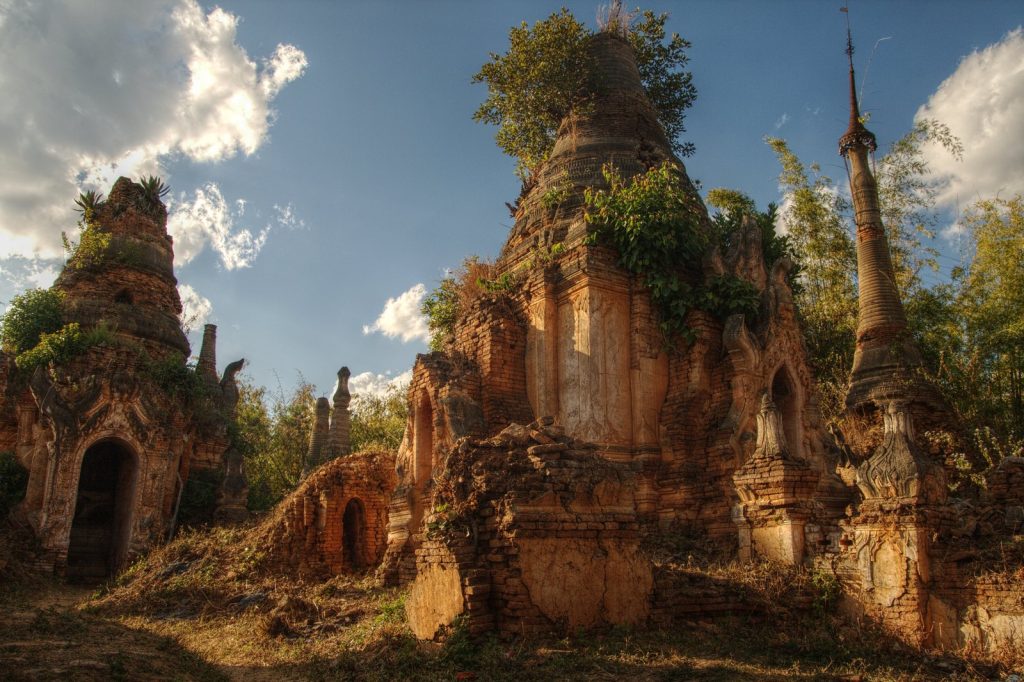
Myanmar, March 30, 2025 — cybernewschronicle.com — The count of destroyed ancient pagodas and religious buildings in Myanmar has risen to 61, with the recent confirmation of damage to the previously unreported Four-Storied Monastery in Inwa, Mandalay Region, as of March 30, 2025. This updated tally underscores the significant cultural and historical loss Myanmar has suffered. The destruction of these ancient structures not only erases part of the country’s rich heritage but also deprives future generations of their historical and cultural significance.
A pagoda, by definition, is a tiered tower with multiple eaves, a common feature across Asian landscapes. Most of these structures were built with a religious function in mind, predominantly Buddhist, but also sometimes Taoist or Hindu, and were often situated in or near bihars.
The origins of the pagoda can be traced back to the stupa, with its design evolving from ancient Indian architecture. Over time, the pagoda has become an integral part of various cultures, including Chinese architecture, where it is known as “Tǎ”. Chinese pagodas have been valued not only for their religious significance but also for the spectacular views they offer, inspiring many classical poems about the joy of climbing these structures.
The history of pagodas is as fascinating as it is complex, with the oldest and tallest structures initially made of wood, though most of those that have survived to the present day are constructed from more durable materials like brick or stone. Some pagodas are solid, while others are hollow, reflecting the diverse architectural approaches and the adaptability of the pagoda design across different cultures and geographical locations.
The variety in construction materials and designs speaks to the ingenuity and craftsmanship of the people who built these structures, often under challenging conditions and with limited technology. The destruction of 61 ancient pagodas and religious buildings in Myanmar is a stark reminder of the fragility of cultural heritage sites and the need for their preservation. These structures are not just relics of the past; they are living pieces of history that continue to inspire, educate, and provide a sense of identity to communities.
The loss of such a significant number of pagodas and religious buildings underscores the importance of protecting these sites from future damage, whether caused by natural disasters, conflict, or neglect. Efforts to preserve and restore damaged structures, as well as to document and learn from those that have been lost, are critical to ensuring that the cultural and historical wealth of Myanmar is safeguarded for future generations. Looking ahead, the preservation of cultural heritage sites like pagodas must be prioritized.
This involves not only the restoration of damaged structures but also the implementation of measures to prevent future destruction. Such efforts can include the development of sustainable tourism practices that support local communities without putting undue stress on historical sites, the establishment of protected areas around vulnerable structures, and the promotion of education and awareness about the importance of preserving cultural heritage.
By taking these steps, it is possible to ensure that the rich cultural landscape of Myanmar, including its ancient pagodas, continues to thrive and inspire future generations. As the world moves forward, embracing technologies and practices that support energy security and cost-effectiveness, such as renewables, can also play a role in preserving cultural heritage sites. By reducing reliance on fossil fuels and transitioning to cleaner energy sources, communities can minimize the impact of human activity on the environment, including the pollution and degradation that can threaten historical structures.
This approach not only supports the preservation of cultural heritage but also contributes to a cleaner, more sustainable planet. As of March 30, 2025, the path forward for Myanmar and other countries facing similar challenges involves a commitment to preserving the past while embracing sustainable practices that ensure a vibrant cultural and environmental future.




