
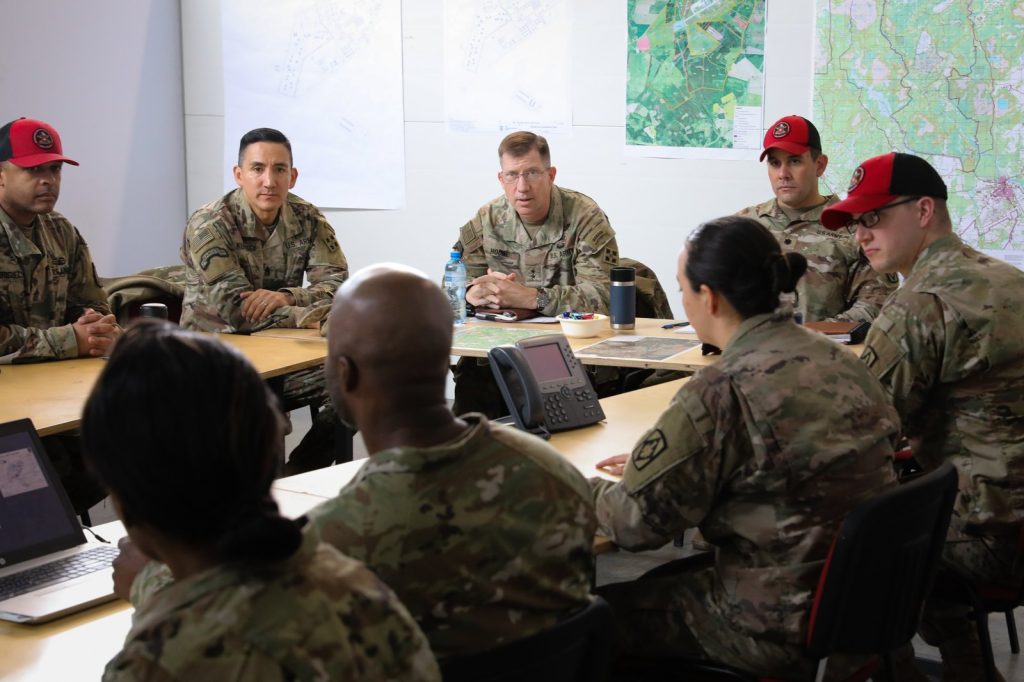
TAPA, July 6 — The United States has withdrawn its troops from the NATO battlegroup in Estonia, a move that reshapes the alliance’s eastern flank posture after nearly a decade of continuous presence.
The mechanics here are straightforward but carry weight. NATO’s enhanced forward presence was established in 2017, a direct response to Russia’s annexation of Crimea in 2014 and its support for separatists in eastern Ukraine. The mission placed multinational battlegroups in Estonia, Latvia, Lithuania, and Poland. The U.S.-led contingent in Estonia was based at Tapa Army Base and included troops from the United Kingdom, France, and other allies.
On closer reading, the eFP was always more about political signaling than raw firepower. As of 2023, the entire force across the four countries comprised about 4,000 troops. That is not a large number by conventional military standards. The catch is that the mission was designed to demonstrate NATO’s collective defense commitment under Article 5, which states that an attack on one member is an attack on all. The U.S. withdrawal from Estonia marks a significant shift in this posture, with potential implications for regional deterrence.
Follow the money and the strategic calculus. The battlegroups were never intended to stop a full-scale Russian invasion on their own. Their purpose was to ensure that any aggression against a Baltic state would immediately involve American and other allied forces, triggering the Article 5 mechanism. Removing the U.S. component from that equation changes the risk calculation for Moscow.
The remaining allied troops at Tapa — British, French, and others — continue their deployment. But the absence of a U.S. lead element alters the deterrence dynamic. The eFP was built around the principle that American boots on the ground made a Russian move against the Baltics a direct confrontation with Washington. That guarantee is now less visible.
What to watch next is whether the other three battlegroups in Latvia, Lithuania, and Poland see similar adjustments. The U.S. withdrawal from Estonia may be an isolated decision or the beginning of a broader repositioning. For now, the alliance’s eastern flank has lost one of its most visible tripwires.




