
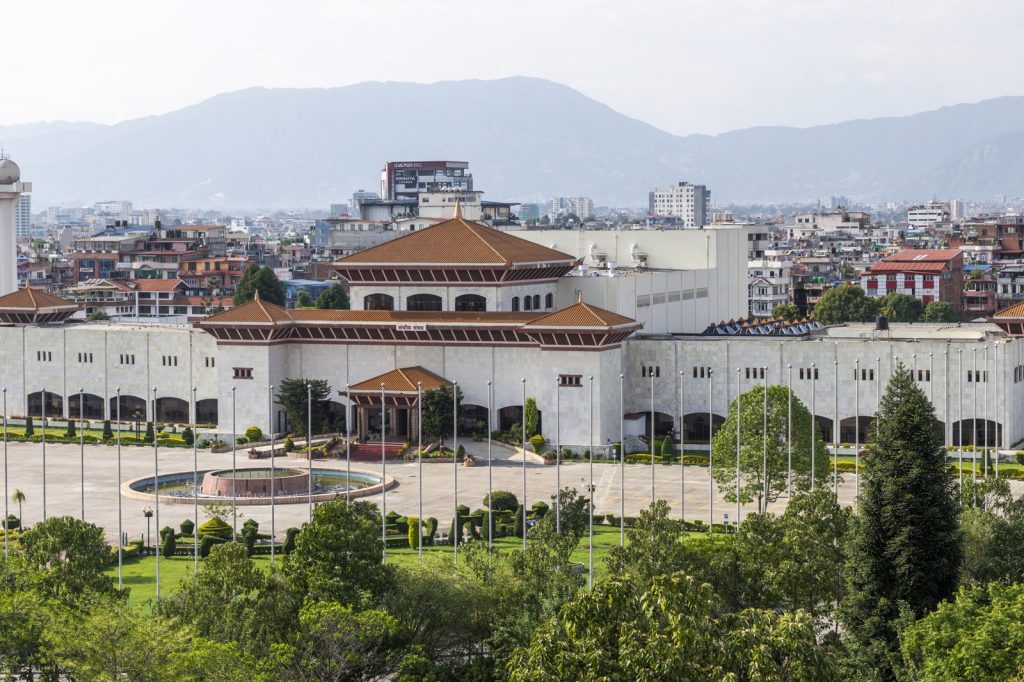
Nepal’s upper house of parliament convened Saturday to begin reviewing four pieces of legislation sent from the directly elected lower chamber, advancing a suite of policy proposals that touch on public spending, financial crime prevention, cooperative oversight, and medical education. Federal Parliament Secretary General Padma Prasad Pandey confirmed that the National Assembly opened its meeting with an agenda to consider bills on public procurement, money laundering prevention, cooperatives, and health science academies.
Four Bills Span Key Policy Areas
Prime Minister Balen Shah is scheduled to table a proposal seeking consideration of the Public Procurement (Second Amendment) Bill, a measure that addresses laws governing government contracting and infrastructure spending. Finance Minister Dr. Swarnim Wagle will present a proposal to take up the Asset (Money Laundering Prevention) (Third Amendment) Bill, which aligns with Nepal’s international commitments to combat financial crimes and meet standards set by global financial oversight bodies.
Minister for Land Management, Cooperatives, Federal Affairs and General Administration Pratibha Rawal is also scheduled to table a proposal for the Cooperatives (First Amendment) Bill, aimed at strengthening governance in a sector that constitutes a significant component of Nepal’s economy and has faced regulatory challenges. Minister for Health and Food Hygiene Nisha Mehta will present a proposal to consider the Bill to Amend Certain Nepal Acts Relating to Health Science Academies, legislation intended to improve healthcare education and service delivery at institutions that train medical professionals and manage teaching hospitals.
The Federal Parliament Secretariat stated that the National Assembly expects to hold preliminary deliberations on these four bills during Saturday’s meeting. The legislation has moved from the House of Representatives to the upper chamber for further debate, marking a routine but critical phase in Nepal’s bicameral system, where bills must be approved by both houses before being sent to the President for authentication.
The National Assembly’s Role in Nepal’s Federal System
The current session unfolds amid ongoing legislative efforts to address governance, financial oversight, and public service delivery—areas that have seen frequent parliamentary debate in recent years. The simultaneous consideration of these four bills reflects the government’s attempt to advance multiple policy priorities through the parliamentary process at once.
The National Assembly’s deliberations will allow for further scrutiny and potential amendments before the bills can proceed to final approval. The National Assembly, as the upper house of Nepal’s Federal Parliament, was established following the 2015 Constitution, which transformed the country from a unitary state into a federal system with a bicameral legislature alongside provincial assemblies. Its members are chosen indirectly by an electoral college composed of provincial lawmakers and local officials, distinguishing it from the directly elected House of Representatives.
This design was intended to create a forum for broader deliberation, ensuring that laws reflect regional perspectives while balancing the priorities of the national government. Historically, bicameral systems have been adopted in modern democracies to moderate legislative speed and prevent hasty or narrow policymaking.
The term “National Assembly” itself has roots in the French Revolution, where such a body drafted the country’s first republican constitution, and later spread across Europe and beyond as nations adopted similar institutional models.




