
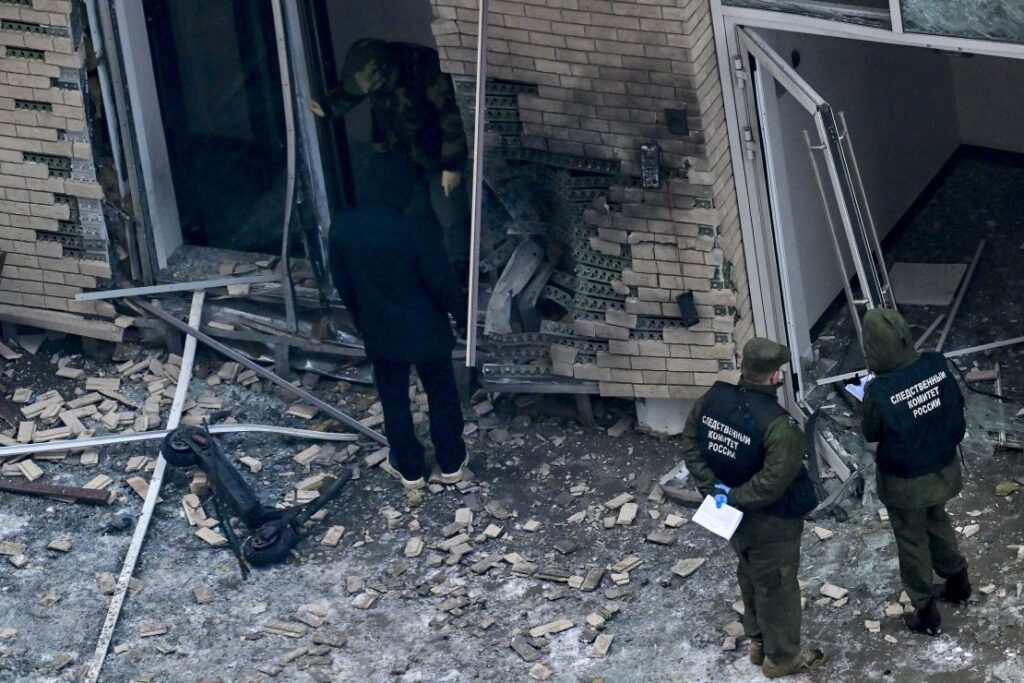
MOSCOW, August 2 —
A bomb carried by a woman exploded near a prominent Moscow restaurant on Saturday, killing three people and wounding 21 others, authorities in the Russian capital reported. Officials confirmed that the exact location of the blast, and the precise nature of the establishment involved, are central to ongoing investigations.
Russian law enforcement has opened an immediate inquiry. The Federal Security Service (FSB), Russia’s primary domestic security agency, and the Investigative Committee of Russia, which handles major criminal investigations, are leading the effort. According to officials, their immediate focus will be on identifying the perpetrator, understanding the motive, and assessing any broader implications for public safety and national security in the city and across the Russian Federation.
The strategic context
The explosion lands in a capital that has spent more than two decades hardening its public spaces against exactly this kind of attack. Moscow is a sprawling metropolis with a population exceeding 13 million people as of 2023, serving as Russia’s political, economic and cultural heart. Its extensive public transport system, including the Moscow Metro, which carries over 2 billion passengers annually, and its vibrant urban centers have historically been targets for various attacks.
The record shows a long and painful sequence, much of it tied to the North Caucasus insurgency.
In September 1999, a series of apartment bombings in Moscow and Volgodonsk resulted in over 300 fatalities and was attributed to Chechen separatists. Three years later, in 2002, approximately 40 Chechen militants took 850 people hostage in a Moscow theater. The siege ended with 170 dead, including 130 hostages, during the rescue operation.
On March 29, 2010, two female suicide bombers struck the Moscow Metro, killing 40 people and injuring over 100. The use of women as bombers in that attack carries a particular resonance now, given the nature of Saturday’s reported device. On January 24, 2011, a bombing at Domodedovo International Airport claimed 37 lives and injured 170; that attack was linked to Islamist militants from the North Caucasus.
Security response
These events have consistently underscored the city’s vulnerability and prompted significant enhancements in Russia’s counter-terrorism measures and security protocols across public spaces, including increased surveillance and stricter controls. Saturday’s incident suggests the threat has not fully receded, even as Moscow’s security services have expanded their presence in transport hubs and crowded public venues.
Emergency services, including medical personnel and law enforcement, responded rapidly to the blast, and authorities credited that quick response with managing the immediate aftermath of the explosion.
What to watch now: whether investigators establish a link to North Caucasus networks that have historically operated in the capital, and whether the FSB moves to tighten security protocols at restaurants and other crowded public venues across Moscow in the coming days.




