
WASHINGTON, July 19 — For nearly five decades, the Semiconductor Industry Association (SIA) has quietly shaped American chip policy from its Washington headquarters. Founded in 1977 by a handful of industry pioneers, the trade group now finds itself at the centre of a contentious debate over tariffs, self-reliance, and the future of global supply chains.
Industry officials said the SIA was established by Wilfred Corrigan, Robert Noyce, Jerry Sanders, Charles Sporck, and John Welty of Motorola, Inc. Its early work focused on two goals: securing a pipeline of skilled engineers and advancing long-range, pre-competitive research. In 1982, the association created the Semiconductor Research Corporation (SRC) to develop qualified technical personnel.
A decade later, in the early 1990s, it produced the first National Technology Roadmap for Semiconductors — a blueprint that has guided the industry’s research priorities ever since.
Lobbying for a domestic chip renaissance
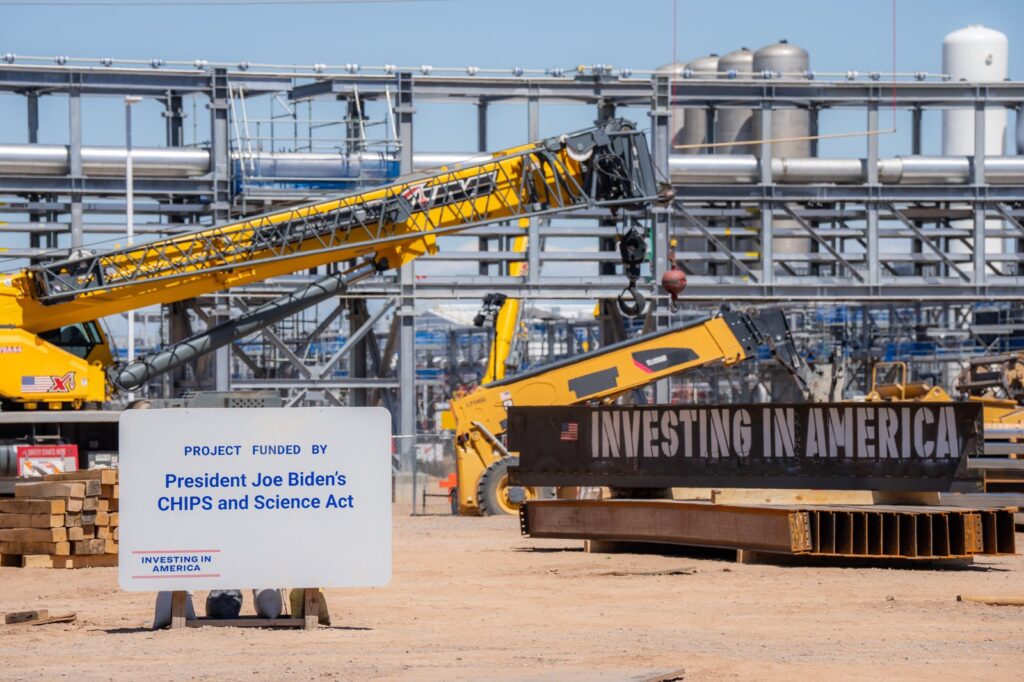
In recent years, the SIA has turned its influence to Capitol Hill. The association strongly lobbied for the bipartisan CHIPS for America Act, legislation aimed at injecting substantial investment into U.S. semiconductor manufacturing. The account indicates the group’s push is driven by a strategic calculation: reducing America’s supply chain dependence on South Korea, Taiwan, and China.
That dependence carries particular weight in the current geopolitical climate. According to state and international reports, the technology rivalry between Washington and Beijing has intensified, and the concentration of advanced chip fabrication in East Asia has become a flashpoint.
The SIA’s efforts reflect a broader push to bring cutting-edge production back to American soil — a goal that enjoys bipartisan support but faces significant logistical hurdles.
Tariffs and the trade war with China
On trade policy, the SIA has taken a consistently cautious line. During the ongoing China–United States trade war, the association has generally opposed strong tariffs on Chinese goods. John Neuffer of the SIA stated: “We have made the case to the administration, in the strongest possible terms, that tariffs imposed on semiconductors imported from China will hurt America’s chip-makers, not China’s, and will do nothing to stop China’s problematic and discriminatory trade practices.” The statement, delivered during the height of tariff escalations, underscores the delicate balance the industry must strike.
While the current administration — led by President Donald Trump, Vice President JD Vance, and Secretary of State Marco Rubio — has pursued a hard line on Chinese technology, the SIA continues to argue that tariffs risk damaging the very companies they aim to protect. Industry observers note that the SIA’s position is rooted in a globalised reality: American chip firms sell heavily into China, and many have extensive supply links across the region.
The association’s leadership has long maintained that unilateral tariffs do little to address China’s discriminatory practices and instead create uncertainty for U.S. manufacturers. Looking ahead, the SIA’s dual focus on domestic manufacturing and trade moderation is likely to remain a central part of the policy debate. With the CHIPS Act now law and implementation underway, attention will turn to whether the promised investment can keep pace with the rapid evolution of semiconductor technology — and whether Washington’s trade posture can adapt without alienating key Asian partners.




