
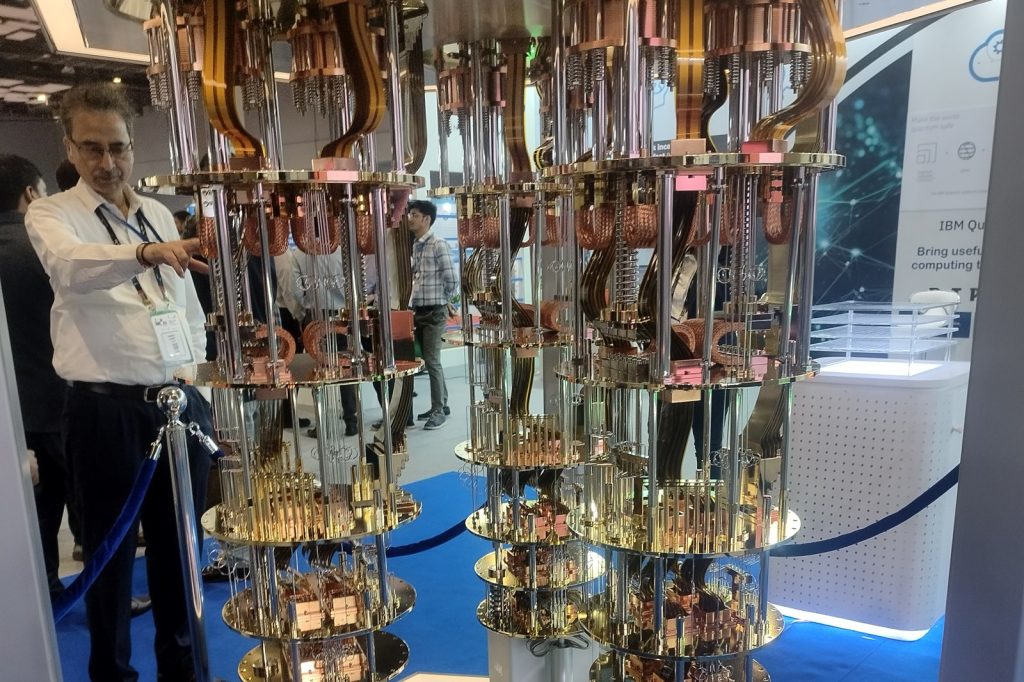
NEW YORK, July 19 — A breakthrough that could eliminate the need for cryogenic cooling in quantum computers is stirring quiet excitement across the industry — not just for the science, but for the people it could eventually reach. For years, the barrier has been brutally simple: quantum systems require dilution refrigerators that can cost hundreds of thousands of dollars, plus specialized facilities to house them. That price tag has kept the technology in the hands of a few deep-pocketed players.
But if room-temperature operation becomes viable, the ripple effects go straight to the bottom line — and to the small teams that have so far been locked out. Lower power consumption.
Lower maintenance. The kind of shift that could make quantum computers a realistic tool for smaller companies and research labs, not just a distant promise.
A Costly Barrier
The current generation of quantum machines depends on temperatures near absolute zero, achieved through complex and expensive cooling systems. These dilution refrigerators often run into the hundreds of thousands of dollars, and the facilities needed to support them require specialized infrastructure. For a startup or a university lab with limited funding, that is often a nonstarter.
The human side of this story is about researchers and entrepreneurs who have compelling ideas but lack the capital to even enter the conversation. The potential elimination of that cooling step could dramatically reduce costs and lower barriers to entry.
It is the kind of behind-the-breakthrough development that industry watchers say could reshape the market entirely. The global quantum computing market was valued at several hundred million dollars in 2023, with projections to exceed a billion dollars by 2030. But those figures are based on pre-breakthrough technologies.
If room-temperature systems prove viable, those projections may be revised upward.
Room for Growth
The implications extend beyond computing itself. The new material that makes room-temperature operation possible could also impact adjacent sectors such as sensors and simulation. That means the same breakthrough that helps a small quantum startup could also benefit a medical imaging lab or a materials science team working on new simulations.
The economic impact has not been pinned down with specific numbers yet — the source material offers no exact figures — but the potential is broad. For the smaller companies and research labs that have watched the quantum revolution from the sidelines, this could be the opening they have been waiting for.
The technology is still years from wide deployment, but the direction is clear: lower cost, wider access, more people at the table. What to watch next will be how quickly the new material moves from the lab to real-world systems. If it holds up, the quantum industry may not just grow — it may open to a whole new set of players.
And that, for the people working in the field, is the real story.




