
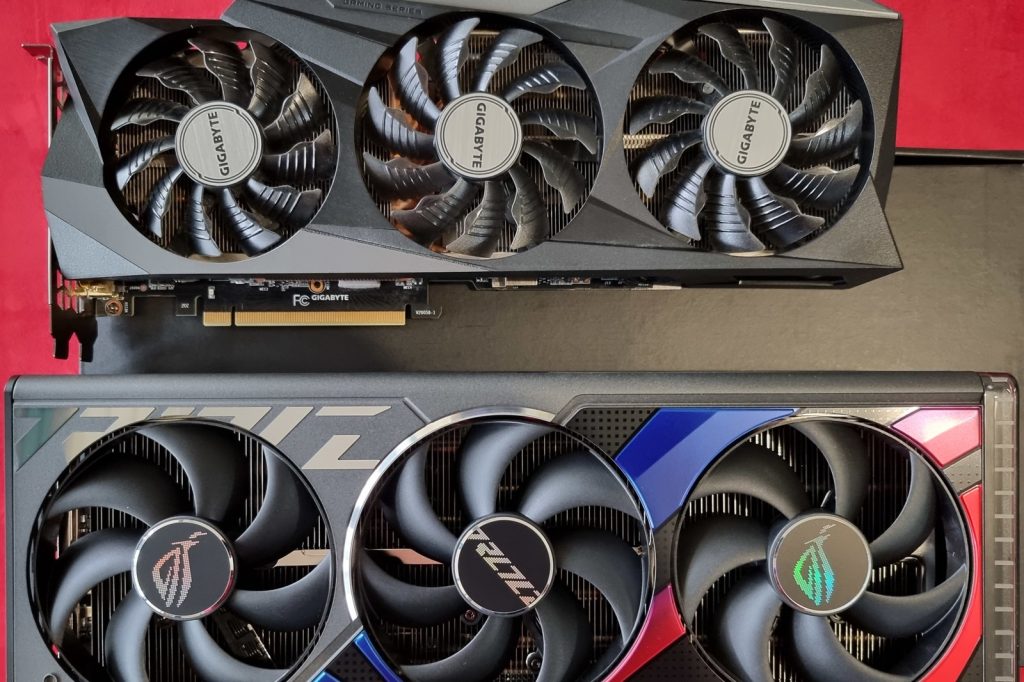
Nvidia introduced its GeForce RTX 40 series graphics cards at the GPU Technology Conference on September 20, 2022, marking a significant architectural transition. The new lineup is built entirely on the Ada Lovelace architecture, which replaces the Ampere design used in the RTX 30 series.
This shift represents a fundamental change in how the company approaches both gaming and artificial intelligence processing. The Ada Lovelace architecture incorporates two specialized processing components that Nvidia has been developing over multiple generations. The third-generation RT cores manage ray tracing, a rendering technique that simulates realistic light behavior in virtual scenes.
The fourth-generation Tensor cores handle deep learning tasks. Rather than incremental updates, these components are designed to drive parallel advances in gaming visuals and AI capabilities.
The RTX 4090, positioned as the flagship model, is scheduled for release on October 12, 2022. Nvidia describes it as the fastest consumer graphics processing unit ever produced. However, the company’s broader strategy extends beyond raw performance metrics.
With the RTX 30 series, ray tracing functioned as an optional feature that often reduced performance. The third-generation RT cores in the RTX 40 series aim to make ray tracing fast enough for developers to integrate it as a standard element in game design, potentially transforming visual quality and gameplay possibilities.
The Tensor cores may have even greater long-term implications. Deep learning capabilities extend beyond resolution upscaling to include AI-powered rendering, real-time neural networks, and machine learning models capable of generating textures, animating characters, or simulating physics. The RTX 40 series brings this processing power to desktop computers, enabling developers to experiment with AI techniques previously confined to data center environments.
Nvidia is employing a staggered launch strategy, with the RTX 4090 arriving first and lower-tier models following later. This approach allows the company to establish a new performance benchmark before addressing the mid-range market.
All subsequent models will be measured against the RTX 4090’s capabilities. The launch faces market challenges. The RTX 30 series experienced supply shortages and elevated prices, and the RTX 40 series enters a market still recovering from those constraints. Many gamers have been waiting or saving for new hardware, while others continue using older cards.
Nvidia must deliver sufficient units while setting prices that maintain its core audience. The company has not disclosed pricing, though specifications suggest significant costs.
The Ada Lovelace architecture represents a dual bet: that ray tracing will become the standard for gaming graphics within two to three years, and that AI and deep learning will become as integral to graphics cards as traditional polygon rendering. If both trends materialize, the RTX 40 series could be viewed as a pivotal generation. If only one succeeds, the lineup will still be considered strong.
If neither materializes, Nvidia faces a significant challenge. Game developers are already creating titles optimized for the new RT and Tensor cores, giving the industry a hardware target for the next wave of games.




