
SAN FRANCISCO, July 11 — The story of the microprocessor is really the story of how we got here. It is a tale of shrinking transistors and expanding possibility, told in four- and eight- and 32-bit steps that, taken together, built the world we live in now. For the families who rely on smartphones for work, for patients whose medical implants talk to doctors across town, for anyone who has ever searched the internet from a laptop — this is the engine that made it all go.
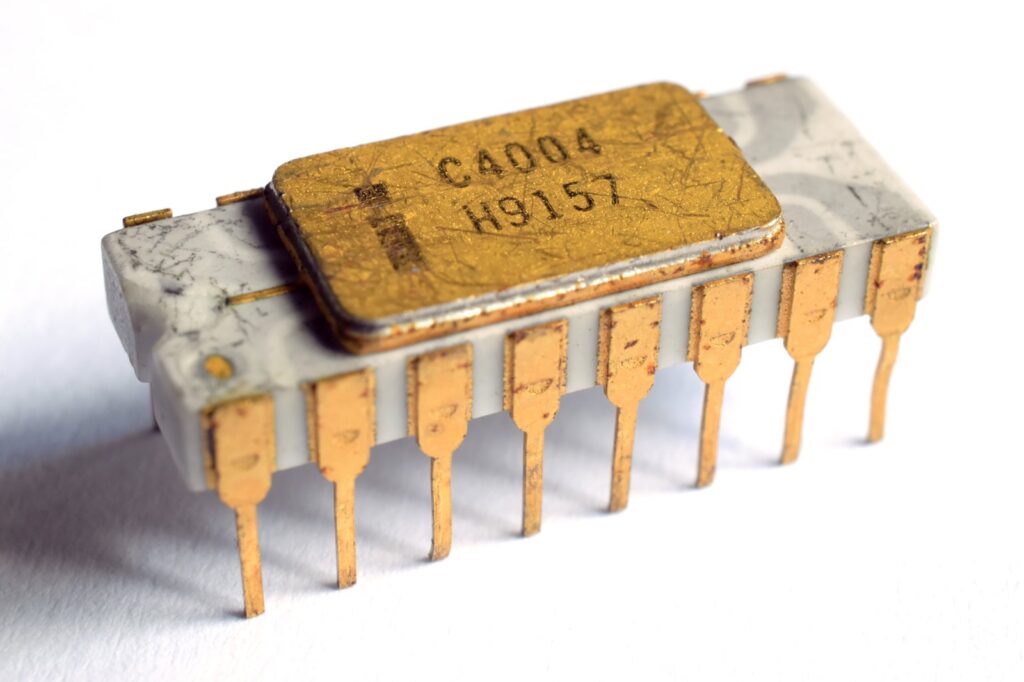
It began quietly enough. In 1971, Intel released the 4004, the first commercially available microprocessor.
It had 2,300 transistors and ran on a 4-bit architecture, a design that seems impossibly modest by today’s standards. But it was the seed. Three years later, the Intel 8080 arrived.
With 4,500 transistors and an 8-bit design, it found its way into the Altair 8800, a machine that captured the imagination of hobbyists and helped launch the personal computer revolution. The 8080 was not just a chip; it was an invitation.
The architecture that would not die
Then came 1978 and the Intel 8086. This was a 16-bit processor, and it introduced the x86 architecture — a design that, remarkably, is still in use today. That kind of longevity is almost unheard of in technology, where standards come and go with the seasons.
But x86 stuck, and it became the backbone of the PC era. By 1985, the 32-bit Intel 80386 packed 275,000 transistors onto a single slice of silicon.
That chip, known to enthusiasts as the 386, opened the door to graphical operating systems and multitasking. It was a leap. The 64-bit era dawned in 2003, not from Intel but from AMD.
The AMD64 architecture pushed past the 32-bit barrier, allowing processors to address vastly more memory. It was a shift that mattered for servers, for scientific computing, and eventually for the powerful workstations that sit on creative professionals’ desks.
From 2,300 to over 100 billion
The numbers tell a staggering story. The 4004’s clock speed was 740 kilohertz. Modern chips routinely run above 5 gigahertz — more than 6,000 times faster.
And the transistor count has gone from 2,300 to over 100 billion in today’s high-end microprocessors. The Apple M3 Ultra, released in 2025, is built on a 3-nanometer process and contains more than 100 billion transistors.
That is not just progress; it is a transformation of scale that defies easy comprehension. For decades, this exponential growth followed Moore’s Law, the observation that transistor density doubles roughly every two years. In recent years, that pace has slowed.
The physics of the very small has become harder to bend. But the chips we have now are extraordinary by any measure.
The microprocessor enabled the personal computer, the smartphone, the embedded systems that run everything from cars to medical devices, and the internet itself. Behind every search query, every text message, every digital photograph, there is a microprocessor doing its work. That is the human side of this story — not the transistors, but what they make possible.
As we look ahead, the question is not whether microprocessors will continue to improve, but what new capabilities those improvements will unlock. The next breakthrough may not come from shrinking transistors further, but from rethinking the architecture entirely. Whatever comes next, it will be built on the foundation laid by those early chips — the 4004, the 8080, the 8086, the 386, and all the generations that followed.
Sources
{“@context”: “https://schema.org”, “@type”: “NewsArticle”, “headline”: “The Microprocessor Revolution: Intel 4004 to the Modern CPU”, “description”: “SAN FRANCISCO, July 11 — The story of the microprocessor is really the story of how we got here. It is a tale of shrinking…”, “datePublished”: “2026-07-11T09:30:00+00:00”, “author”: {“@type”: “Person”, “name”: “James Roberto”}, “publisher”: {“@type”: “Organization”, “name”: “InfoPulse Today”, “url”: “https://newsfeed.2bme.xyz/”}, “citation”: [{“@type”: “CreativeWork”, “url”: “https://en.wikipedia.org/wiki/Microprocessor”}]}




