
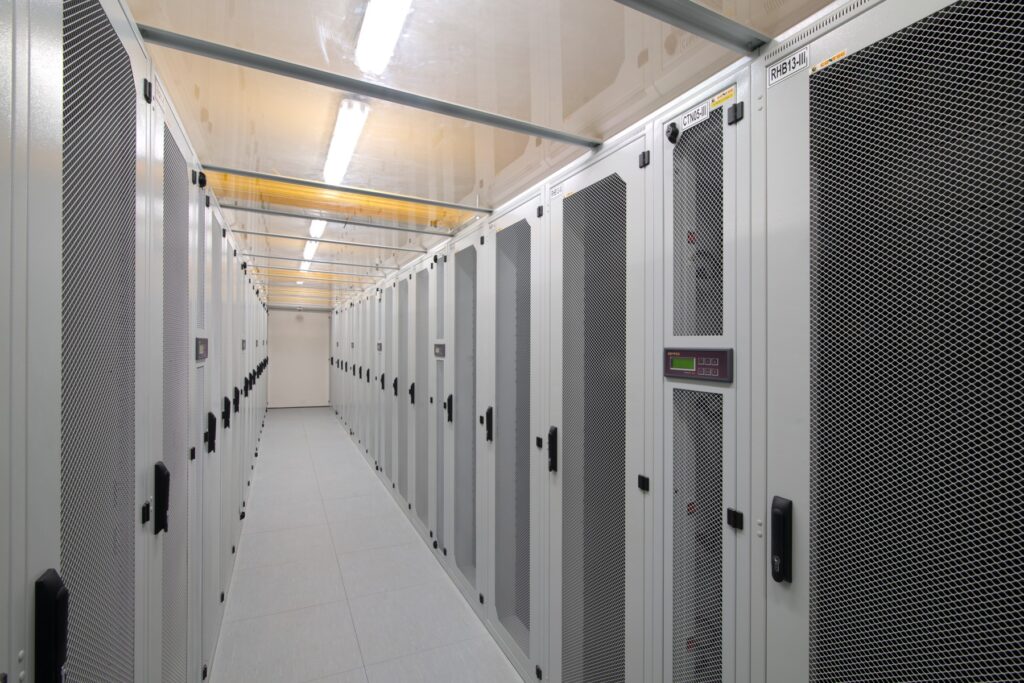
PORTLAND, September 18 — Oregon’s data center industry has been measured for the first time, and the numbers land hard: 111 operational facilities across the state, roughly 22.1 million square feet of gross building space, and another 32 projects planned or under construction that would add about 6.9 million square feet. The report, released Thursday, Sept. 17, 2026, comes from ECOnorthwest and the University of Virginia and was funded by the Portland-based nonprofit Lemelson Foundation. Oregon Public Broadcasting shared the key findings exclusively ahead of publication.
Those facilities consumed about 23% of Oregon’s retail electricity sales in 2025. That single figure may do more than any other to explain why data centers have become a flashpoint in the state.
Two markets, one state
Terry Wirkkala, project director and applied economist at ECOnorthwest, told OPB the research is meant to inform the public at a time when data centers are a hot topic. He said a key finding is that Oregon essentially has two separate data center markets. The east side of the state is currently built out more than the west side, while future development will occur at a higher rate on the west side.
Eastern Oregon is where the major hyperscale data centers sit, often larger than multiple football fields. The planned facilities, mostly on the western side, are much smaller, often used by multiple companies that rent out space, and may be co-housed with offices.
Direct employment tells its own story. Data centers employ 2,630 workers statewide, about 0.2% of Oregon’s roughly 1.97 million-person workforce. But 2,205 of those direct workers are in Eastern Oregon.
In Morrow County, hyperscale data centers directly employ more than 10% of the local workforce.
Counting workers is harder than it sounds
Data centers tend to have few direct employees and often rely on third-party contractors to build facilities and service equipment. That makes it hard to determine who exactly works at them, and researchers had to scour multiple sources to compile their numbers. The report also flags gaps in what is knowable.
Its authors found inconsistent, incomplete, or unavailable data sources for water use and other information necessary to analyze the facilities’ effects on landscapes and communities. Tax breaks helped fuel data center development in Oregon in recent years.
Over the last few months, local communities have considered or implemented moratoriums on the facilities, and data centers have become a key issue ahead of the November election. A Google data center in The Dalles, Ore., is pictured in an April 1, 2026, photo by Saskia Hatvany of OPB accompanying the report.
The report was published by OPB on Sept. 17, 2026, at 1 p.m. and updated at 10:51 p.m. What to watch next: whether the water-use data gap closes, and how the November vote reshapes the rules for the 32 facilities already in the pipeline.




