
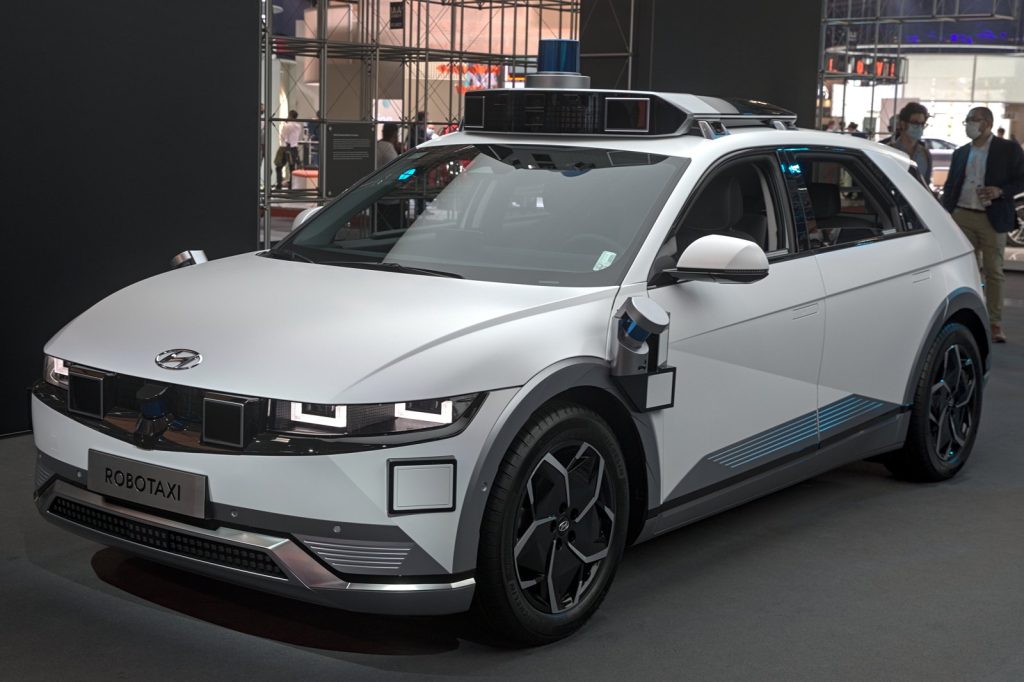
Robotaxis are finally hitting public roads, and behind a growing number of them sits the same name that powers the artificial-intelligence boom: NVIDIA. In a new clip, the chipmaker puts it plainly — driverless cars are arriving, and NVIDIA is supplying the brains that make them possible.
It is a quieter role than Tesla’s headline-grabbing robotaxi reveals, but arguably a more pervasive one. While individual carmakers race to launch their own autonomous fleets, NVIDIA has positioned itself as the common foundation underneath many of them: the compute, the sensors’ processing, and the software stack that turns raw road data into split-second driving decisions.
One platform, many robotaxis
The centrepiece is NVIDIA DRIVE — and in particular DRIVE Hyperion, which the company has pitched as a standardised, production-ready platform for building robotaxis. The idea is simple but powerful: instead of every automaker reinventing the enormously complex hardware-and-software base required for full autonomy, they can build on a shared reference system that is already validated for safety and sensor integration.
That approach has pulled in a striking roster of partners. Hyundai and Kia have deepened a strategic partnership with NVIDIA for next-generation autonomous driving. BYD, Nissan and a widening circle of global manufacturers have signed on to build on NVIDIA’s autonomous-vehicle stack. For a technology as capital-intensive and safety-critical as self-driving, a trusted common platform is exactly the kind of accelerant the industry has been waiting for.
Why the chipmaker holds the keys
Autonomy is, at its heart, a computing problem. A robotaxi must fuse data from cameras, radar and lidar, build a live model of the world around it, predict what every other road user will do next, and act — continuously, in real time, with no margin for a crash. That demands enormous on-board processing, and it is precisely the kind of accelerated computing NVIDIA has spent two decades perfecting.
The same expertise that made NVIDIA indispensable to data centres training large AI models translates directly to the car. Its automotive chips deliver the sustained performance a driverless vehicle needs, while its simulation tools let developers train and test autonomous systems across millions of virtual miles before they ever touch a public street. That blend of silicon and software is hard for any single automaker to replicate alone.
The payoff, if it works at scale, is a faster and safer path to driverless transport. A shared platform means lessons learned by one fleet can harden the system for all of them, and improvements arrive through software the way they do on a smartphone. It also quietly cements NVIDIA’s position: just as it became the default engine of the AI data centre, it is angling to be the default engine of the autonomous car.
Robotaxis still face real hurdles — regulation, public trust, and the long tail of rare road scenarios that remain the hardest part of the problem. But the infrastructure beneath them is maturing fast, and the company supplying much of it is one investors already know well. The driverless era is being built on familiar silicon.
Video posted by NVIDIA. Watch above.




