
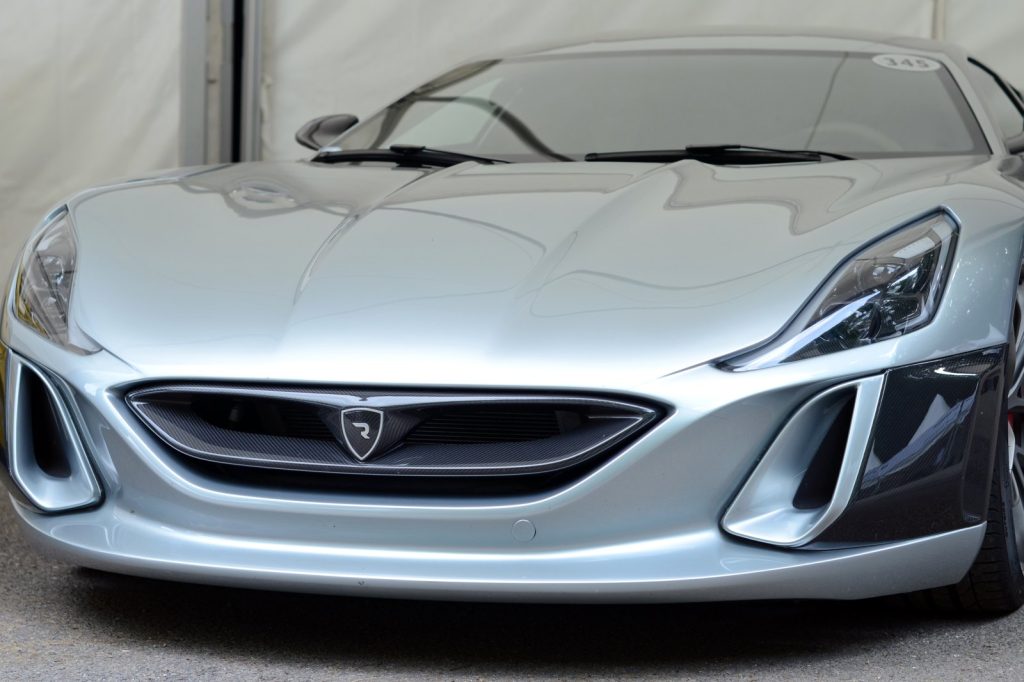
ProLogium and Rimac Accelerate Solid-State EV Battery Commercialization
ProLogium and Rimac Technology have announced a joint battery pack mock-up concept in Paris, advancing their collaboration on next-generation solid-state EV batteries.
Joint Development and Technical Approach
ProLogium and Rimac signed a Memorandum of Understanding in September 2025 to develop a next-generation battery platform. The partnership focuses on integrating ProLogium’s cell technology with Rimac’s expertise in vehicle-level battery systems. ProLogium is building a cell-to-pack (CTP) architecture for pouch batteries, which eliminates individual cell casings to save space and reduce weight. This design uses flexible pouch-format cells stacked directly into the pack structure. Rimac is responsible for technology integration, testing heat management, mechanical cell integration, and overall system design to ensure performance and safety are maintained.
Performance and Energy Density Gains
ProLogium’s Generation 3.5 lithium-ceramic battery achieves 381 Wh/kg gravimetric energy density and 903 Wh/L volumetric energy density, according to independent testing verified by TÜV. The battery uses a ceramic-based solid electrolyte, replacing the flammable liquid electrolyte in conventional lithium-ion cells. This solid-state design improves safety and enables higher energy storage per unit weight or volume. ProLogium began mass production of this battery at a Giga-level facility in Taiwan on September 2, 2026. The company is expanding its target markets beyond electric vehicles to include AI data centers, unmanned systems, aerospace, and maritime applications.
Timeline for Testing and Rollout
The prototype battery pack mock-up was showcased at the 2026 Paris Motor Show. ProLogium expects to develop a fully operational battery segment by early 2027, with plans to present it at CES 2027 in Las Vegas. A fully functional battery pack is targeted for delivery in the second half of 2027. The companies are following a multi-step approach that includes lab testing, in-vehicle validation, and on-road trials to evaluate pack design, cooling mechanisms, mechanical integration, and safety before final vehicle integration.
Strategic Implications
The collaboration aims to produce lighter and more compact battery systems by combining high-energy density cells with optimized pack architecture. However, ProLogium cautions that these cell-level advantages do not automatically result in lighter or more compact vehicle batteries without thorough system-level testing. Rimac’s role ensures that vehicle-level requirements drive the design process, focusing on reducing complexity, combining functions, and managing costs while delivering state-of-the-art performance. ProLogium’s shift toward AI data centers reflects growing demand for reliable, high-density backup power in infrastructure supporting AI workloads, with major tech firms projected to spend over $725 billion on AI capital expenditure in 2026. The company sees its solid-state battery technology as critical infrastructure for this buildout, leveraging its existing EV expertise to enter new high-growth markets.
Technical Advantages of the Solid-State Design
The Generation 3.5 lithium-ceramic battery uses a ceramic-based solid electrolyte, eliminating the flammable liquid electrolyte found in conventional lithium-ion cells. This substitution enhances safety by removing the most combustible component of traditional batteries while enabling higher energy storage per unit weight or volume.
The battery achieves 381 Wh/kg gravimetric energy density and 903 Wh/L volumetric energy density, as verified by independent testing through TÜV. These metrics represent a significant improvement in energy storage efficiency, allowing more power to be packed into a given weight or volume compared to conventional lithium-ion alternatives.
The cell-to-pack (CTP) architecture for pouch batteries eliminates individual cell casings, reducing weight and saving space by stacking flexible pouch-format cells directly into the pack structure. This design approach contributes to lighter and more compact battery systems when integrated at the system level.
Projected Performance Gains And Energy Density Improvements
ProLogium’s Generation 3.5 lithium-ceramic battery has achieved significant energy density improvements, with 381 Wh/kg gravimetric energy density and 903 Wh/L volumetric energy density, as verified by independent testing through TÜV.
The company’s solid-state battery technology is expected to enable faster charging and reduced weight, making it an attractive option for various applications, including electric vehicles, AI data centers, unmanned systems, aerospace, and maritime.
According to Vincent Yang, Founder and CEO of ProLogium, “Bringing next-generation batteries to the automotive market requires more than cell technology.” The company is working to develop a fully operational battery segment by early 2027 and a fully functional battery pack by the second half of 2027.
Market Rollout And Testing Schedule
According to Vincent Yang, Founder and CEO of ProLogium, the company is preparing to move into the development and production of a functional battery, progressing toward a full-scale battery pack and subsequent vehicle integration validation. The prototype battery pack mock-up was showcased at the 2026 Paris Motor Show.
ProLogium expects to develop a fully operational battery segment by early 2027, with plans to present it at CES 2027 in Las Vegas. A fully functional battery pack is targeted for delivery in the second half of 2027. The companies are following a multi-step approach that includes lab testing, in-vehicle validation, and on-road trials to evaluate pack design, cooling mechanisms, mechanical integration, and safety before final vehicle integration.
The collaboration between ProLogium and Rimac Technology is aimed at producing lighter and more compact battery systems by combining high-energy density cells with optimized pack architecture. Rimac technology is tasked with the technology integration, exploring multiple approaches in tandem, including testing the EV batteries for heat management, mechanical cell integration, and system design.
Sources
- ProLogium
- Next-generation EV battery targets faster charging with less weight
- ProLogium 381 Wh/kg Solid-State Battery Eyes AI Data Centers




