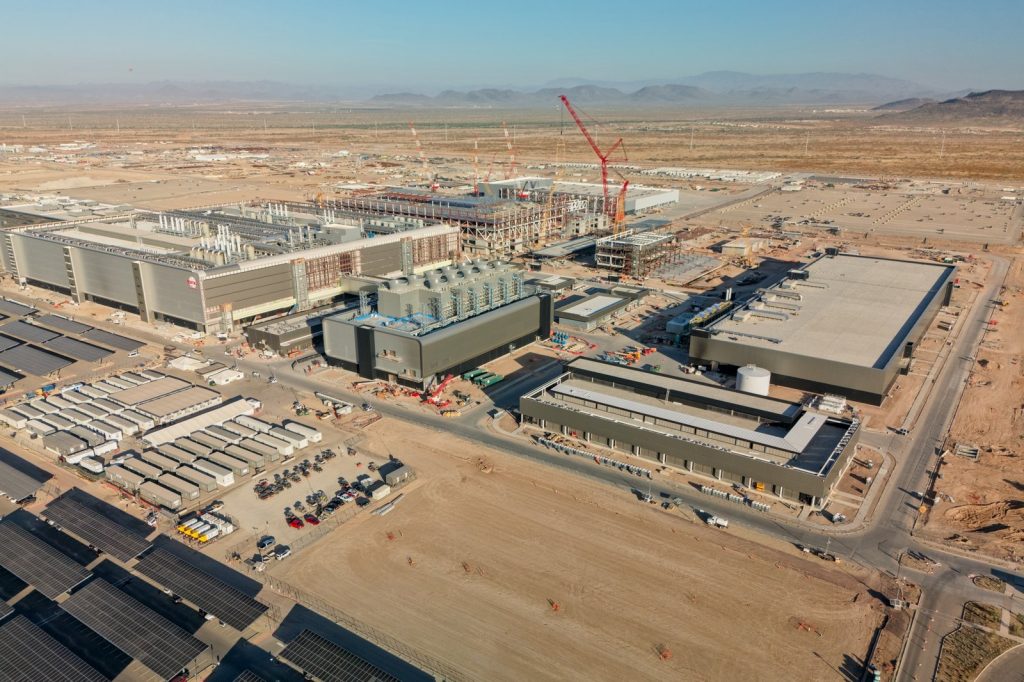
Europe wants a fifth of the world’s chip production by 2030. Its Chips Act, adopted in 2023, aims to mobilise up to €43 billion in public and private investment to get there. Support covers research, industrial capacity and the security of supply chains, and projects have been announced in Germany, France and Italy.
The continent starts from an odd position. It owns ASML, which leads in EUV lithography. It has no part in making the most advanced chips, a field TSMC and Samsung dominate.
A gap of money, not know-how
Pascal Vivet, scientific director of the “Integration and Packaging” programme at CEA-Leti, says Europe once held its own at the leading edge through STMicroelectronics, Infineon and NXP. Around fifteen years ago those manufacturers stopped chasing the next node. American players such as Intel and Asian ones such as TSMC and Samsung were the only ones able to find the money the race now demands.
“The current gap is more a matter of investment than a technological shortfall,” Vivet says. CEA-Leti is still working on advanced FD-SOI pilot lines near the 10 nm mark. Industry in Europe currently uses 28 nm or 18 nm. Getting to 10 nm or 7 nm would be a big jump, he says, but possible.
Start-ups and skills
Vivet names the weakest link as design. Europe has large industrial groups but few start-ups capable of producing the sector’s next leaders. The United States had venture capital to feed such firms. European start-ups have the ideas, he says, and struggle to scale fast enough against American and Asian rivals. He points to AXELERA in the Netherlands and VSORA in France as chip designers worth watching.
People are a second problem. Europe does not yet have the workforce to roll out several state-of-the-art mega-factories quickly, and France is expanding training in universities, engineering schools and laboratories. Even with money, Vivet says, building that workforce takes a long time.
On the 20% target, he is cautious. It is “ambitious,” he says, and it sends a signal to industry, but it is still too early to say whether it will be reached by 2030.
What comes next
Some officials and industry players already talk about a “Chips Act 2.0.” Nothing has been adopted under that name. The discussion centres on funding for design companies, skills, research and advanced integration technologies, rather than the production capacity that dominated the first phase.
Vivet also sees room outside the race to shrink transistors. Chiplets and heterogeneous integration combine building blocks made with different processes in a single system. And demand from defence, space and critical infrastructure gives Europe an opening: investments made now, he says, could pay off within 5 to 10 years.