
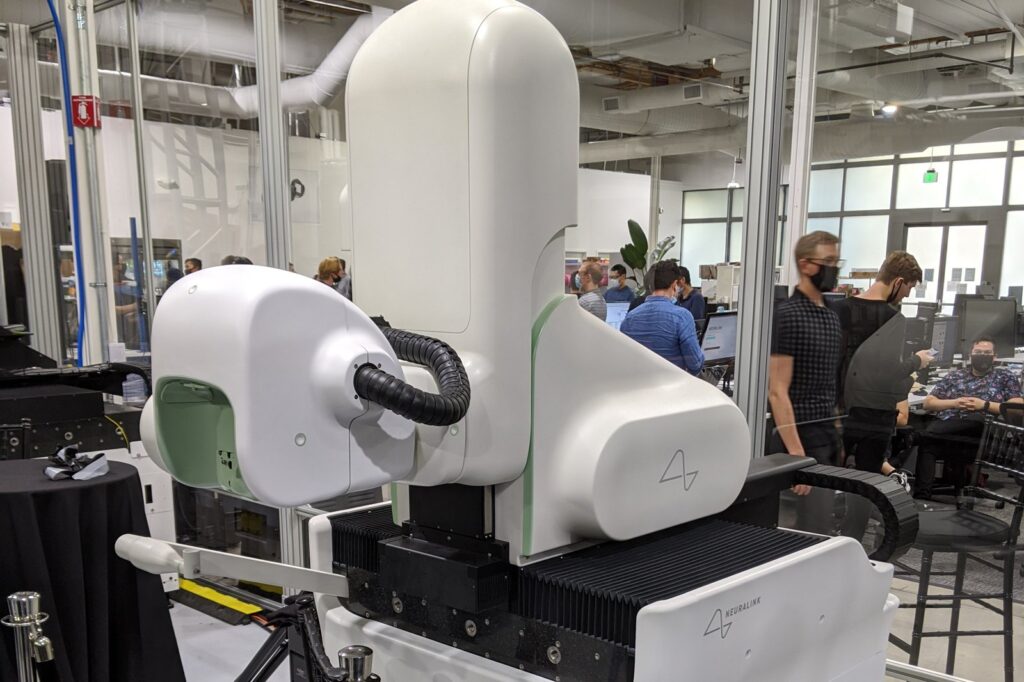
In Fremont, California, Neuralink’s core technology consists of ultra‑thin polymer threads that measure just 4 to 6 micrometers in width—narrower than a human hair. These flexible filaments are inserted into brain tissue by a robotic system that the company describes as operating like a “sewing machine.” The combination of the fine threads and the precision robot is intended to overcome the limitations of traditional brain‑computer interface (BCI) electrodes, which are typically rigid, cause scar tissue, and can shift over time. Founded by Elon Musk in 2016, Neuralink announced its long‑term ambitions in March 2017.
By 2019 the firm had demonstrated a laboratory rat equipped with a 1,500‑electrode array capable of recording neural activity. That same year the company unveiled the sewing‑machine‑style implantation device.
The threads themselves are the pivotal innovation: their flexibility allows them to weave between blood vessels, reducing damage while providing a high density of contact points. More contact points translate into richer neural data, which the company hopes will eventually enable precise decoding of neuronal signals. Neuralink’s headquarters remain in Fremont, but the company plans to relocate a substantial portion of its operations to Del Valle, Texas, roughly ten miles west of Tesla’s Gigafactory Texas.
The move is designed to place the firm nearer to Musk’s other enterprises and to tap into the growing engineering talent pool around Austin. Since its inception, Neuralink has secured $158 million in funding, with Elon Musk contributing $100 million personally.
By 2019 the staff count had reached 90, including several prominent neuroscientists recruited from universities. These researchers are focused on developing a device that could one day address conditions such as paralysis, blindness and memory loss. As of January 28 2024, Neuralink stands on the cusp of initiating human trials.
The company possesses the financing, the technology and a multidisciplinary team, but it has yet to complete a trial in a human subject. The robotic inserter and the 1,500‑electrode system have both been tested in animal models, yet regulators will scrutinize the transition from rodent to human application.
The thin, flexible threads are central to Neuralink’s claim that its implant could remain functional in a human brain for years without degradation. If the sewing‑machine device can replicate its animal‑model performance in a human skull, the firm could move from experimental prototypes to a viable clinical product. Neuralink’s next milestone will be to demonstrate that its implantation robot can safely and accurately place the micrometer‑wide threads in a human brain, a step that will determine whether the company’s ambitious vision for long‑term neural interfaces can become a reality.




