
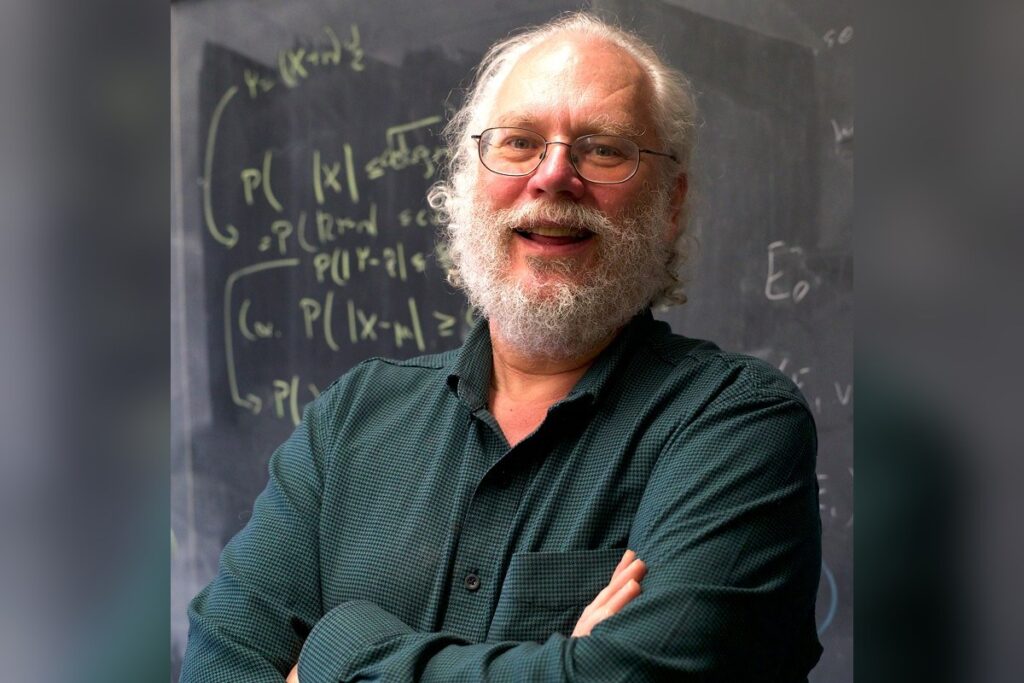
CAMBRIDGE, July 6 — CAMBRIDGE, Mass., July 6, 2026 — Peter Shor, the American mathematician and computer scientist now at MIT, changed the trajectory of computing with a single algorithm. In 1994, Shor developed an algorithm that can factor large integers exponentially faster than the best known classical algorithms. The work demonstrated that a quantum computer could break widely used public-key cryptography systems like RSA.
Shor’s algorithm sparked intense interest in quantum computing. Before 1994, the field was largely theoretical.
After Shor’s paper, researchers and governments began pouring resources into building a working quantum machine. The breakthrough came with a catch. Quantum computers are notoriously fragile.
In 1995, Shor contributed quantum error correction with what is now called the Shor code. This work provided a path forward for building reliable quantum systems.
Shor received the MacArthur Fellowship in 1999. That same year, he also received the Gödel Prize for his algorithm. Today, Shor is a professor at MIT.
His 1994 algorithm remains the most famous demonstration of quantum computing’s potential power. The race to build a fault-tolerant quantum computer continues, driven in large part by the cryptographic threat Shor identified more than three decades ago. Public-key cryptography, the foundation of modern secure communications, relies heavily on the computational difficulty of factoring large integers—a problem that classical computers solve only inefficiently.
Methods like RSA encryption depend on this asymmetry; while multiplying two large primes is straightforward, reversing the process to derive the original primes is computationally intensive for traditional machines. Shor’s algorithm exploits the principles of quantum mechanics, particularly superposition and entanglement, to perform factorization with exponential speed, rendering such cryptographic systems vulnerable if a sufficiently powerful quantum computer is ever built.
The implications of Shor’s work extend beyond cryptography, reshaping the broader landscape of computational theory and engineering. Before his 1994 breakthrough, quantum computing existed primarily as a speculative field, with few practical applications beyond theoretical exploration. Shor’s algorithm provided a concrete demonstration of quantum advantage—a scenario where a quantum computer outperforms classical counterparts for a specific task—sparking a global race among governments, corporations, and research institutions to develop scalable, fault-tolerant quantum machines.
The urgency of this pursuit has only intensified as digital security frameworks, from financial transactions to national defense, increasingly depend on encryption methods now under threat.




