
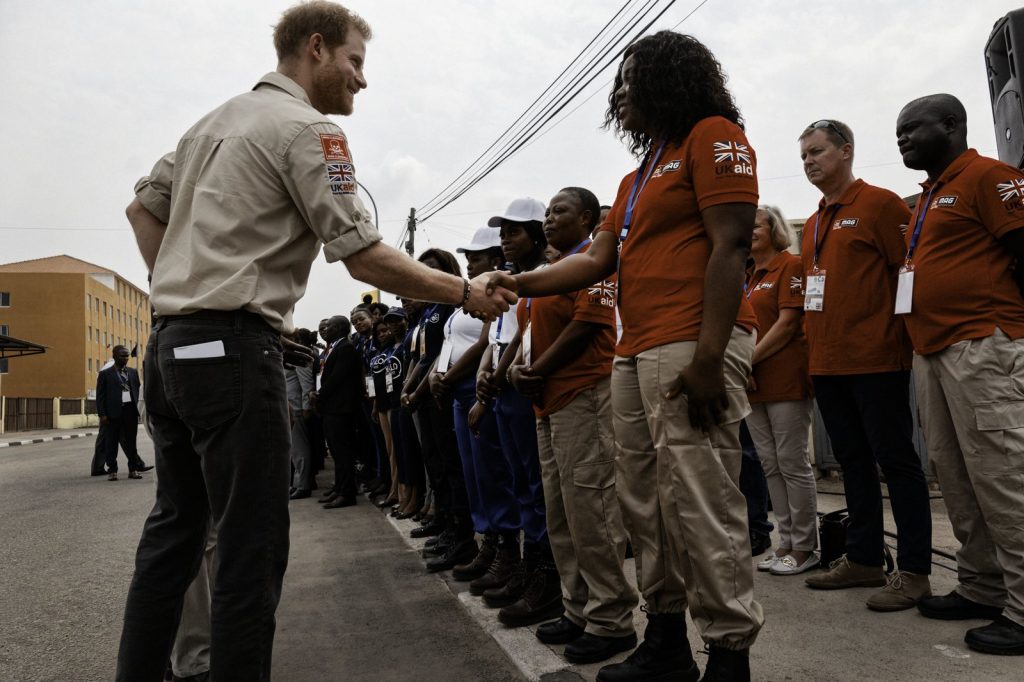
Nottingham, October 16 — Prince Harry and his wife Meghan Markle carried out their first joint engagement since their return to the UK in August. At its heart, the event took place in Nottingham, where the couple visited three charities that support young people and local communities. This visit potentially puts the pair at odds with Buckingham Palace over their status while living back in Britain.
The king made it clear in a letter released last month that their position was ‘akin to private citizens’ with charitable interests rather than public figures and that they should not be addressed as his and her royal highness. The last time Harry and Meghan appeared together at a public event in Britain was when they attended the late Queen Elizabeth’s funeral in September 2022.
A Return to Public Life
The couple’s visit to Nottingham marks a significant step in their return to public life in the UK. They have been living in California since stepping down as senior royals in 2020.
A New Role, a New Status
Their new status as private citizens, however, has been a point of contention. The king’s letter made it clear that they would no longer receive public funds for their charitable work, a significant change from their previous roles as working royals.
A Look Ahead
As the couple continues to navigate their new roles, they face challenges in balancing their charitable work with their personal lives. The visit to Nottingham is a sign that they are committed to making a difference, even if it means doing so without the trappings of royalty.
Sources
Background and why it matters
Prince Harry and Meghan Markle stepped back from senior royal duties in early 2020, relocating to California to pursue financial independence and a more private life. Their decision followed intense media scrutiny and public debate about the role of modern monarchy. Since then, they have focused on charitable initiatives through their Archewell Foundation, while maintaining limited ties to royal institutions. The couple’s return to the UK for joint engagements marks a shift in their public presence after years abroad.
Prince Harry, born Henry Charles Albert David in 1984, is the younger son of King Charles III and the late Diana, Princess of Wales. He served in the British Army for ten years, including two deployments to Afghanistan, and founded the Invictus Games in 2014 to support wounded veterans. Meghan Markle, an American actress known for her role in the television series Suits, married Harry in 2018 and became the Duchess of Sussex. Their union was notable for its transatlantic and mixed-heritage dimensions within the historically homogeneous royal family.
Their current status reflects a broader evolution in how royal family members engage with public life. While they retain their titles, the monarch’s recent guidance clarifies that they are not to use the style “His/Her Royal Highness” in official contexts and are not funded by the Sovereign Grant. This distinction affects how they operate domestically and internationally, particularly when undertaking charitable work in the UK.
Their continued involvement in philanthropy, especially youth and community support, underscores an ongoing commitment to public service outside traditional royal frameworks. For readers, this development illustrates how individuals born into institutional roles can redefine their contributions amid changing societal expectations about duty, privacy, and institutional allegiance. It also highlights the evolving boundaries between personal autonomy and institutional expectation within one of the world’s most visible monarchies.




