
LONDON, July 8 — The story of quantum computing is no longer confined to the laboratory. What began as a theoretical pursuit, a puzzle for physicists and mathematicians, has become a global race for technological dominance. The market itself tells the tale: valued at $866 million in 2023, it is projected to reach $6.5 billion by 2030, according to MarketsandMarkets.
That is a compound annual growth rate of 32.1 percent, a figure that signals not just promise, but a fundamental shift in how we process information. For those involved, the stakes could not be higher.
At its heart, this is a competition between nations and corporations, each betting billions on the idea that a quantum machine will one day solve problems that are impossible for even the most powerful classical computer. The market is divided into three key segments: the hardware itself, which includes superconducting, trapped ion, and photonic approaches; the software, encompassing algorithms and platforms; and the services layer, from cloud access to consulting.
Each segment represents a different piece of the puzzle, and a different opportunity for the companies racing to commercialise the technology. IBM reported $1.5 billion in quantum-related revenue in 2023.
That is a concrete number from a major player, a signal that the technology is already generating serious money. Google, meanwhile, invested over $1 billion in quantum research, a sum that underscores its commitment to being at the forefront. Venture capital has also poured in; McKinsey reported that funding for quantum startups reached $1.4 billion in 2022.
The public markets have taken notice, too. IonQ, a pure-play quantum computing company, had a market capitalisation of roughly $2 billion in 2024. Rigetti Computing was valued at around $500 million, and D-Wave Quantum at approximately $300 million.
These are not speculative penny stocks; they are established, if still young, publicly traded firms.
The Geopolitical Dimension
This is not merely a corporate story. The United States government, through the National Quantum Initiative Act of 2018, authorised $1.275 billion over five years to accelerate research and development. That legislation was a clear statement of intent: quantum computing is a matter of national security and economic competitiveness.
But the American effort is dwarfed by the scale of China’s investment. Beijing has committed over $15 billion to quantum technology, including a $10 billion national laboratory in Hefei.
That single facility represents a concentration of resources that is staggering, even by the standards of big science. Europe, too, has entered the arena. The Quantum Flagship program, launched in 2018, has committed €1 billion to the field.
The European approach is more collaborative, linking universities and research institutes across the continent, but the goal is the same: to ensure that the next generation of computing power is not monopolised by the United States or China. For those involved in these national programs, the work is as much about sovereignty as it is about science.
The Human Element
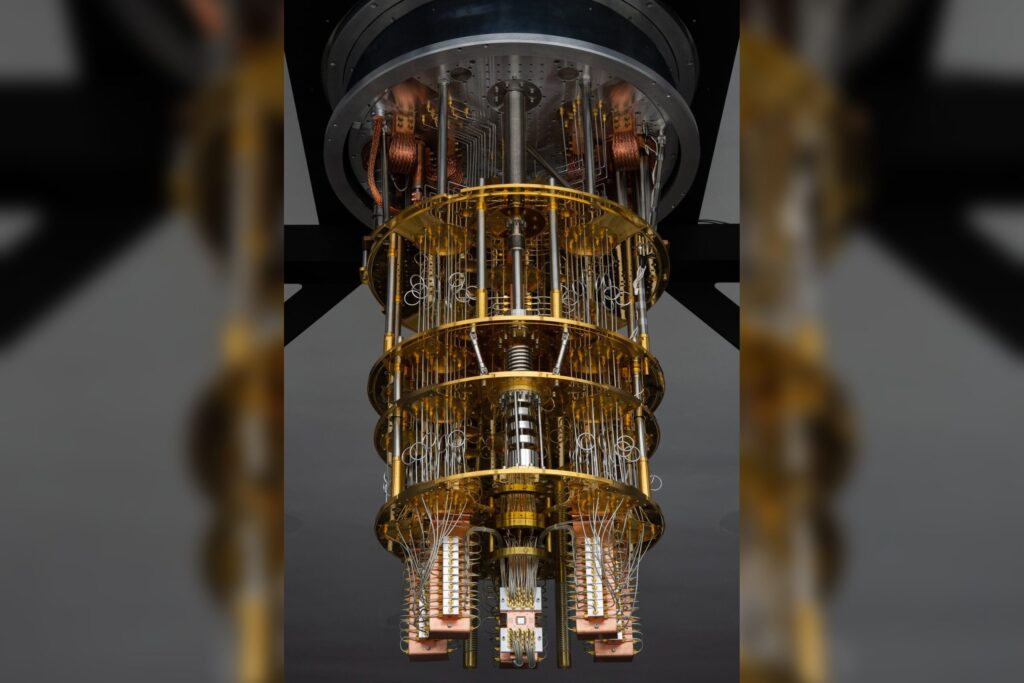
For the researchers and engineers building these machines, the work is painstaking. The hardware segment alone is a battlefield of competing architectures. Superconducting qubits, the approach favoured by Google and IBM, require temperatures near absolute zero.
Trapped ion systems, used by IonQ, rely on lasers to manipulate individual atoms. Photonic systems, still more experimental, use particles of light.
Each approach has its proponents, its trade-offs, and its believers. There is no consensus on which will ultimately prevail, and that uncertainty is itself a driver of the market’s dynamism. The software and services layers are where much of the near-term value may lie.
Cloud access to quantum processors allows companies to experiment without building their own hardware. Consulting firms are helping clients understand what problems a quantum computer might actually solve.
The algorithms being developed today are designed to run on machines that do not yet exist at scale, a kind of forward engineering that requires both patience and a willingness to fail. For the startups in this space, the challenge is to stay alive long enough for the hardware to catch up with the theory. Looking ahead, the trajectory is clear.
The investment is in place, the talent is being trained, and the first commercial applications are beginning to emerge. But the road from $866 million to $6.5 billion is not a straight line. Technical hurdles remain immense.
Error correction, qubit coherence times, and the sheer complexity of scaling up from dozens of qubits to thousands or millions are problems that have not yet been solved. For those involved, the story of quantum computing is still being written, one qubit at a time.
{“@context”: “https://schema.org”, “@type”: “NewsArticle”, “headline”: “Quantum Computing Market to Surge from $866M to $6.5B by 2030”, “description”: “LONDON, July 8 — The story of quantum computing is no longer confined to the laboratory. What began as a theoretical pursuit, a puzzle for…”, “datePublished”: “2026-07-08T09:30:00+00:00”, “author”: {“@type”: “Person”, “name”: “Sophie King”}, “publisher”: {“@type”: “Organization”, “name”: “InfoPulse Today”, “url”: “https://newsfeed.infopulsetoday.com/”}}




