
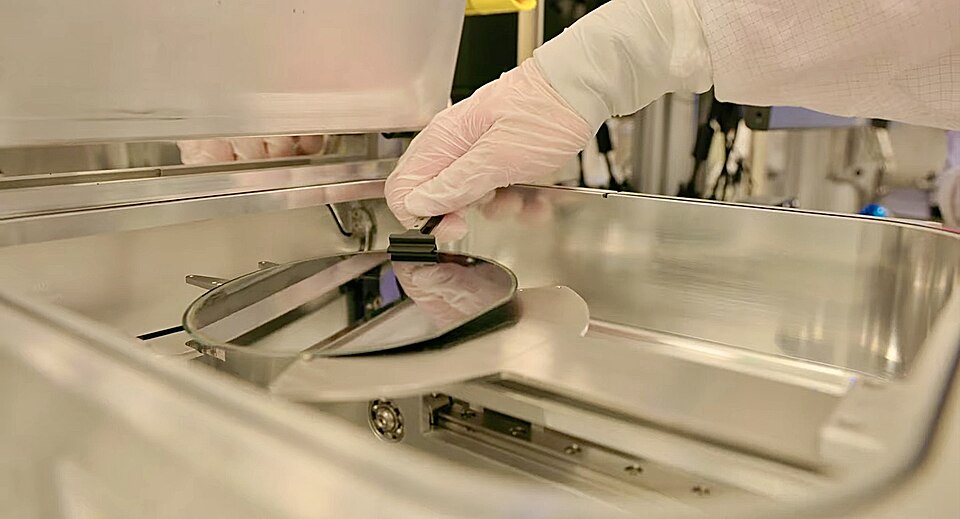
Washington, September 13 — The global race to build the world’s most advanced semiconductors has become the defining technological contest of the decade, and the numbers tell a story of dramatic shift. The United States’ share of global chip manufacturing has fallen from 37% in 1990 to about 12% in 2023, according to the Semiconductor Industry Association. That decline has prompted lawmakers in Washington to act, passing the CHIPS and Science Act in August 2022, which allocated $52.7 billion for semiconductor research, development, and manufacturing incentives.
The chip itself is the foundational technology of the modern world, powering everything from smartphones to fighter jets. Its story began at Bell Labs in 1947, when John Bardeen, Walter Brattain, and William Shockley invented the transistor.
Just over a decade later, Jack Kilby of Texas Instruments and Robert Noyce of Fairchild Semiconductor independently developed the first integrated circuit in 1958-1959. Then, in 1965, Gordon Moore made an observation that would become known as Moore’s Law — predicting that the number of transistors on a chip would double approximately every two years. That prediction drove decades of exponential progress.
From Intel to the Foundry Revolution
Intel was founded in 1968. The rise of Taiwan Semiconductor Manufacturing Company (TSMC) in 1987 introduced the first pure-play foundry model, and the 1990s brought the fabless semiconductor revolution, in which companies designed chips without owning the factories that made them. Today, the industry is dominated by a handful of players.
TSMC and Samsung lead in foundry manufacturing. ASML holds a critical position in lithography.
US firms like Intel, Nvidia, AMD, and Qualcomm remain central in chip design. Taiwan’s dominance in advanced logic chips — about 90% of the most advanced chips — makes it a critical chokepoint in the global supply chain. Governments have responded with industrial policy.
The European Union followed the US with its own European Chips Act in 2023, aiming to double its global market share to 20% by 2030. China has invested heavily through its ‘Big Fund’ and Made in China 2025 initiative, aiming for 70% self-sufficiency in chips by 2025.
Geopolitics and the Talent Gap
The race has geopolitical implications. The US imposed export controls in October 2022, updated in October 2023, restricting China’s access to advanced chipmaking equipment and AI chips. The industry also faces a talent shortage.
The US is expected to face a deficit of 67,000 semiconductor workers by 2030, according to a 2023 report by the Semiconductor Industry Association and Oxford Economics. What comes next will be shaped by advanced packaging, chiplets, 2nm and 1nm process nodes, and the pursuit of quantum computing and AI-specific chips.
The science behind these advances — and the race to control them — shows no sign of slowing.




