
HSINCHU, July 19 — For India’s semiconductor ambitions and the broader Asian tech supply chain, few companies matter more than Taiwan Semiconductor Manufacturing Company. As the world’s first dedicated foundry and the dominant producer of advanced chips for artificial intelligence, TSMC has become a bottleneck for everything from smartphones to defence electronics. Analysts note that any disruption at the Hsinchu-based giant could trigger a global chip shortage, given that it supplies Nvidia, Apple, Broadcom, and Qualcomm among others.
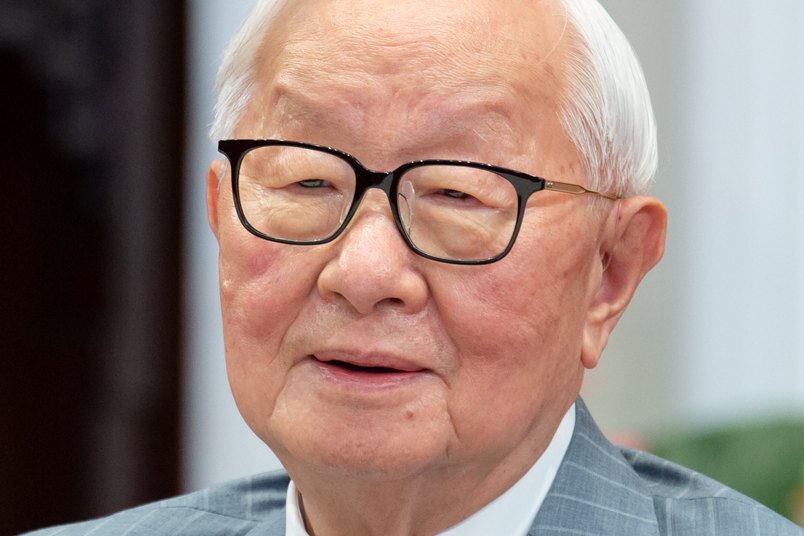
TSMC was founded in 1987 by Morris Chang, a joint venture between Taiwan’s government, the Industrial Technology Research Institute, and private investors. The initial funding came from the government’s National Development Fund (which held 48.3 percent), Philips (27.6 percent, contributing $58 million plus technology and intellectual property), and eight private Taiwanese companies — including Formosa Plastics Group at 5 percent.
Today, the company holds roughly 70 percent of the global semiconductor foundry market and ranks 38th in the Forbes Global 2000 as of 2025. Its market capitalisation makes it one of the largest non-U.S. companies in the world.
An AI-driven growth engine
The artificial intelligence boom has accelerated TSMC’s rise. Its advanced process nodes — from 2 microns down to 3 nanometres — are essential for the high-performance chips powering AI models. The foundry was the first to commercialise 7-nanometre and 5-nanometre production, and the first to use ASML’s extreme ultraviolet lithography in high volume.
Revenue has grown at a compound annual rate of 17.4 percent since 1994, with earnings rising 16.1 percent annually. Its global capacity stood at roughly 13 million 300 mm-equivalent wafers per year as of 2020.
Taiwan’s economic linchpin
TSMC is deeply woven into Taiwan’s economy. It makes up about 30 percent of the Taiwan Stock Exchange’s main index. In 2022, Taiwan’s exports of integrated circuits totalled $184 billion — nearly 25 percent of the island’s GDP.
The government of Taiwan remains the largest single shareholder, though the majority of the company is owned by foreign investors. Morris Chang retired in 2018 after 31 years at the helm, with Mark Liu succeeding as chairman and C.
C. Wei as CEO.
Supply-chain stakes from New Delhi to Tokyo
For India, which is working to build its own chip ecosystem, TSMC’s dominance presents both a challenge and a reference point. Indian IT services companies and electronic manufacturers depend on the same global supply chain that passes through TSMC’s fabs. The company’s customer list includes MediaTek, a Taiwanese chip design house that has strong ties to Indian smartphone makers.
Any hiccup in TSMC’s output — from geopolitical tension or natural disaster — would immediately affect device availability and pricing in India and across emerging Asia.
What to watch next
With AI demand continuing to push the limits of chip design, TSMC remains the key enabler. Analysts are watching how the company manages capacity expansion and its relationships with customers like Nvidia and Apple, as well as the potential for further investment outside Taiwan. The company’s role as a critical node in the global tech economy is unlikely to diminish soon.




