
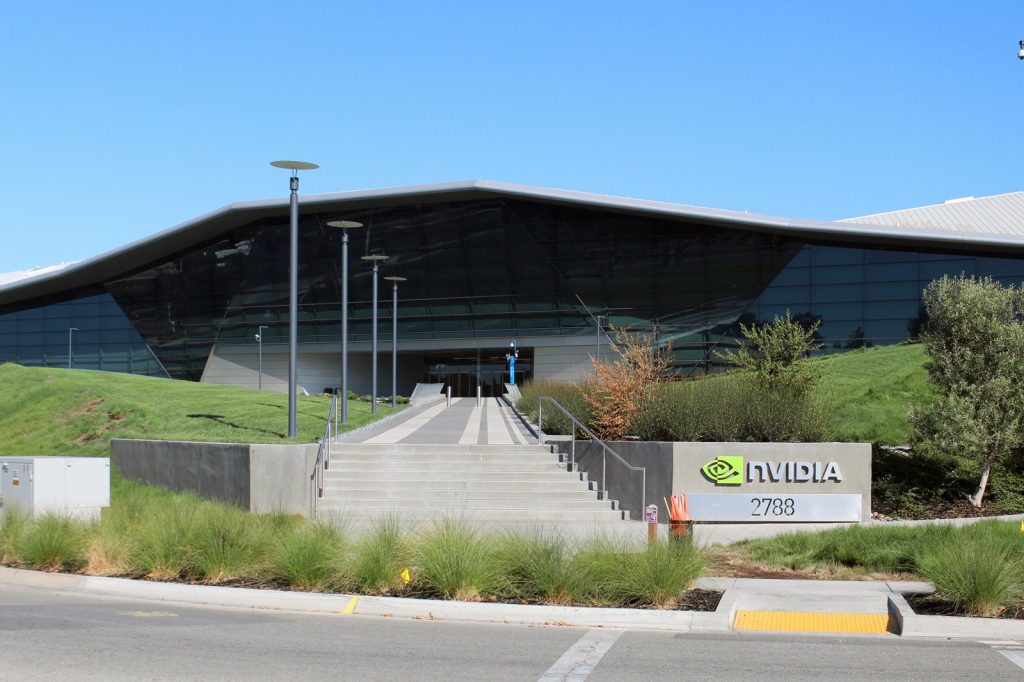
A proprietary computing platform that began as a Stanford University doctoral project has become the foundation for much of the world’s artificial intelligence and scientific computing. Nvidia’s Compute Unified Device Architecture, known as CUDA, is both a software layer and an application programming interface that allows software to harness the processing power of graphics processing units for general-purpose tasks far beyond the video game graphics they were originally designed for.
The platform’s journey from a university lab experiment to a cornerstone of modern computing illustrates how American research and corporate development converged to reshape the technology landscape.
From Stanford Lab to Industry Standard
The roots of CUDA trace back to the early 2000s, when Ian Buck, then a computer science Ph.D. student at Stanford University, began exploring ways to use graphics processing units for more than rendering images. Buck constructed an 8K gaming rig using 32 GeForce graphics cards and developed a programming language called Brook, designed for general-purpose computing on GPUs. His work received support from both Nvidia and the Defense Advanced Research Projects Agency, the U.S. defense research arm.
In 2004, Nvidia hired Buck and paired him with John Nickolls, then the company’s director of architecture for GPU computing, to transform Brook into a commercial platform. The result, CUDA, was officially released in 2007.
At launch, the name was an acronym for Compute Unified Device Architecture, though Nvidia later dropped the full meaning. The platform is written in the C programming language but is designed to work with C++, Fortran, Python, and Julia, making it accessible to specialists in parallel programming without requiring deep expertise in graphics programming. Prior to CUDA, developers had to rely on APIs like Direct3D and OpenGL, which demanded advanced graphics skills.
A Platform for Parallel Computing
CUDA functions as both a software layer that manages data, giving direct access to the GPU and central processing unit as needed, and a library of application programming interfaces that enable parallel computation. The platform includes drivers, runtime kernels, compilers, libraries, and developer tools. By 2012, GPUs had evolved into highly parallel multi-core systems capable of efficiently manipulating large blocks of data.
These systems proved more effective than traditional CPUs for algorithms used in machine learning, molecular dynamics simulations, and physics engines. CUDA-powered GPUs also support programming frameworks such as OpenMP, OpenACC, and OpenCL, broadening their utility across scientific and industrial applications.
The platform that began as a Ph.D. project backed by DARPA now underpins much of the world’s high-performance computing and machine learning infrastructure. Nvidia, an American company founded in 1993 by Jensen Huang, Chris Malachowsky, and Curtis Priem, initially focused on developing GPUs for video games. The company later expanded into professional visualization, supercomputing, and artificial intelligence, including development of the Tegra mobile processor line and the GeForce Now cloud gaming service.
Today, Nvidia holds a dominant position in the hardware market for training and deploying AI models and supplies chips for a majority of the world’s fastest supercomputers. These advancements have helped Nvidia become one of the largest companies on the stock market by valuation.
The shift has moved the GPU from a tool for gaming into a core component of data science, meaning that the technology powering modern artificial intelligence and scientific research relies heavily on the hardware and software ecosystems Nvidia built. The CUDA platform remains a proprietary standard, but its origin in a Stanford lab backed by U.S. government research funding underscores the role of American innovation in driving the computational infrastructure that supports today’s most demanding workloads.
{“@context”: “https://schema.org”, “@type”: “NewsArticle”, “headline”: “CUDA: From Stanford Lab to AI and Scientific Computing Standard”, “description”: “SANTA CLARA, July 16 — A proprietary computing platform that began as a Stanford University doctoral project has become the foundation for much of the…”, “datePublished”: “2026-07-16T09:30:00+00:00”, “author”: {“@type”: “Person”, “name”: “Erika Johnson”}, “publisher”: {“@type”: “Organization”, “name”: “InfoPulse Today”, “url”: “https://newsfeed.infopulsetoday.com/”}}




