
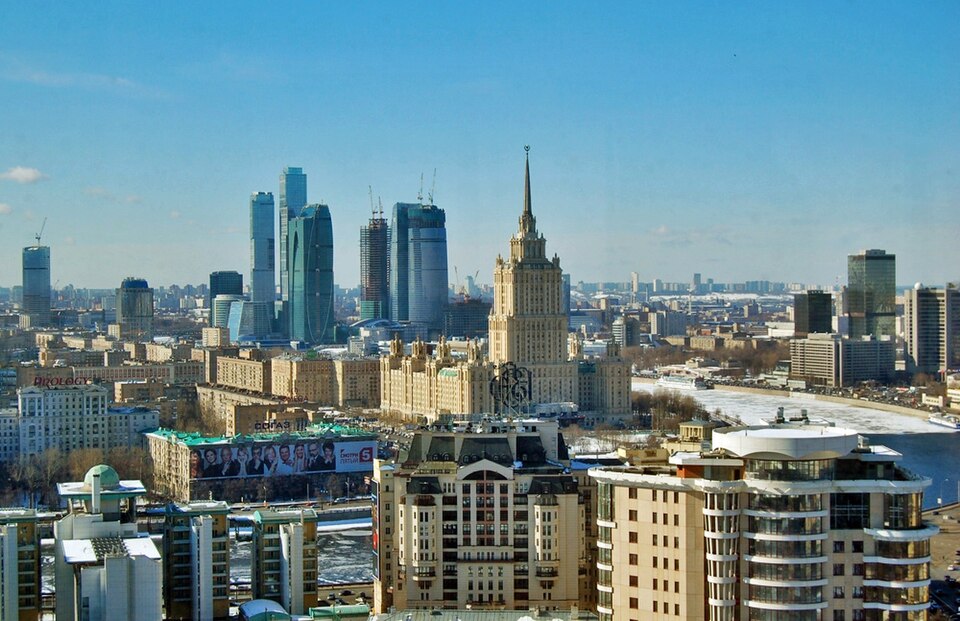
MOSCOW, September 14 — New Moscow, the federal expansion that more than doubled the capital’s territory, remains the clearest case study of a global dilemma: the same digital infrastructure that delivers government services to millions also gives the state an unmatched capacity to watch its citizens. The expansion took effect on July 1, 2012, when Moscow’s area grew from roughly one thousand square kilometers to about two thousand five hundred, adding land southwest of the old city boundary. It created the Troitsky and Novomoskovsky administrative okrugs.
The stated purpose was to relieve congestion in central Moscow by shifting government offices and new residential development outward. President Vladimir Putin signed the expansion decree in 2011; Mayor Sergei Sobyanin, who has led the city since 2010, has overseen both the expansion and the digital initiatives built on top of it.
A testing ground for digital services
Since the 2010s, Russian state and city authorities have promoted the area as a testing ground for digital urban services — smart traffic management, e-government portals, sensor-equipped public infrastructure. The state services portal Gosuslugi, launched in 2009, has become a central platform for accessing government services electronically, with tens of millions of registered users. Moscow’s city government has also operated a network of several hundred thousand CCTV cameras, one of the densest urban camera systems in the world.
Facial recognition technology is deployed at entrances to the metro and at public events. That capability has not gone unused against political opponents.
Human rights organizations, including Amnesty International and Human Rights Watch, have documented Russia’s use of facial recognition and other surveillance tools to monitor protesters and activists. In 2019, Moscow authorities used facial recognition to identify and fine participants in unauthorized protests, according to reporting by the Associated Press and other outlets. Alexei Navalny, the opposition leader who died in prison in February 2024, saw his supporters tracked via facial recognition.
The convenience-and-control trade-off
The combination of digital convenience and state monitoring has drawn comparisons to China’s social credit system, though Russia’s system is less formalized. New Moscow’s population has grown to roughly 1.5 million residents as of 2023, according to city estimates. The area includes Vnukovo International Airport and the Moscow Ring Road.
The story is not breaking news. It is a decade-long trend, and it illustrates a tension that also plays out in the United States and Europe: smart city technologies can improve services while enabling surveillance.
What to watch next is whether the digital layer built over New Moscow continues to expand faster than the legal restraints on how it is used.




