
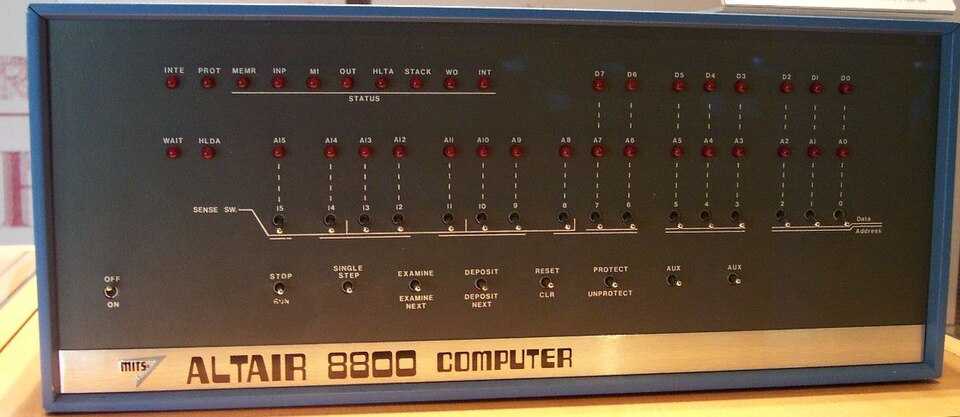
TEHRAN, July 8 — The story of the personal computer is one of small beginnings, hobbyist tinkering, and a series of technological leaps that reshaped the world. Early findings suggest that the real turning point was not a single product, but the invention of the microprocessor itself, which made affordable computing possible for the first time. The Altair 8800, released in 1975 by Micro Instrumentation and Telemetry Systems (MITS), is widely regarded as the spark that lit the fire.
It used the Intel 8080 processor and was sold as a kit for $439. This machine was not for the faint of heart—it required assembly and a deep understanding of electronics.
Yet it inspired a generation of hobbyists and entrepreneurs. Among those captivated were Bill Gates and Paul Allen, who founded Microsoft in 1975 and wrote a BASIC interpreter for the Altair. That software, rudimentary by today’s standards, was the beginning of an empire.
The encouraging part for those watching the industry was that the Altair was just the opening act. By 1977, Apple Computer—founded by Steve Jobs and Steve Wozniak—introduced the Apple II.
This machine was a different proposition altogether. It featured a 1 MHz MOS 6502 processor, 4 KB of RAM, and a color display, selling for $1,298. It became one of the first highly successful mass-produced microcomputers.
Patients of the technology world, so to speak, could begin to see a path forward that did not require a soldering iron. The landscape shifted again on August 12, 1981, when IBM launched its Personal Computer, the IBM PC. It used an Intel 8088 processor and ran Microsoft’s MS-DOS operating system.
The price tag was $1,565. This machine did something the earlier kits and hobbyist machines could not: it set a standard.
The IBM PC architecture became the template that the entire industry would follow for decades. By 1982, Time magazine had named the computer its “Machine of the Year,” a clear signal that computing had moved from the margins to the mainstream. The PC market grew from zero in 1975 to over 300 million units shipped annually by 2023.
That is a staggering trajectory, one that few industries have ever matched. The microprocessor, the Altair, the Apple II, and the IBM PC each played a role in this transformation.
The encouraging part is that the foundation they built remains relevant today, even as the form of computing continues to evolve into laptops, tablets, and smartphones. As we look ahead, the question is not whether personal computing will continue to change, but how. The history of the PC suggests that the next leap will likely come from a combination of hardware innovation and software that makes it accessible.
For those who remember the days of the Altair kit, the progress is nothing short of remarkable. For newcomers, the story is a reminder that today’s powerful machines rest on the shoulders of those early, clunky boxes. The point is that the personal computer is a story of human ingenuity, and it is far from over.
Consult your own curiosity, and keep watching.
{“@context”: “https://schema.org”, “@type”: “NewsArticle”, “headline”: “How the Microprocessor Created the Personal Computer Industry”, “description”: “TEHRAN, July 8 — The story of the personal computer is one of small beginnings, hobbyist tinkering, and a series of technological leaps that reshaped…”, “datePublished”: “2026-07-08T09:30:00+00:00”, “author”: {“@type”: “Person”, “name”: “Muhammad Asim”}, “publisher”: {“@type”: “Organization”, “name”: “InfoPulse Today”, “url”: “https://newsfeed.2bme.xyz/”}}




