
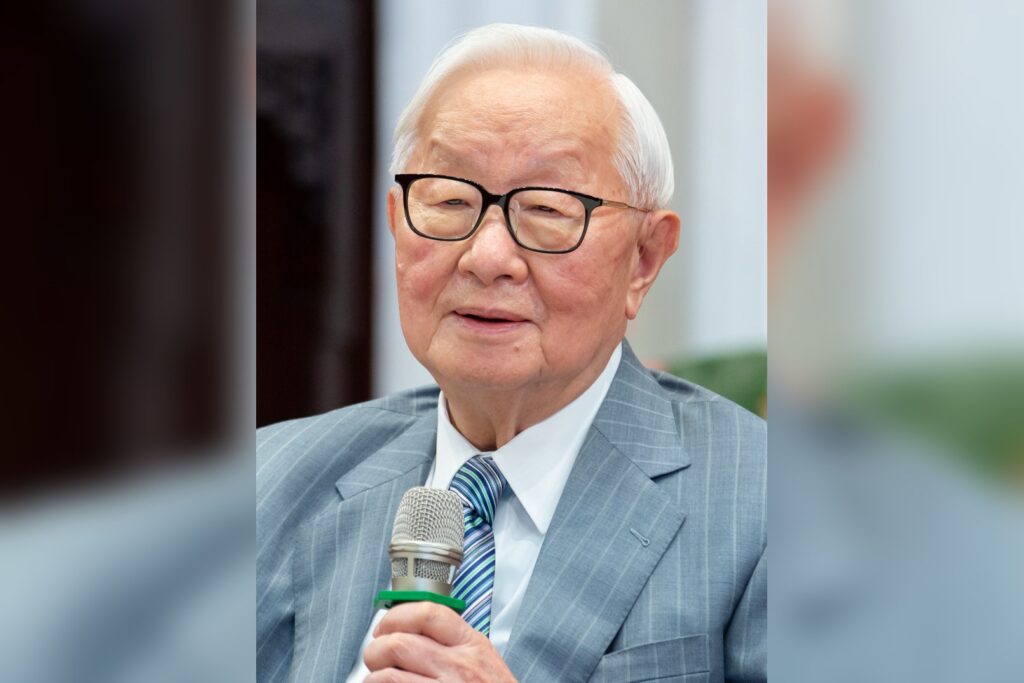
TAIPEI, July 13 — For India’s tech ecosystem, the semiconductor story has always been about what could be. But the man who wrote the global playbook for chip manufacturing, Morris Chang, built that model far from Indian shores, in Taiwan, with a government-backed bet that reshaped the entire electronics industry. Chang, born in 1931 in Ningbo, China, moved to the United States in 1949.
His academic path was formidable: degrees from Harvard, a B.S. and M.S. in mechanical engineering from MIT, and a Ph.D. in electrical engineering from Stanford in 1964. At Texas Instruments, he worked from 1958 to 1983, rising to group vice president.
That corporate pedigree alone would have made him a notable figure. But his real impact began in 1985, when Taiwan’s government invited him to lead the Industrial Technology Research Institute, or ITRI. Two years later, in 1987, Chang founded Taiwan Semiconductor Manufacturing Company, TSMC.
The model was a radical departure from industry norms. TSMC would not design a single chip.
Instead, it would manufacture chips designed by other companies — the world’s first dedicated semiconductor foundry. This pure-play model, as it came to be known, unlocked an entire industry of fabless chip designers. Companies like Apple, Nvidia, and AMD could now produce cutting-edge processors without the multi-billion-dollar burden of owning fabrication plants.
For Indian observers, the lesson has long been clear. Chang’s TSMC succeeded because of sustained government backing, a deep pool of engineering talent, and a strategic focus that never wavered. Under his leadership, the company invested heavily in advanced manufacturing nodes, ploughing about 8% of annual revenue into research and development.
By 2021, TSMC’s market capitalisation had crossed $500 billion, making it one of the most valuable companies in Asia. Chang retired as chairman in 2018 but remains a key advisor to the company.
His legacy is now central to global supply chain discussions. The chip shortages of the early 2020s, the geopolitical tensions around Taiwan, and the push by every major economy to build domestic semiconductor capacity — all of it traces back to the model Chang established.
Recognition and industry impact
The industry has not been shy in honouring Chang. He received the IEEE Medal of Honor in 2011, one of the highest accolades in engineering. In 2022, the United States awarded him the National Medal of Technology and Innovation, a rare recognition for a figure whose work reshaped American companies as much as Asian manufacturing.
Analysts note that Chang’s career trajectory — from a Chinese-born engineer educated in the US, to a Taiwanese industrial titan — mirrors the cross-border flows of talent and capital that define the semiconductor industry. For India, which has launched its own production-linked incentive schemes to attract chip fabs, the Chang story is a benchmark.
The question is whether any Indian state can replicate the conditions that allowed a single foundry to become a $500 billion linchpin of global technology.
What to watch
As of mid-2026, TSMC continues to expand its global footprint, with new fabs under construction in Japan, Germany, and the United States. Chang, now in his mid-90s, remains a presence in strategic discussions, though day-to-day operations are in younger hands. For markets across Asia, the durability of the pure-play foundry model — and whether it can survive rising geopolitical pressures — will define the next chapter of the semiconductor story.
Sources
{“@context”: “https://schema.org”, “@type”: “NewsArticle”, “headline”: “92-Year-Old Morris Chang Made Taiwan Indispensable for Global Chips”, “description”: “TAIPEI, July 13 — For India’s tech ecosystem, the semiconductor story has always been about what could be. But the man who wrote the global…”, “datePublished”: “2026-07-13T09:30:00+00:00”, “author”: {“@type”: “Person”, “name”: “Arjun Mehta”}, “publisher”: {“@type”: “Organization”, “name”: “InfoPulse Today”, “url”: “https://newsfeed.2bme.xyz/”}, “citation”: [{“@type”: “CreativeWork”, “url”: “https://en.wikipedia.org/wiki/Morris_Chang”}]}




