
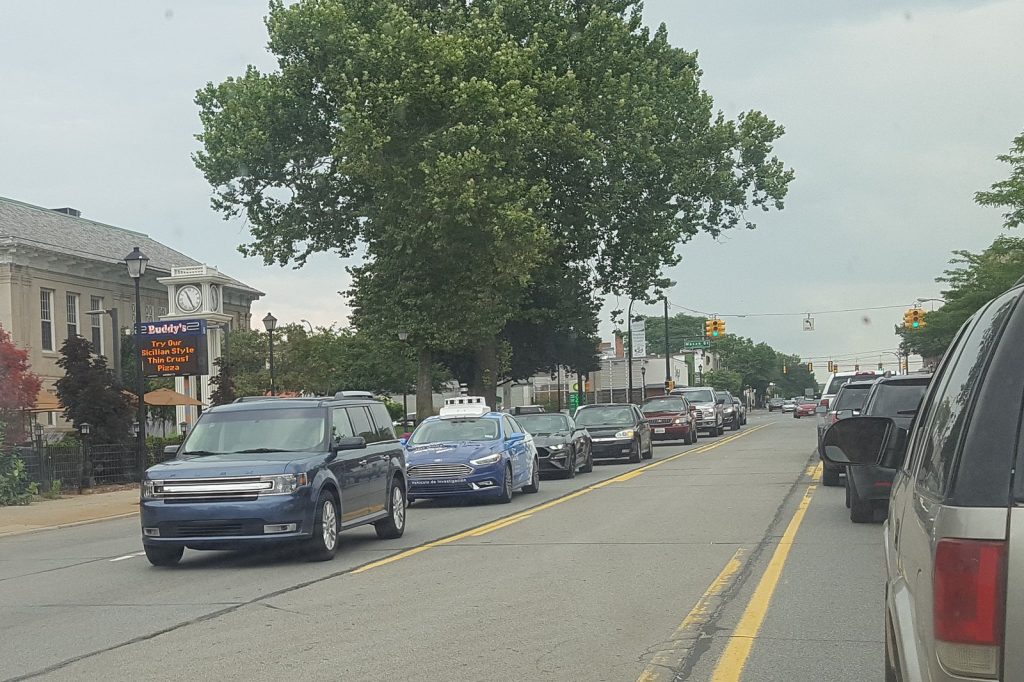
The global market for positioning, navigation, and timing (PNT) technology, valued at roughly $200 billion in 2022, has become a central focus for the future of autonomous vehicles. As families anticipate a day when driverless cars can safely transport children or handle package deliveries in challenging weather, attention has shifted from the vehicles themselves to the invisible signals that guide them. The existing PNT market is dominated by the Global Positioning System (GPS), a satellite constellation operated by the U.S. Space Force.
However, GPS signals are inherently weak and vulnerable to interference from jamming and spoofing — a limitation that has become a national concern for U.S. transportation authorities.
The Fragile Foundation of GPS
Standard GPS provides positioning accuracy of approximately 3 to 5 meters, sufficient for many everyday navigation tasks but inadequate for autonomous vehicles that must know exactly where a lane begins and ends. The U.S. Department of Transportation has officially identified GPS vulnerabilities as a national concern, while the Department of Homeland Security has funded research into backup PNT systems that could serve as alternatives in the event of signal disruption.
The concept of an autonomous vehicle — a car that can sense its environment and operate without human input — has evolved from early experiments in robotic control to today’s commercial trials in limited areas. The first public driverless taxi service launched in 2020, yet full autonomy across all conditions remains unrealized. Early progress relied heavily on existing navigation tools, but as developers pushed for higher precision, the shortcomings of standard GPS became apparent.
A vehicle navigating urban streets or maintaining its lane requires centimeter-level accuracy and high reliability, far beyond the 3-to-5-meter baseline that GPS typically delivers.
A New Market in Low Earth Orbit
To meet that demand, the company Xona is building a constellation of satellites in low Earth orbit (LEO) designed to deliver positioning accuracy of less than 10 centimeters. That represents a significant leap from the current GPS standard.
Xona’s commercial service is expected to compete with other emerging LEO PNT providers. Satelles, which uses Iridium satellites, and TrustPoint are both developing their own alternative positioning systems. This quiet race in the sky is being watched by families waiting for autonomous vehicles to become a trusted part of daily life.
The demand for robust, alternative PNT extends well beyond personal transportation. Drone delivery services require precise navigation to drop packages in designated locations.
Precision farming relies on accurate positioning for tasks such as automated planting, spraying, and harvesting. Telecommunications networks depend on reliable timing signals for synchronization, a function that GPS also currently provides. Each of these sectors — along with many other everyday services — would benefit from a more resilient and accurate positioning infrastructure.
Broader Implications for National Infrastructure
The push for alternative PNT systems reflects a recognition that dependence on a single technology carries risks. The Department of Homeland Security’s funding of backup PNT research underscores the strategic importance of diversifying positioning capabilities. As autonomous vehicle development continues, the need for centimeter-level accuracy has driven demand for new positioning technologies, exposing gaps that traditional systems could not fill.
The evolution from early robotic control experiments to today’s commercial trials has shown that reliable positioning is the linchpin of full autonomy. For the families who envision a future where a driverless car can pick up a child from practice or deliver a package across town in a downpour, the progress of companies like Xona, Satelles, and TrustPoint represents a quiet but critical advancement.
The invisible signals guiding tomorrow’s vehicles are being redefined in low Earth orbit, where a race for precision is quietly underway — one that touches not just personal transport but agriculture, telecommunications, and countless other industries that depend on knowing exactly where they are.




