
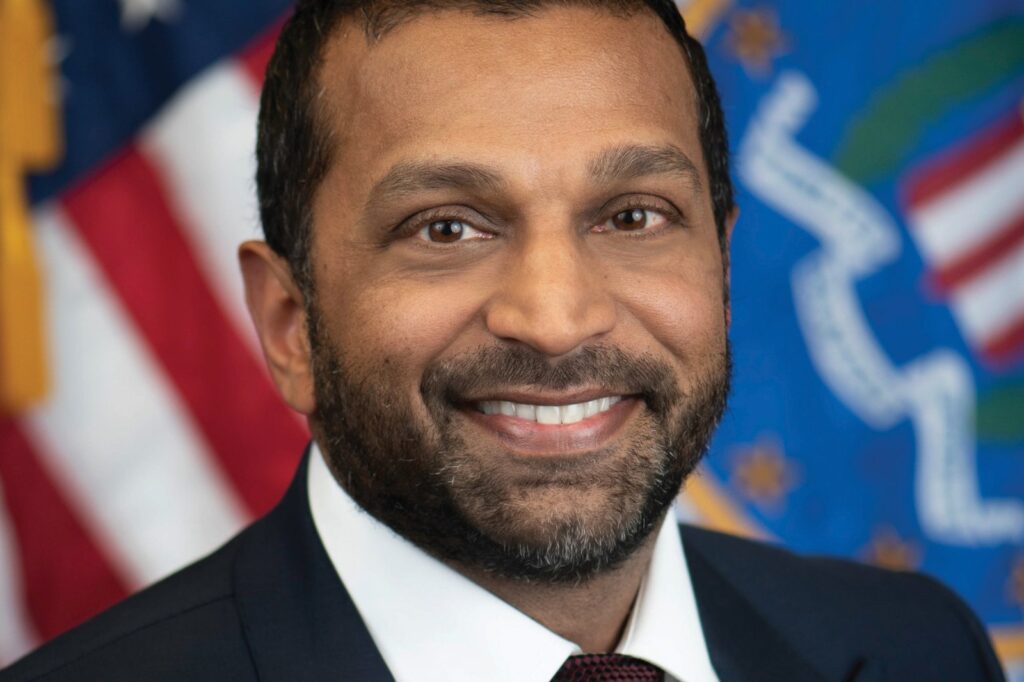
WASHINGTON, September 19 — The Federal Bureau of Investigation under Director Kash Patel is pressing a fraud-enforcement agenda that has produced arrests at home and abroad, even as critics question whether the bureau’s traditional independence is being eroded. Patel became the eighth FBI director in February 2025 after a contentious Senate confirmation. A former federal prosecutor and House Intelligence Committee staffer, he has vowed to overhaul the bureau and focus on public corruption, immigration enforcement, and violent crime.
The Trump administration has made cracking down on fraud a priority, particularly schemes targeting the elderly and government programs. In 2025, the Justice Department announced the creation of a joint task force with the FBI to investigate pandemic-era fraud, which has resulted in charges against thousands of defendants.
Patel’s public announcement of arrests reflects that focus. He named Manjit Singh Bedi, Khalid Ahmed Satary, Said Abdullahi Ereg, Emylee Thai, Elaine Angene Escoe and Herbert Leon Kimble. Several of the arrests took place abroad, a fact that signals the bureau’s reach beyond U.S. borders.
The FBI, founded in 1908 as the Bureau of Investigation, has more than 35,000 employees and a budget of approximately $11.3 billion in fiscal year 2024. Under Patel, the bureau has emphasized partnerships with local law enforcement and international allies.
Politicization Concerns and the Road Ahead
Critics have raised concerns about politicization of the bureau. The FBI’s traditional independence from political influence is a cornerstone of its credibility. Patel has defended his leadership, stating that the bureau will pursue criminals regardless of political affiliation.
The administration’s immigration policies have also intersected with FBI operations, particularly in cases involving transnational gangs. The outcomes of these cases will be closely watched as indicators of the administration’s law enforcement strategy.
The FBI’s next steps include seeking extradition and building prosecutions, which may take months or years. The long-term impact on fraud enforcement and international cooperation remains to be seen.




