
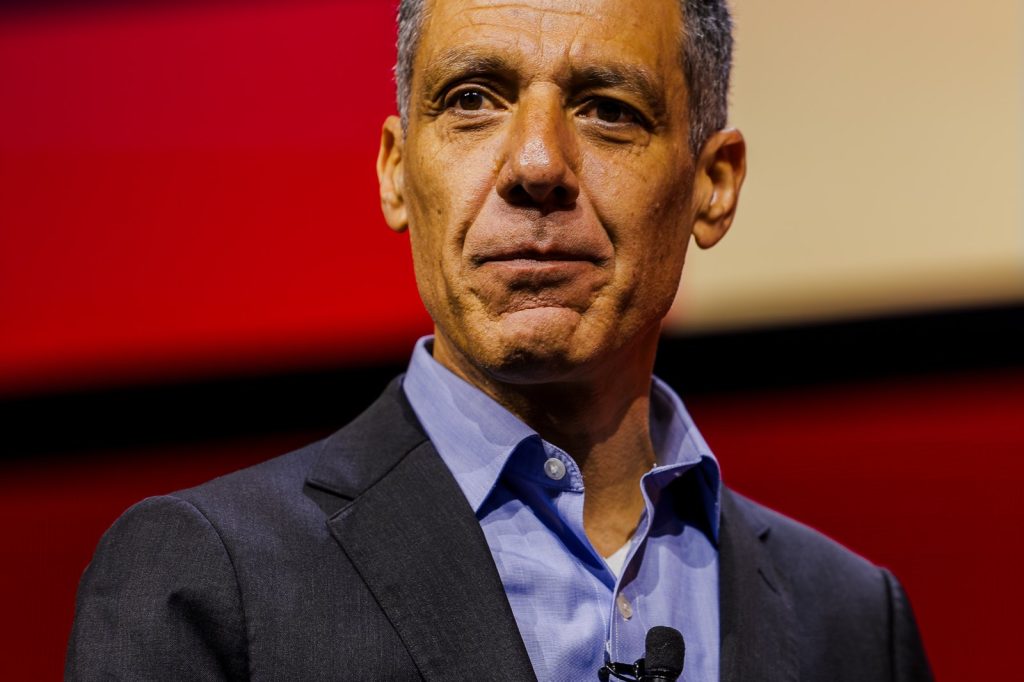
REDMOND, Wash., July 21 — A digital fingerprinting tool born in a university lab nearly two decades ago now sits at the centre of an increasingly contentious debate about what should and should not appear online. PhotoDNA, a perceptual hashing algorithm developed by Microsoft Research and Dartmouth College professor Hany Farid beginning in 2009, has quietly become the backbone of automated content moderation across the world’s largest platforms — and a flashpoint in legislative battles from Washington to Brussels. The technical reality is straightforward, if clever.
PhotoDNA does not recognise faces, identify people, or understand objects. Instead it converts images to black-and-white, divides them into a grid of squares, and quantifies the shading in each cell.
The resulting hash — a unique digital fingerprint — can be compared against a database of known hashes to spot copies even after resizing or minor colour alterations. Since around 2015, the same technique has been applied to individual video frames. The method is computationally cheap and deliberately resistant to the sort of tweaks that break cruder checksums like MD5.
How PhotoDNA Works
Under the hood, the algorithm’s design ensures that two versions of the same image — one heavily compressed, one full-resolution — produce near-identical hashes. That property is what makes it useful for spotting known child sexual abuse material at scale. Microsoft donated the algorithm to Project VIC, a programme managed by the International Centre for Missing & Exploited Children (ICMEC), which maintains a database of millions of hashes.
In December 2014, Microsoft made PhotoDNA available as a free software-as-a-service offering through the Azure Marketplace. The UK Internet Watch Foundation reported that its own PhotoDNA reference database contains over three hundred thousand hashes of known child sexual exploitation materials.
The National Center for Missing & Exploited Children in the United States maintains hash databases using PhotoDNA alongside other formats such as PDQ, MD5, and SHA-1. By 2022, the list of major platforms that had adopted the tool included Bing, OneDrive, Google Gmail, Twitter, Facebook, Adobe Systems, Reddit, and Discord. In 2021, a leaked software library implementing PhotoDNA became accessible on GitHub.
That leak did not, as some feared, suddenly break the system — the algorithm’s value depends on access to the hash database, not merely the code — but it did remove a layer of obscurity around how the tool works.
Policy and Controversy
The algorithm’s role expanded well beyond child protection. In 2016, Hany Farid proposed extending PhotoDNA to terrorism-related content. That December, Facebook, Twitter, Google, and Microsoft announced plans to use the tool to remove extremist material such as terrorist recruitment videos.
By 2018, Facebook stated it was using PhotoDNA to automatically remove al-Qaeda videos. The following year, the Global Internet Forum to Counter Terrorism began operating a shared database that relied on the same perceptual hashing technique.
Those moves drew attention from policymakers. European Commission initiatives that referenced or implicated the technology included voluntary codes on hate speech, disinformation, copyright legislation — the 2019 Copyright Directive, debated from 2014 to 2021 — terrorism-related regulations, and internet wiretapping rules colloquially called “chat control.” In the United States, the algorithm featured in Senate hearings in 2019 on digital responsibility and in 2022 on the EARN IT Act.
A note of caution surfaced in 2022, when a report noted that two fathers whose Google accounts were closed after medical photos of their child were automatically uploaded. The article drew a distinction between PhotoDNA — which requires a database of known hashes and thus cannot flag new or never-before-seen material — and Google’s own AI-based technology, which is capable of recognising previously unseen exploitative images.
That distinction matters: a hash-matching system is only as good as its reference library. It cannot catch what it has never seen. PhotoDNA remains widely deployed for detecting child sexual abuse material and non-consensual intimate imagery.
Its supporters argue it is a narrowly scoped, privacy-preserving tool that does not analyse content, only compare fingerprints. Its critics worry about mission creep — the extension from child protection to terrorism moderation, and the use of similar techniques in legislative proposals that could reshape how every user’s uploads are scanned. The detail that matters now is who controls the hash databases.
With the National Center for Missing & Exploited Children, the International Centre for Missing & Exploited Children, and the Global Internet Forum to Counter Terrorism all maintaining separate reference lists, and with the original algorithm now freely available in leaked form, the next chapter of this story may turn on governance rather than technology. That, and how far lawmakers are willing to go in obligating platforms to run every photo and every video through the same perceptual sieve.
Sources
{“@context”: “https://schema.org”, “@type”: “NewsArticle”, “headline”: “PhotoDNA: Perceptual Hashing Revolutionizes Online Child Safety”, “description”: “REDMOND, Wash., July 21 — A digital fingerprinting tool born in a university lab nearly two decades ago now sits at the centre of an…”, “datePublished”: “2026-07-21T09:30:00+00:00”, “author”: {“@type”: “Person”, “name”: “Sebastian Smith”}, “publisher”: {“@type”: “Organization”, “name”: “InfoPulse Today”, “url”: “https://newsfeed.infopulsetoday.com/”}, “citation”: [{“@type”: “CreativeWork”, “url”: “https://en.wikipedia.org/wiki/PhotoDNA”}]}




