
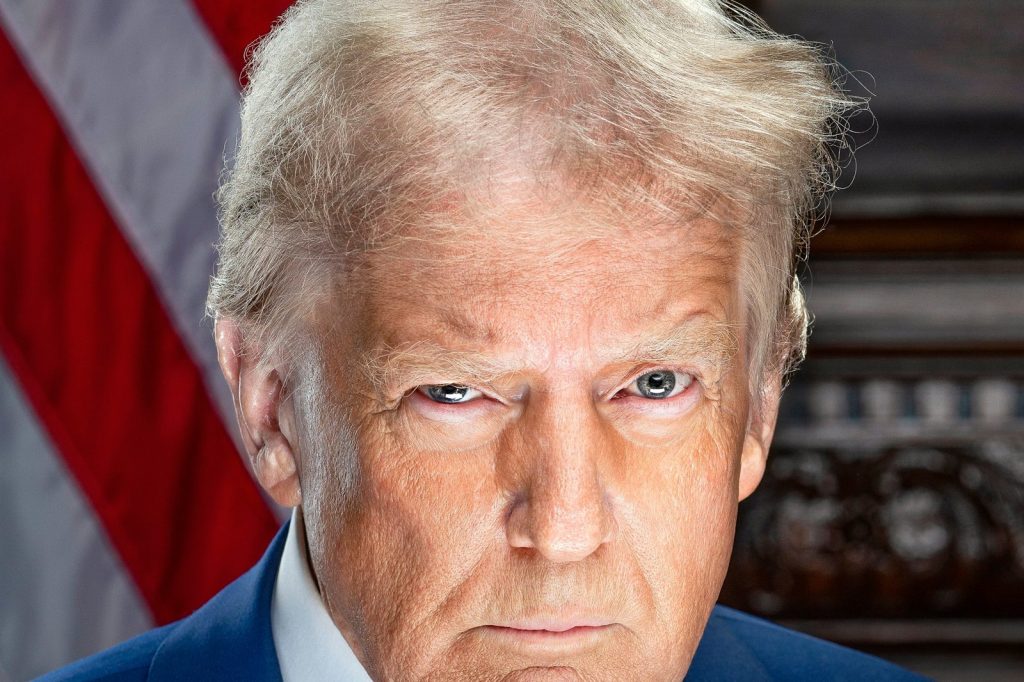
WASHINGTON — President Donald Trump said he is forming an “AI Force” modeled after the U.S. Space Force and will soon appoint an artificial intelligence czar, describing artificial intelligence as the next Industrial Revolution and vowing that America will not hinder or stifle its growth. The announcement, made in public remarks, did not include a specific timeline for the czar’s appointment or details on the AI Force’s structure, budget, or legal basis. Trump said only high-IQ individuals need apply.
No names have been announced for the czar post, and the White House has not cited any formal executive order or legislation behind the plan.
A 25 percent claim, against a 6 percent reality
Trump said AI could eventually account for as much as 25 percent of U.S. GDP. That figure, if realized, would mark a historic shift in the shape of the American economy. For comparison, the U.S. information sector — which includes software, data processing, and publishing — has accounted for roughly 5 to 6 percent of GDP in recent years, according to Bureau of Economic Analysis data.
He also pledged to protect the industry from what he called “anti-AI hoaxes.” The phrase was not defined in his remarks. The pledge lands amid a patchwork of state and federal efforts to regulate AI, including the European Union’s AI Act, which entered into force on August 1, 2024, along with a series of executive orders and legislative proposals in the United States.
The Space Force template
The Space Force that Trump cited as his model was established as the sixth branch of the U.S. armed forces with the signing of the National Defense Authorization Act for Fiscal Year 2020 on December 20, 2019. It is the first new U.S. military service since the Air Force was created in 1947.
Whether an AI Force would follow that path — a military branch — or instead take shape as a federal agency or an advisory body remains unresolved, as does how it would be funded and who would lead it. The czar role would be a new White House position.
The U.S. has previously had officials with technology portfolios, including the Office of Science and Technology Policy director and a National Cyber Director established by the National Defense Authorization Act for Fiscal Year 2021. Trump’s remarks echo his broader technology posture. In his first term he created the American AI Initiative through Executive Order 13859, signed on February 11, 2019, which directed federal agencies to prioritize AI research and development.
The U.S. AI sector is dominated by companies including OpenAI, Google, Microsoft, Meta, and Anthropic, and AI-related investment has surged since OpenAI’s release of ChatGPT in November 2022. What to watch next: whether the White House attaches a timeline to the czar appointment, names a candidate, or puts the AI Force on a formal legal footing through an executive order or legislation.
Until then, the structure, funding, and leadership of both remain open questions.




