
CARNARVON, South Africa, October 4, 2026 A historic breakthrough in planetary science has sent ripples of excitement across communities, families, and researchers. For the first time, astronomers have detected radio signals directly from an exoplanet, providing a new window for studying the properties of distant worlds. The signals were observed coming from Beta Pictoris b, a gas giant exoplanet orbiting a star approximately 64 light-years from Earth.
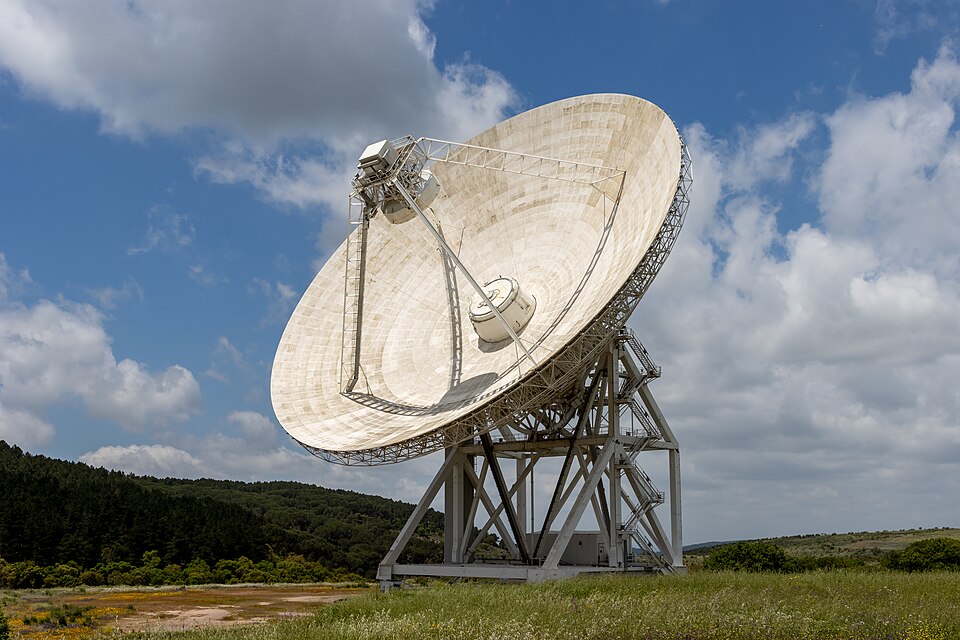
The detection was made using South Africa’s MeerKAT radio telescope array, a precursor to the Square Kilometre Array (SKA) telescope located 90 km outside Carnarvon in the Northern Cape. Researchers from the Centre for Astrophysics, in collaboration with Harvard, the Smithsonian Institution, and the University of Oregon, identified the repeating radio bursts as originating beyond the solar system.
These signals are tied to powerful auroras on the planet, providing the first direct measurement of an exoplanet’s magnetic field. The measurement of Beta Pictoris b’s magnetic field strength offers new insights into the internal dynamics and atmospheric processes of distant worlds. Scientists emphasize that this technique opens a new window for studying exoplanet properties that cannot be inferred from transit or radial velocity methods alone.
This discovery confirms that exoplanets can generate detectable radio emissions through magnetic interactions with stellar winds, similar to Jupiter’s auroral radio emissions but scaled up. The breakthrough is expected to advance understanding of planetary magnetism, habitability conditions, and the diversity of planetary systems in the galaxy.
While the signals are not indicative of extraterrestrial life, the method enhances tools for future investigations into exoplanet environments. The MeerKAT array’s sensitivity was critical in isolating the faint, circularly polarized radio bursts from background noise. This detection represents the first time in history that radio waves have been traced directly to a planet outside Earth’s solar system.
As we look to the future, researchers will continue to harness the power of the MeerKAT and SKA telescopes to unlock more secrets about the universe. The discovery underscores the potential for collaboration among researchers from various institutions to contribute to groundbreaking discoveries. For researchers like Dr. Maria Santos, a Filipino astrophysicist, this development is an exciting step forward.
“This discovery is a testament to the power of collaboration and the endless possibilities that lie beyond our own solar system,” said Dr. Santos. “As we continue to push the boundaries of our understanding, we’re one step closer to uncovering the mysteries of the universe and the search for life beyond Earth,” she added.
As the world eagerly awaits the next big discovery, the astronomy community remains hopeful that this breakthrough is just the beginning of a new chapter in the exploration of the cosmos.




