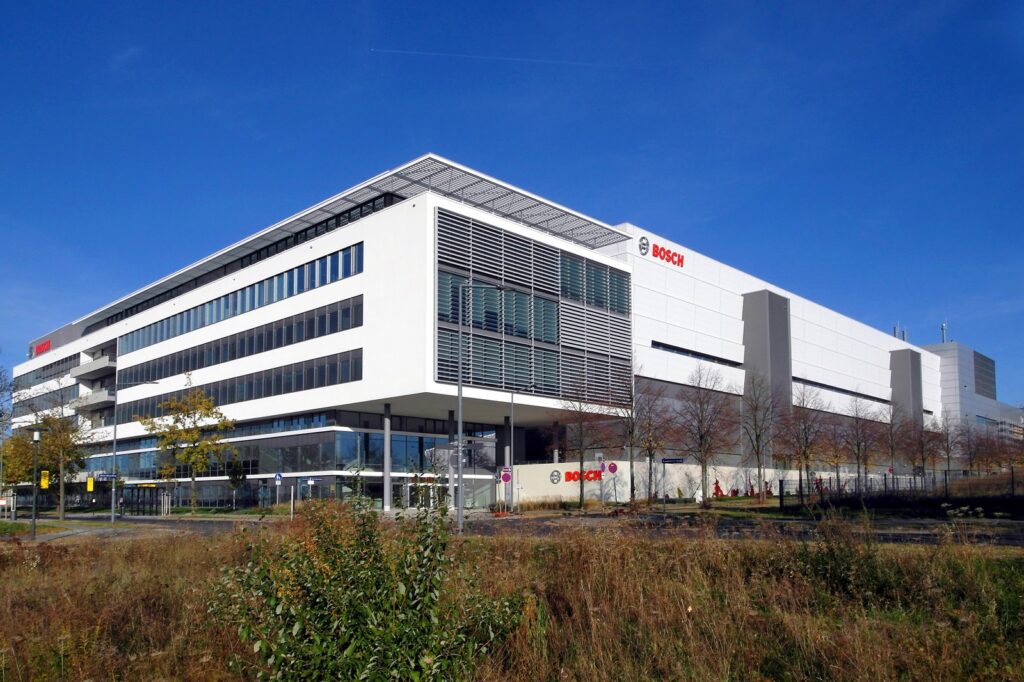
STUTTGART, November 3, 2026 — Bosch will carve out its chip operations into a standalone Semiconductors division on January 1, 2028, splitting from the Mobility Electronics unit that houses them today. The German industrial giant is targeting 5 billion euros in annual semiconductor revenue by 2030, roughly $5.6 billion at current rates.
The Shift Is Structural
The move separates chip development, manufacturing and sales from the automotive control-unit business. Mobility Electronics will keep electronic control units and power electronics for vehicles. The new division stays inside the broader Mobility sector, which Markus Heyn, deputy chairman of the board and Mobility sector chief, oversees. Heyn called semiconductors the “linchpin of our connected world and a key success factor for all of Bosch’s business fields.”
Erik Rein, who runs the chip business today, framed the step as a new chapter in Bosch’s 60-year semiconductor history. He said a dedicated unit lets the company tailor services faster to customers in automotive, consumer electronics and beyond. Rein highlighted MEMS sensor leadership, silicon carbide chips and application-specific integrated circuits as core strengths the new division will leverage.
Beyond the Dashboard
The shift is aimed at markets outside the traditional automotive box. Bosch cited McKinsey data estimating generative AI alone could drive demand for 3.6 million additional wafers a year by 2030. Strategy& and ZVEI analyses suggest European semiconductor demand tied to robotics and industrial automation could double by 2040.
Bosch chips already control humanoid robots. The company sees precision sensors as the foundation for the next wave of smart systems, from robotic vacuums to humanoid platforms. AI data-centre infrastructure is the other growth vector. The division will chase both while defending its position in vehicle electronics, smartphones and wearables.
Foundry Ambitions
Bosch will increasingly open its fabs to external partners, building a contract-manufacturing business alongside its own product lines. The model mirrors the foundry playbook but backed by a balance sheet built on industrial volumes rather than pure-play logic.
Global Footprint, Heavy Capital
The company operates roughly 40 semiconductor sites worldwide for research, development and production. Recent capital deployment includes approximately 3 billion euros in the Dresden and Reutlingen wafer fabs in Germany and around $2 billion to equip the Roseville, California plant for silicon carbide production. A 10% stake in the ESMC joint venture in Dresden gives Bosch direct access to additional leading-edge capacity. The Penang, Malaysia test centre is slated for expansion by the middle of the next decade to harden supply-chain resilience.
What’s Changing
The reorganisation follows the corporate restructuring Bosch announced in late October 2026. By giving chips their own P&L and governance, the company argues it can match the pace and particular demands of the semiconductor cycle — faster turns, different customer rhythms, capital intensity that does not map neatly onto automotive model years. The 5-billion-euro target by 2030 is the scorecard. The new division goes live January 1, 2028.
Sources
- Bosch to create semiconductor division from January 2028
- Bosch to create semiconductor division from January 2028 – AOL
- Bosch to Develop a Dedicated Division for Semiconductors
- Bosch to create Semiconductors division in 2028 and targets €5 billion in chip sales by 2030
- Bosch to restructure semiconductor business from 2028 – electrive.com
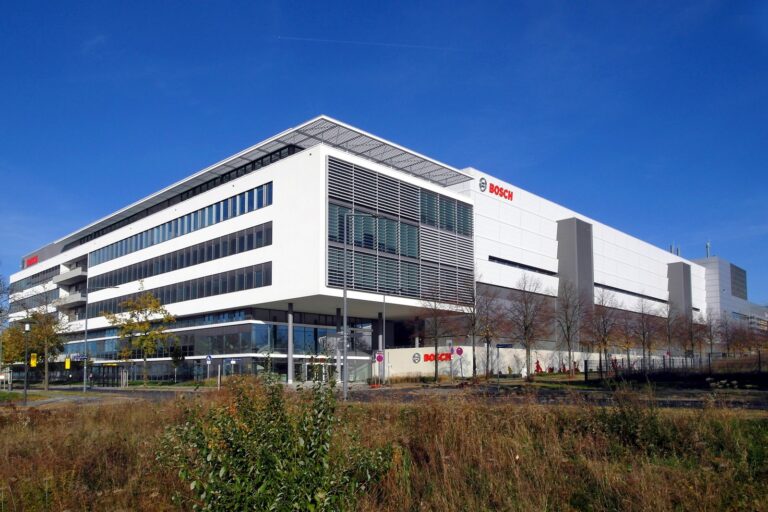
Photo: Jörg Blobelt (CC BY-SA 4.0)