
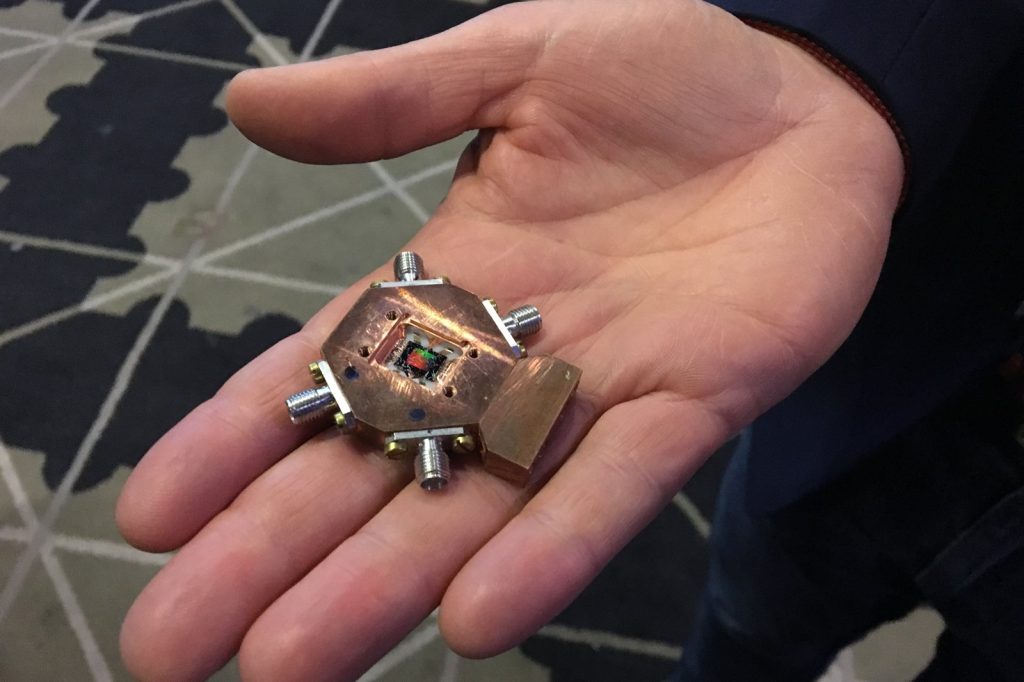
LONDON, July 13 — The path to a practical quantum computer runs through a thicket of engineering problems, and the most stubborn of them is error. Current quantum processors suffer error rates around 1% per gate operation, a figure that makes sustained computation all but impossible without correction. Under the hood, the technical reality is that quantum bits, or qubits, are fragile.
Their coherence times last only microseconds to milliseconds, and the superconducting variety must be cooled to 15 millikelvins — near absolute zero — using expensive dilution refrigerators. These constraints are not merely inconvenient; they are existential for the field. ## The Surface Code and the Qubit Budget Quantum error correction codes, such as the surface code, offer a way out, but the price is steep.
The surface code requires thousands of physical qubits to create a single logical qubit — one that can hold a state long enough to be useful. That qubit budget is the central challenge for scalability: connecting many qubits while maintaining low error rates is difficult. In 2024, Google’s Willow chip provided a landmark result.
The team demonstrated that adding more qubits could actually reduce error rates, a reversal of the usual scaling problem. It was a key milestone, but one that underscored how far the field still has to go. ## Interconnects and Networks Scalability is not just about the processor.
A 2023 team at the University of Chicago showed a method for interconnecting quantum processors via photonic links, a step toward linking chips rather than cramming more qubits into a single device. The U.S. Department of Energy’s Quantum Internet Blueprint, released in 2020, goes further, aiming to create a quantum network. Most experts predict that fault-tolerant quantum computing with millions of qubits will arrive in the 2030s.
The 2024 IEEE International Roadmap for Devices and Systems is more specific: it estimates that a fully error-corrected quantum computer could be available by 2035. ## The Detail That Matters The detail that matters, as ever, is the gap between demonstration and deployment. A single logical qubit from thousands of physical ones is a proof of concept. A machine with millions of logical qubits is a different order of problem.
The dilution refrigerators, the interconnects, the error-correction overhead — each piece must scale together. The field has its milestones: Willow in 2024, the Chicago photonic links in 2023, the Energy Department blueprint in 2020.
What it does not yet have is a clear engineering path from here to a million-qubit machine. The 2035 estimate from the IEEE roadmap is the most concrete timeline on offer, but it is an estimate, not a guarantee. For now, the work continues.
The next few years will show whether the rate of progress on error correction and interconnect technology can match the ambition of the roadmaps.
Sources
{“@context”: “https://schema.org”, “@type”: “NewsArticle”, “headline”: “Fault-Tolerant Quantum Computers Face Key Challenges Ahead”, “description”: “LONDON, July 13 — The path to a practical quantum computer runs through a thicket of engineering problems, and the most stubborn of them is…”, “datePublished”: “2026-07-13T09:30:00+00:00”, “author”: {“@type”: “Person”, “name”: “Sebastian Smith”}, “publisher”: {“@type”: “Organization”, “name”: “InfoPulse Today”, “url”: “https://newsfeed.infopulsetoday.com/”}, “citation”: [{“@type”: “CreativeWork”, “url”: “https://en.wikipedia.org/wiki/Quantum_error_correction”}]}




