
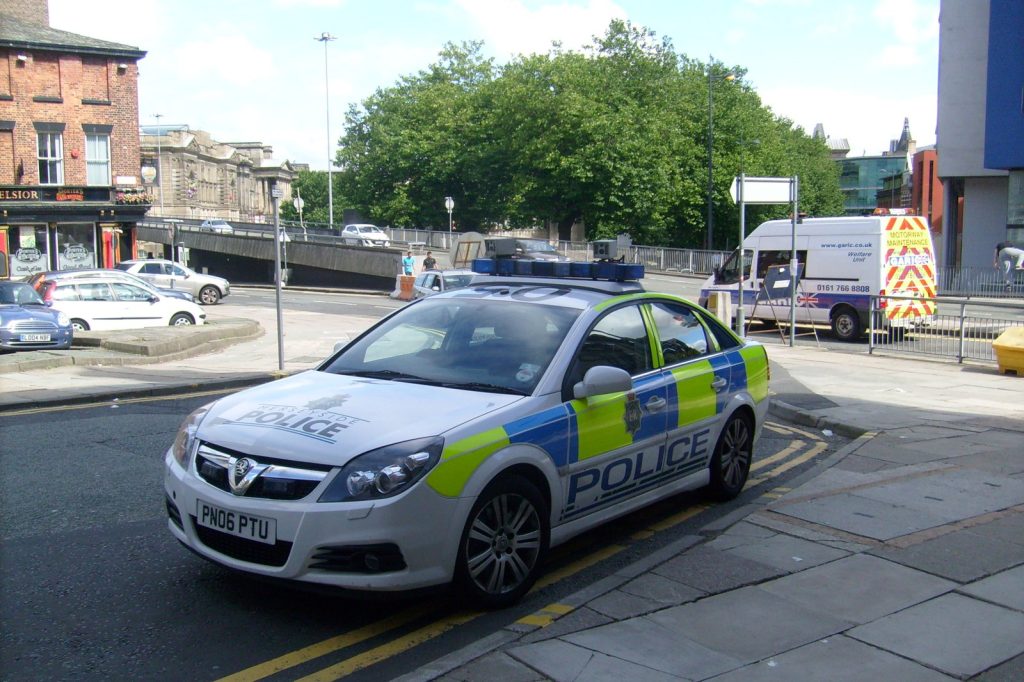
LONDON, July 18 — Automatic number-plate recognition was invented in 1976 at the Police Scientific Development Branch in Britain, and by 1979 prototype systems were working. The mechanics here depend on optical character recognition reading registration plates from images, then creating vehicle location data. The catch is that this technology, now used in law enforcement and toll collection, began as a targeted tool but evolved into a system capable of mass surveillance—and that evolution was documented as early as the 2000s.
From Dartford Tunnel to the first murder case
The early contracts went to EMI Electronics and later Computer Recognition Systems (CRS, now part of Jenoptik) in Wokingham, UK. Trials were deployed on the A1 road and at the Dartford Tunnel. The first arrest through detection of a stolen car occurred in 1981.
But ANPR did not become widely used until new, cheaper software advances in the 1990s. By the early 2000s, the collection of ANPR data for future use in solving then-unidentified crimes was documented.
The first case of ANPR used to help solve a murder came in November 2005 in Bradford, where it helped locate and convict the killers of Sharon Beshenivsky. The technology can use existing CCTV, road-rule enforcement cameras, or dedicated cameras. Systems commonly use infrared lighting to operate day or night.
The software runs on standard computer hardware and first uses image manipulation to detect, normalize, and enhance the plate image, then OCR extracts the alphanumerics.
Two deployment models, one growing database
Two approaches exist. Real-time processing at the lane captures alphanumeric, date-time, and lane ID in about 250 milliseconds. The alternative is later processing at a remote server farm—the London congestion charge project is one example.
That architecture allows data to be stored and cross-referenced later, which is precisely what raises privacy concerns. ANPR is used by police worldwide for law enforcement, checking registration and license validity.
It is also used for electronic toll collection and for cataloguing traffic movements by highways agencies. Systems can store captured images and plate text, and some are configurable to photograph the driver.
The privacy ledger: tracking, errors, and spending
The privacy concerns are not abstract. They include government tracking of citizens’ movements, misidentification, high error rates, and increased government spending. Critics describe it as a form of mass surveillance.
The technology must also handle plate variations from place to place—different fonts, sizes, and formats. Other names for the same technology include automatic vehicle identification (AVI), car-plate recognition (CPR), license-plate recognition (LPR), and vehicle recognition identification (VRI).
Whatever the label, the core mechanism is the same: a plate is read, a location is logged, and often that record is kept. As of 2026, ANPR is a settled technology. But the open question remains how far governments will push the stored data back in time—and whether error rates and misidentification problems will be addressed as the systems become more embedded.
The catch is that the cheaper the software gets, the more ubiquitous the surveillance becomes. Follow the money: the cost of storage drops, the incentive to keep data rises, and the debate over privacy versus enforcement is far from over.
Sources
{“@context”: “https://schema.org”, “@type”: “NewsArticle”, “headline”: “Automatic Number-Plate Recognition sparks privacy debates”, “description”: “LONDON, July 18 — Automatic number-plate recognition was invented in 1976 at the Police Scientific Development Branch in Britain, and by 1979 prototype systems were…”, “datePublished”: “2026-07-18T09:30:00+00:00”, “author”: {“@type”: “Person”, “name”: “Beatrice Ferrari”}, “publisher”: {“@type”: “Organization”, “name”: “InfoPulse Today”, “url”: “https://newsfeed.infopulsetoday.com/”}, “citation”: [{“@type”: “CreativeWork”, “url”: “https://en.wikipedia.org/wiki/Automatic_number-plate_recognition”}]}




