
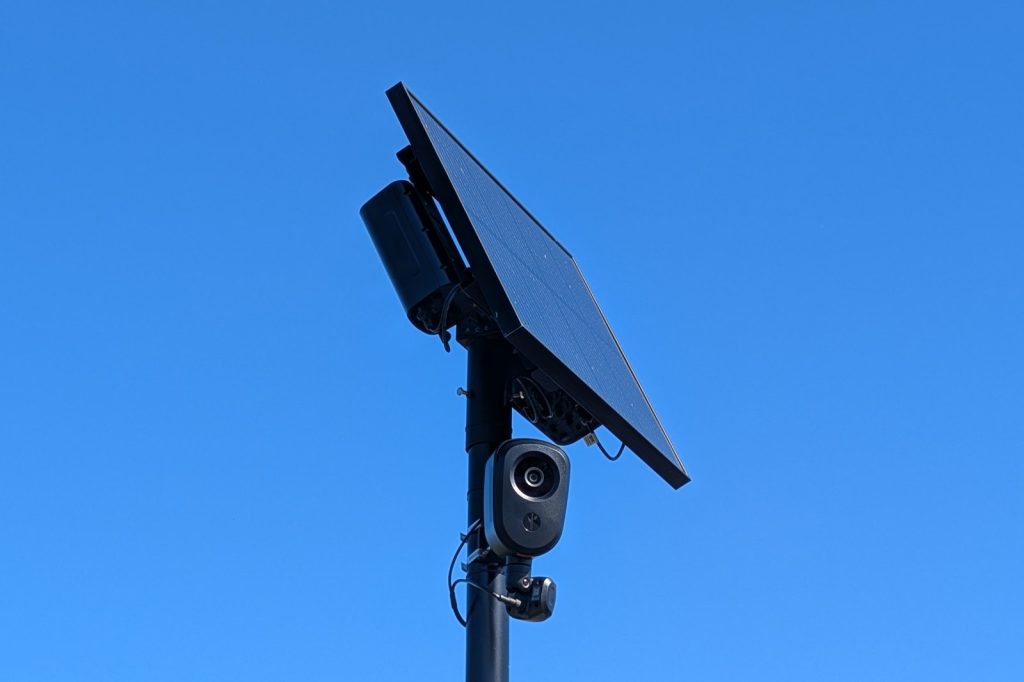
LONDON, July 18 — A technology born in a British police lab half a century ago now quietly logs the movement of millions of vehicles daily. Automatic number-plate recognition — ANPR — reads registration plates via optical character recognition on images from CCTV, road-enforcement cameras, or purpose-built units. The mechanics here are straightforward: capture the plate, convert it to text, store the location and time.
The invention dates to 1976 at the Police Scientific Development Branch in Britain. Prototype systems were running by 1979.
Contracts went first to EMI Electronics, then to Computer Recognition Systems — CRS, now part of Jenoptik — based in Wokingham, UK. Early trials were deployed on the A1 road and at the Dartford Tunnel. The first arrest through detection of a stolen car came in 1981.
Widespread use only took off in the 1990s, once cheaper software made the economics work. The technology does not stop at law enforcement.
It handles electronic toll collection on pay-per-use roads. Highways agencies use it to catalogue traffic movements. Systems commonly use infrared lighting to capture plates at any hour, day or night.
Some configurations store not just the plate text and a captured image, but a photograph of the driver. On closer reading, that means a record linking a person to a precise time and place.
The Surveillance Question
Collection of ANPR data for future crime-solving was documented in the early 2000s. The first documented case of the technology solving a murder occurred in November 2005 in Bradford, UK, where it played a vital role in locating and convicting the killers of Sharon Beshenivsky. That success, however, sits alongside a growing list of privacy concerns.
Critics describe the technology as a form of mass surveillance. Specific complaints include government tracking of citizens’ movements, misidentification, high error rates, and increased government spending.
The claim is that the system can generate a location history for any vehicle — and therefore any driver — without a warrant. The counter-claim from proponents is that it solves crime. The mechanics here produce data; the debate is about who holds it and for how long.
As of mid-2026, the technology is embedded in police forces worldwide, toll networks, and highway management. The shift from expensive, specialised hardware in the 1970s to cheap software in the 1990s opened the market.
Now cameras are ubiquitous, and storage is cheap. The result is a continuous, searchable log of vehicle movements — a tool that solves murders but also raises the spectre of automated tracking. The catch, as always, is in the configuration.
Sources
{“@context”: “https://schema.org”, “@type”: “NewsArticle”, “headline”: “Automatic License Plate Readers: British Invention Turns Global Surveillance”, “description”: “LONDON, July 18 — A technology born in a British police lab half a century ago now quietly logs the movement of millions of vehicles…”, “datePublished”: “2026-07-18T09:30:00+00:00”, “author”: {“@type”: “Person”, “name”: “Beatrice Ferrari”}, “publisher”: {“@type”: “Organization”, “name”: “InfoPulse Today”, “url”: “https://newsfeed.infopulsetoday.com/”}, “citation”: [{“@type”: “CreativeWork”, “url”: “https://en.wikipedia.org/wiki/Automatic_number-plate_recognition”}]}




