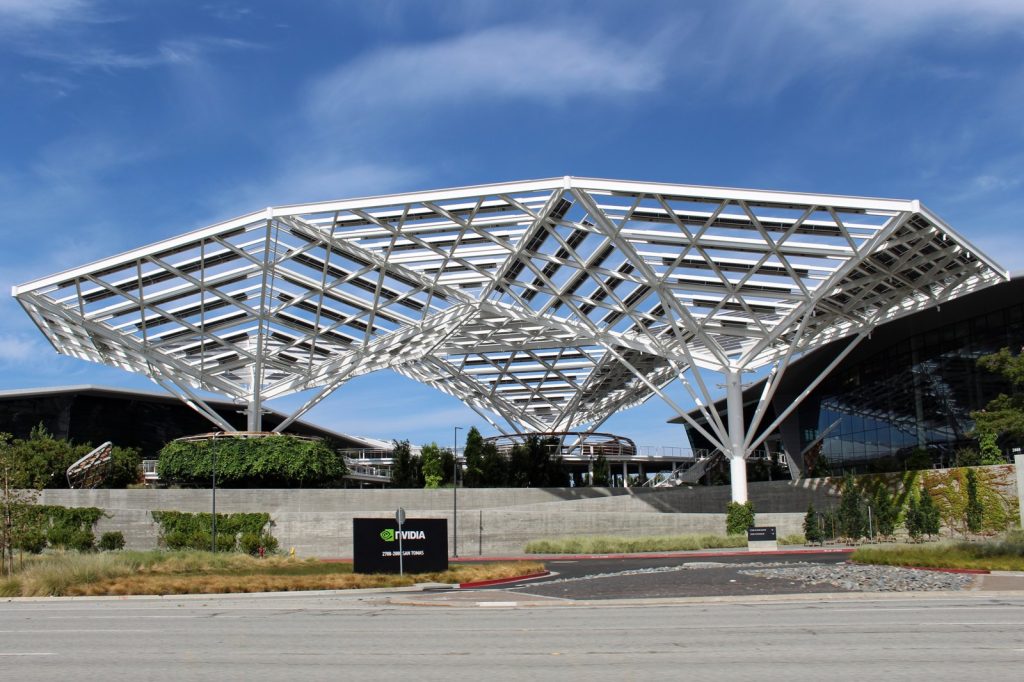
College Station, October 16 Nvidia has awarded a grant of four RTX PRO 6000 Server Edition GPUs to a nuclear engineering research project at Texas A&M University aimed at rethinking radiation transport algorithms for next-generation computing systems. The award, made on October 14, supports work led by Dr. Jean Ragusa, professor of nuclear engineering and associate director of both the Institute for Scientific Computation and the Center for Large-Scale Scientific Simulations.
The grant provides hardware for local development and testing by Ragusa’s research group, which will use the open-source software OpenSn to model the movement and interaction of particles such as neutrons and photons through matter. The research focuses on improving the simulation of radiation transport, a computational challenge central to nuclear reactor analysis, radiation shielding design, medical physics, and other fields requiring precise tracking of particle behaviour across space, direction, and energy.
Rather than merely accelerating existing calculations on faster hardware, the team seeks to understand how transport algorithms should be fundamentally redesigned to exploit the architectural strengths of modern GPUs. Ragusa emphasized that the RTX PRO 6000 Server Edition GPUs are particularly well-suited for this task due to their high levels of parallel computing, substantial memory bandwidth, and superior performance in matrix multiplication compared to traditional central processing units.
The project will pursue two complementary strategies to accelerate the transport sweep — the algorithm responsible for tracking how particles move through matter and one of the most computationally intensive components of radiation transport simulations. First, the team will optimize the OpenSn transport sweep for GPUs by distributing calculations across multiple GPUs and identifying performance bottlenecks.
Second, they will explore reformulating parts of the sweep into computations better matched to the specialized processing units within GPUs designed for specific operations, such as tensor cores or ray tracing accelerators. Ragusa noted that effectively exposing parallelism on modern GPUs requires rethinking data movement, kernel organization, memory access patterns, and work distribution across multiple devices, rather than simply porting CPU-oriented code. OpenSn enables massive parallel simulations on high-performance computing systems and is built to handle the demanding calculations involved in particle tracking.
Its open-source and collaborative nature aligns with the researchers’ plan to share the resulting software, publications, and supporting materials with the broader computational science community upon completion. The team will evaluate their advances using radiation transport benchmark problems representative of current nuclear reactor applications, ensuring relevance to real-world use cases. No monetary value was specified for the grant in the source material.
The award underscores Nvidia’s ongoing engagement with scientific computing challenges beyond traditional graphics or artificial intelligence workloads, extending into domains where computational fidelity and efficiency are critical for safety and design. As high-performance computing architectures continue to evolve, insights from this work may inform not only radiation transport but also other fields reliant on complex particle or photon simulations, from astrophysics to medical imaging.
The coming months will reveal whether algorithmic co-design with GPU hardware can yield meaningful advances in a field where precision and performance are non-negotiable.