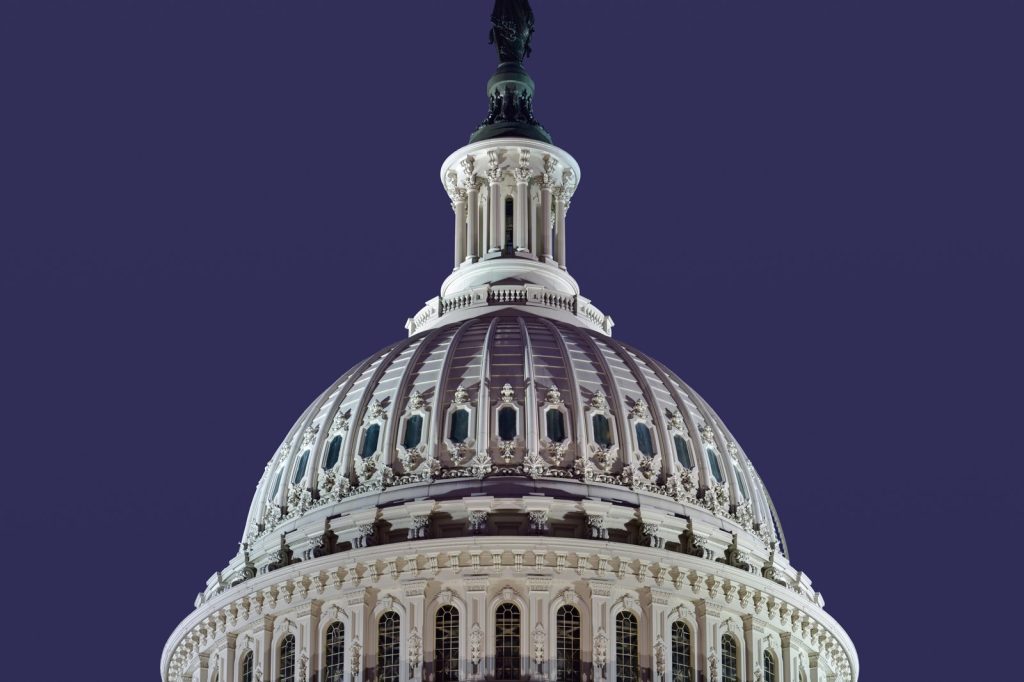
Five decades after taking effect, the Privacy Act of 1974 remains the primary federal statute governing how the government handles personal information, yet its framework reflects a data landscape dramatically different from today’s. The law, which went into force on September 27, 1975, was crafted as an “American Bill of Rights on data” but has evolved into a procedural gate with no dedicated enforcement authority, leaving critics to describe it as the skeleton key to understanding America’s piecemeal approach to data protection.
Origins in Surveillance and Scandal
The law’s roots stretch back to the late 1950s, when the Social Security number quietly became a de facto personal identifier across federal agencies. Computers were being installed in agency after agency, and interest grew in a centralized federal data center, prompting Congress to commission reports exploring the idea.
Public alarm mounted alongside the reach of McCarthyism, a series of Congressional wiretapping hearings in the mid-1960s, and the cultural impact of George Orwell’s novel “Nineteen Eighty-Four.” Congressional hearings on a federal data bank began in 1966. Author Vance Packard testified before lawmakers that “Big Brother, if he ever comes to the United States, may turn out to be…a relentless bureaucrat obsessed with efficiency.” The phrase echoed down the decades as hearings solidified demand for what became known as an American Bill of Rights on data.
By 1971, momentum had built, culminating in a 1973 report titled “Records, Computers, and Rights of Citizens.” Passage of the law became a priority in the wake of the Watergate scandal and the exposure of COINTELPRO, the FBI’s program of illegal surveillance against political groups and individuals deemed subversive. President Richard Nixon, seeking to rebuild public trust, publicly supported privacy rights in 1974.
Senator Sam Ervin of North Carolina served as the principal sponsor, merging House and Senate versions into the final bill.
How the Law Works and Where It Falls Short
The Privacy Act establishes a Code of Fair Information Practice governing the collection, maintenance, use, and dissemination of personally identifiable information maintained in systems of records by federal agencies. A system of records is defined as a group of records under agency control from which information is retrieved by an individual’s name or identifier. Agencies must give public notice of their systems of records by publication in the Federal Register.
The law generally prohibits disclosure of information from a system of records without the written consent of the subject individual, unless one of twelve statutory exceptions applies. Individuals are granted the right to access, amend, and learn the disclosure history of their own records.
Yet the act applies only to federal executive branch agencies and to records systems that are retrieved by a person’s name or identifier. It does not cover state governments, private companies, or newer technologies that agencies use. That limitation, combined with the absence of a dedicated oversight body, has left the law as a procedural framework rather than an active shield against overreach.
Legacy and the Changing Data Landscape
Despite its narrow scope, the Privacy Act’s framework of fair information practices has influenced privacy law worldwide. For readers, the law matters because it remains both the baseline protection against government overreach and a reminder of how much the data landscape has changed since 1974. The same concerns that drove its creation — creeping surveillance, bureaucratic efficiency, and the risk of unchecked government power — persist in an era where personal data flows across sectors and borders at unprecedented speed.