SAN FRANCISCO, July 8 — The integrated circuit, that sliver of silicon from which modern computing was carved, turns 67 this year. Its independent inventor, Robert Noyce, died in 1990, but the technical reality he set in motion continues to define the industry. Noyce, an American engineer and entrepreneur, co-founded Fairchild Semiconductor in 1957 and later Intel in 1968.
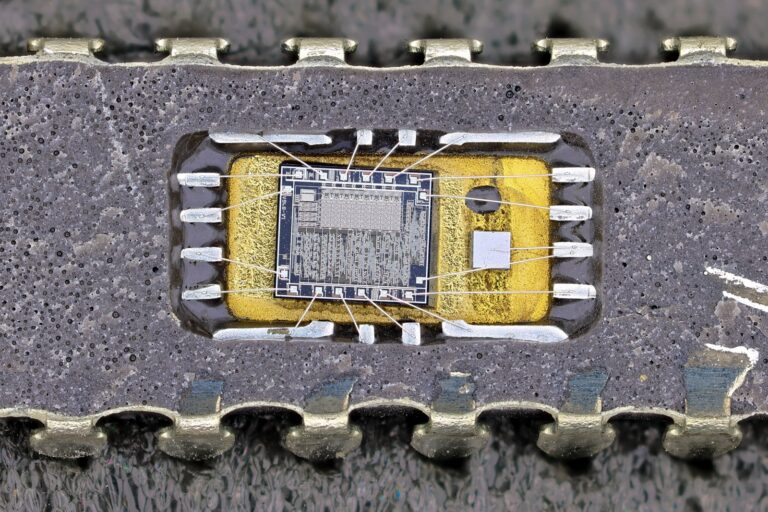
In 1959, he independently invented the integrated circuit using silicon and planar technology to fabricate and interconnect multiple components on a single chip. The detail that mattered at the time was the material.
Jack Kilby, working at Texas Instruments, had demonstrated a working integrated circuit on germanium. It worked, but Noyce’s silicon approach, leveraging the planar process, proved more practical. It enabled the mass production of integrated circuits, and that changed everything.
Noyce held 16 patents over his career. The one that matters most, the integrated circuit, is the reason a chip can contain multiple components.
Under the hood of every microprocessor sits the conceptual architecture he helped pioneer. At Intel, he oversaw the development of the 4004 microprocessor. That device directly enabled the microprocessor revolution.
The culture of Silicon Valley
Noyce is credited with creating the culture of Silicon Valley. That is not a small claim. Before him, the semiconductor industry was hierarchical, secretive, and rigid.
Noyce introduced open communication among engineers and stock options for employees. The latter, as ever, was the mechanism that aligned individual ambition with company success.
It is hard to overstate how radical that was in the late 1960s. Most American corporations treated engineers as interchangeable cogs. Noyce treated them as partners.
The National Medal of Science came in 1979. The IEEE Medal of Honor arrived a year earlier, in 1978.
Both recognised the same achievement: the integrated circuit, and the industry it spawned.
What Noyce built
The technical reality of Noyce’s invention is that it allowed multiple components to be fabricated and interconnected on a single piece of silicon. Before that, each component was made separately and wired together by hand. That was slow, expensive, and unreliable.
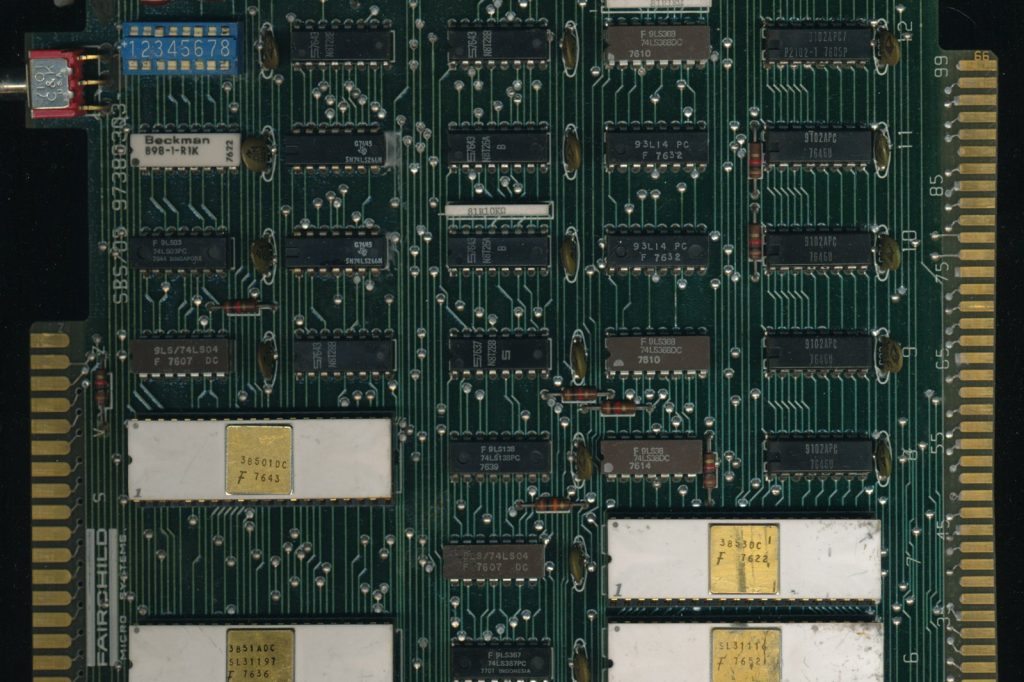
The integrated circuit solved all three problems at once. At Fairchild, Noyce and his colleagues built the first company dedicated to commercialising the planar integrated circuit.
By the time he co-founded Intel in 1968, the semiconductor industry was already growing fast. Intel’s focus on memory chips and microprocessors set the stage for the personal computer revolution. The 4004 microprocessor, developed under Noyce’s oversight, contained 2,300 transistors.
That number seems quaint by today’s standards, but it was the proof of concept. The 4004 demonstrated that a general-purpose processor could fit on a single chip.
Every modern CPU, from the ARM cores in smartphones to the x86 chips in data centres, descends from that design.
What to watch next
The semiconductor industry Noyce helped create now faces its most serious challenge in decades. The physics of silicon are approaching fundamental limits. Transistor gates are measured in nanometres; quantum effects become a problem.
The industry is exploring new materials — gallium nitride, silicon carbide — and new architectures, such as chiplets and 3D stacking. None of this would be happening without the foundation Noyce laid.
The culture he established at Intel — open communication, stock options, flat hierarchies — has been widely copied, but rarely matched. As ever, the detail that matters is that Noyce understood that innovation is not just a technical problem. It is a human one.
Get the incentives right, and the engineers will do the rest. The 4004 microprocessor, the integrated circuit, the 16 patents — those are the concrete achievements.
The culture of Silicon Valley is the intangible one. Both are Noyce’s legacy. Both are still very much in play.